Creatures of Aethoria
Return to Aethorian Tome ⬅ Back to Village Square

CREATURES AND BEASTS

Across Aethoria, creatures have adapted to crystal-fed forests, frozen mountains, lava rivers, dark marshes, ocean caves, and tainted wildlands. Some are gentle, some mysterious, and some are the sort of thing that makes wise travellers suddenly decide they were never actually that curious to begin with.

Jump to Creature

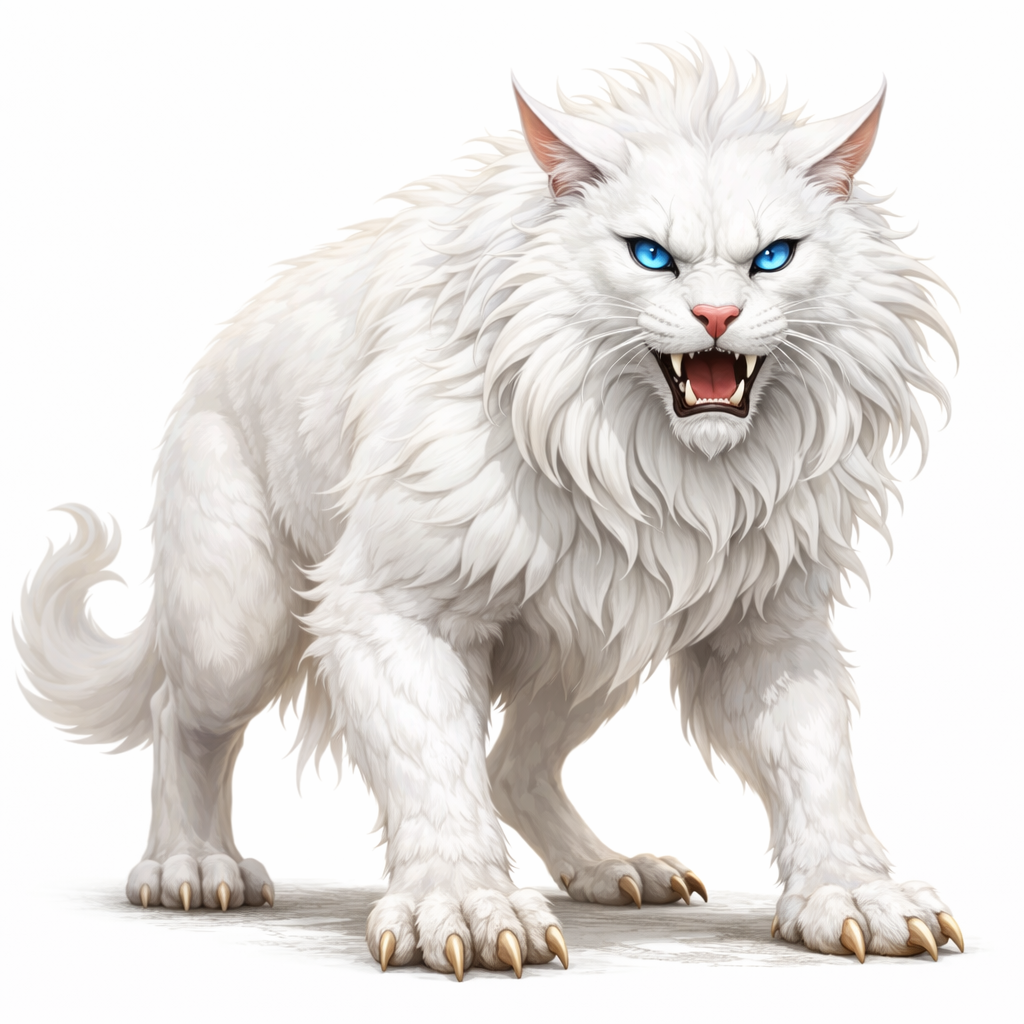
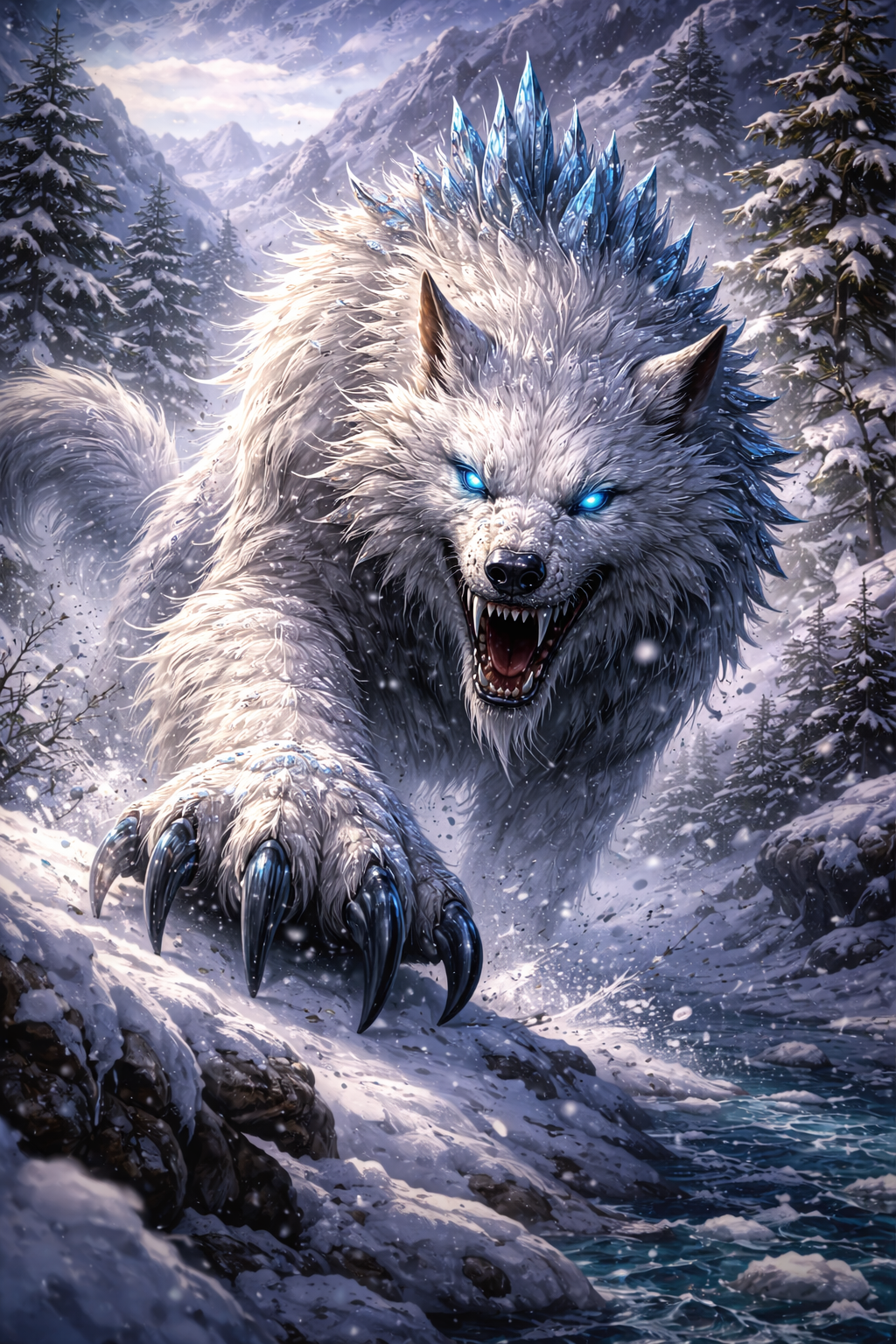
Shadowfang

Snow predator of the northern hinterlands

A snow and hinterland dwelling feline that hunts moonstalkers, Luffy Waterbirds, and small rodents. It is found in lands of the northern hemisphere above the snowline.

This large predator has a sleek, muscular body covered in thick white fur that seems to reflect light, making it nearly invisible in the snow. Its blue eyes hold a deep crystal-infused colour, most likely absorbed from prey that feed on mineralised, crystal-rich vegetation.

It has beautiful, symmetrical features and was once a prized animal for early hunters.

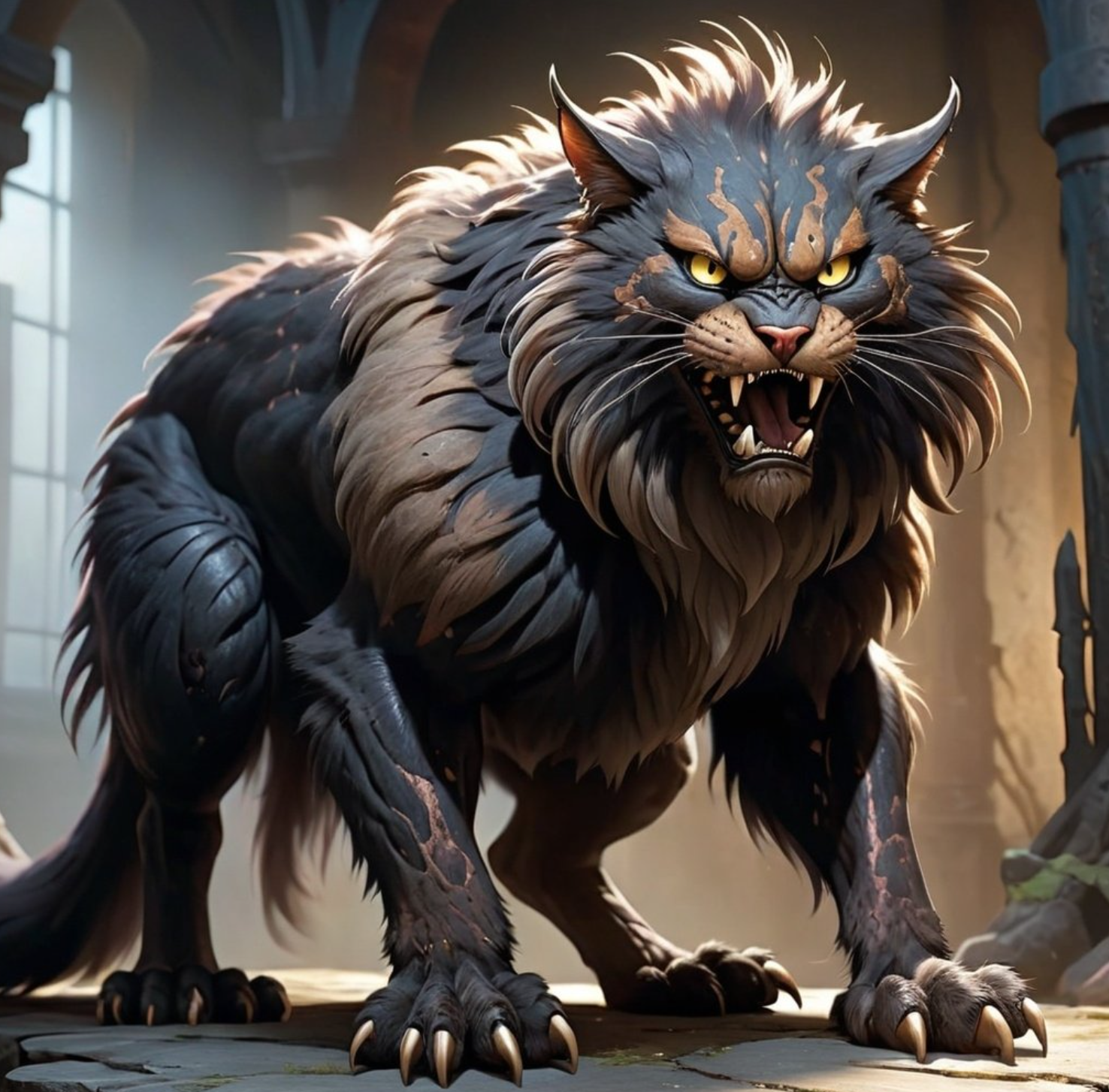
Tainted Shadowfang

A corrupted apex predator of Ironroot’s dark forests

Habitat

The Tainted Shadowfang is primarily found in the dense, mist-laden forests of Ironroot Bastion, especially in the heart of the Dereliction lands. These forests are choked with ancient trees whose thick canopies block most sunlight, creating a dim and eerie hunting ground.

Description

A mutated version of the noble Shadowfang, this creature shows clear signs of the Dereliction. Its dark, matted fur seems to absorb light, its eyes glow with unnatural malice, and its once beautiful features are marred by blackened flesh and grotesque growths.

Behaviour and Prey

The Tainted Shadowfang hunts with terrifying efficiency, stalking silently and striking from above or from dense undergrowth. The corruption has heightened its aggression, strength, and unpredictability, making it far more dangerous than its untainted kin.

Its prey includes small mammals, dive birds, and larger herbivores such as Moonstalkers. Unlike its original form, it has also been known to attack humans.

Danger to Humans

Encounters are extremely dangerous. The beast is cunning, physically formidable, and capable of blending so well into its surroundings that victims may not see it until the attack begins. Travellers in the Brooding Woods are warned to move in groups and remain constantly alert.

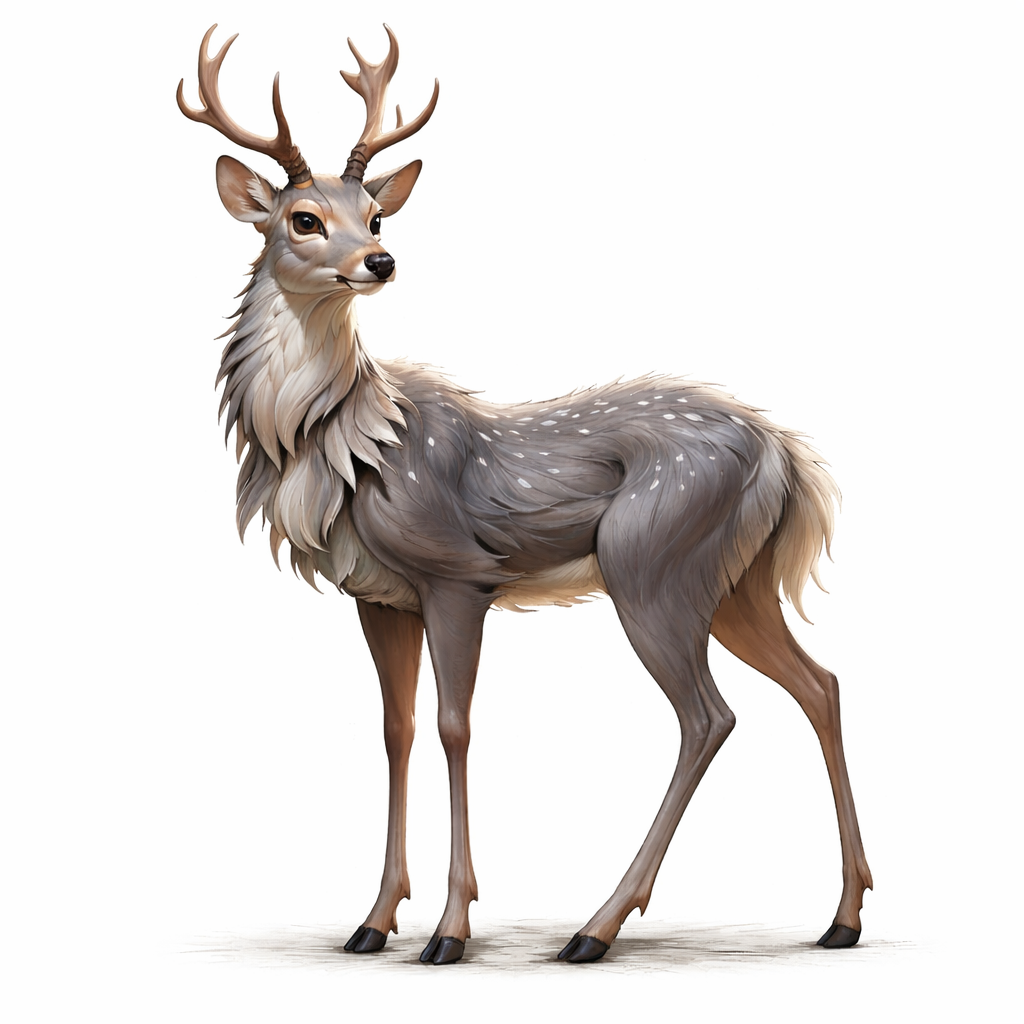
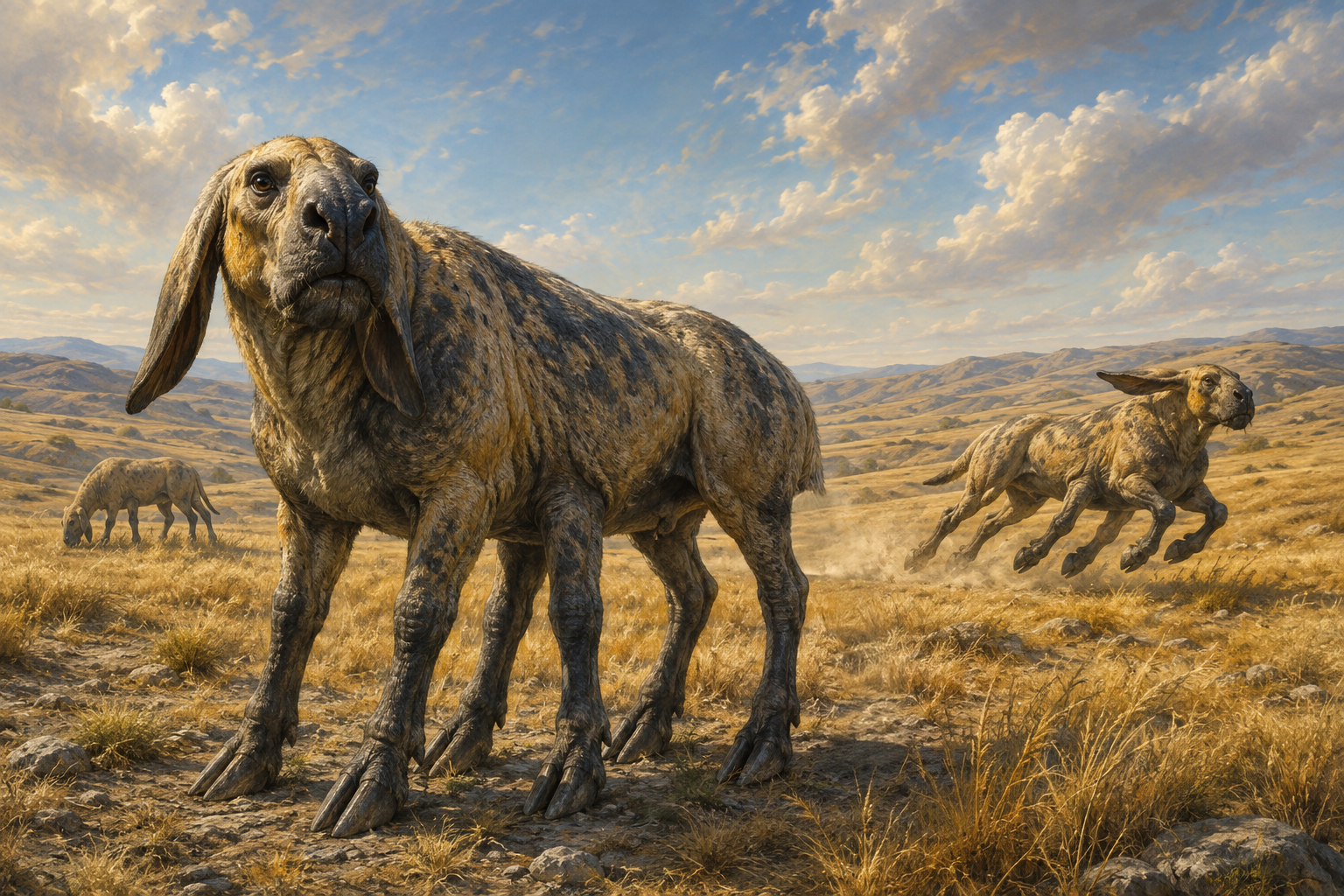
Moonstalker

A graceful forest herbivore of western Aethoria

Habitat

Moonstalkers are found in the meadows and forest clearings of Ironroot forests, the Whispering Woods of Pyprast Bastion, and the forests of Sorka in both east and west. They favour areas near streams, ponds, and soft-lit clearings. A smaller variant is also found on Kefar Island.

Description

Moonstalkers are elegant, slender creatures with long delicate legs, silvery-grey fur, and faintly glowing markings that resemble moonlight through branches. Their large eyes show calm intelligence, and their tapering antlers resemble the limbs of ancient Aethorian trees.

Behaviour and Diet

Peaceful and social, they move in small herds and are mostly nocturnal. They graze on grasses, leaves, Glowleaf, Stargrass, and tender shoots under cover of darkness.

Role in the Ecosystem

As primary consumers, Moonstalkers help control fast-growing vegetation and promote biodiversity. Their droppings also enrich the soil and help new Glowleaf growth.

Threats and Predators

Their main predators include Shadowfangs and Tainted Shadowfangs, especially in northern Ironroot. Tainted flora and the spread of the Dereliction also threaten their grazing lands and migration paths.

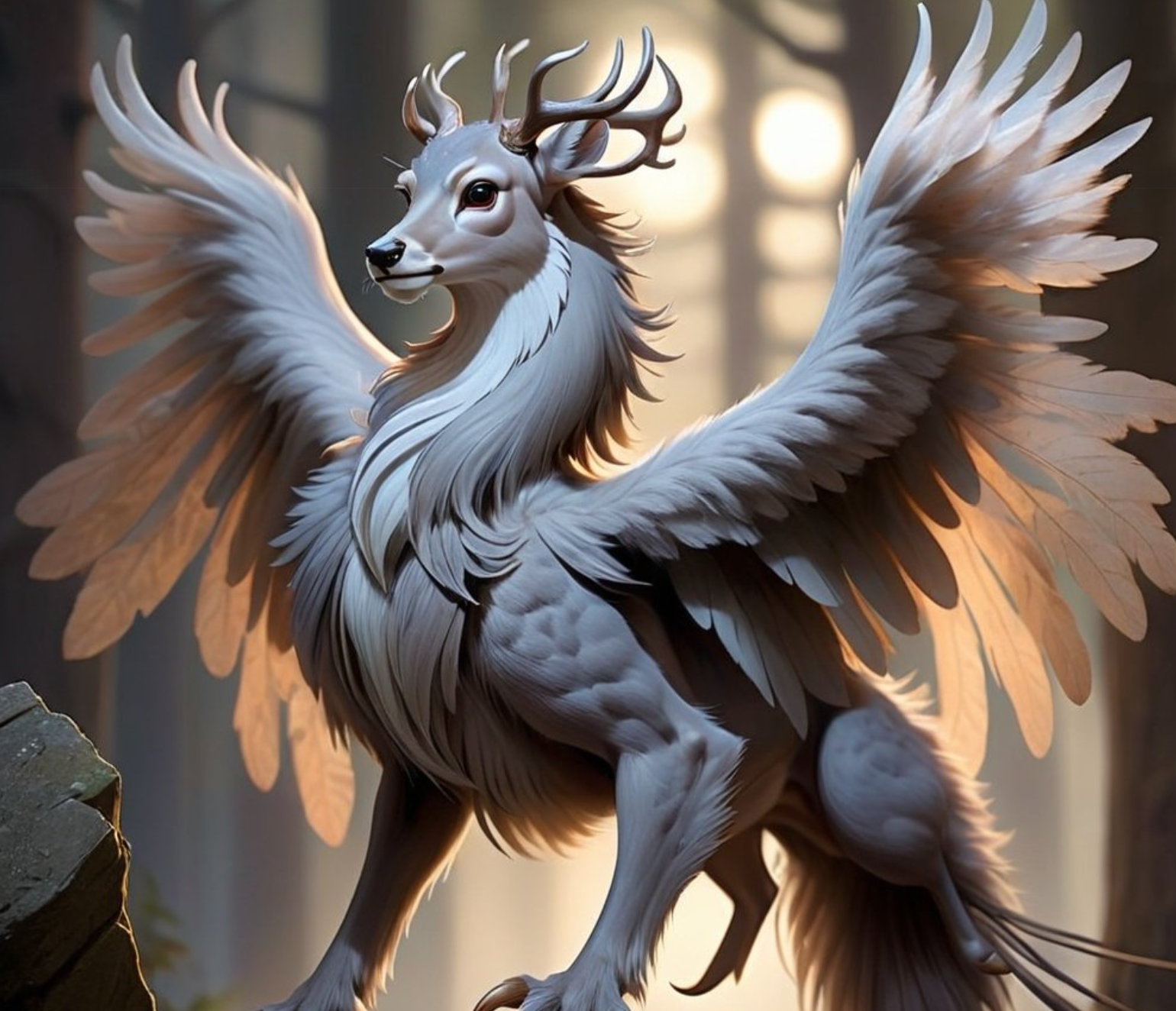
Tainted Moonstalker

A corrupted gliding predator of the north

Habitat

The Tainted Moonstalker roams the shadowed northern reaches of Ironroot Bastion, especially places like Greenhold and Darkveil Hollow where vegetation has mutated and decay hangs over the land.

Description

It retains the silvery fur and glowing markings of its kin, but its back legs have withered and become useless. In their place, great bat-like wings allow it to glide silently through the trees with unnerving grace.

Behaviour and Diet

No longer a grazer, it has adapted into a scavenger and predator, feeding on small animals and carrion. It hunts most often at dusk and dawn, using silence and surprise.

Threat to Humans

Its silent movement and sudden attacks make it a serious threat to travellers and a haunting example of the Dereliction’s power to twist life into something both tragic and horrifying.

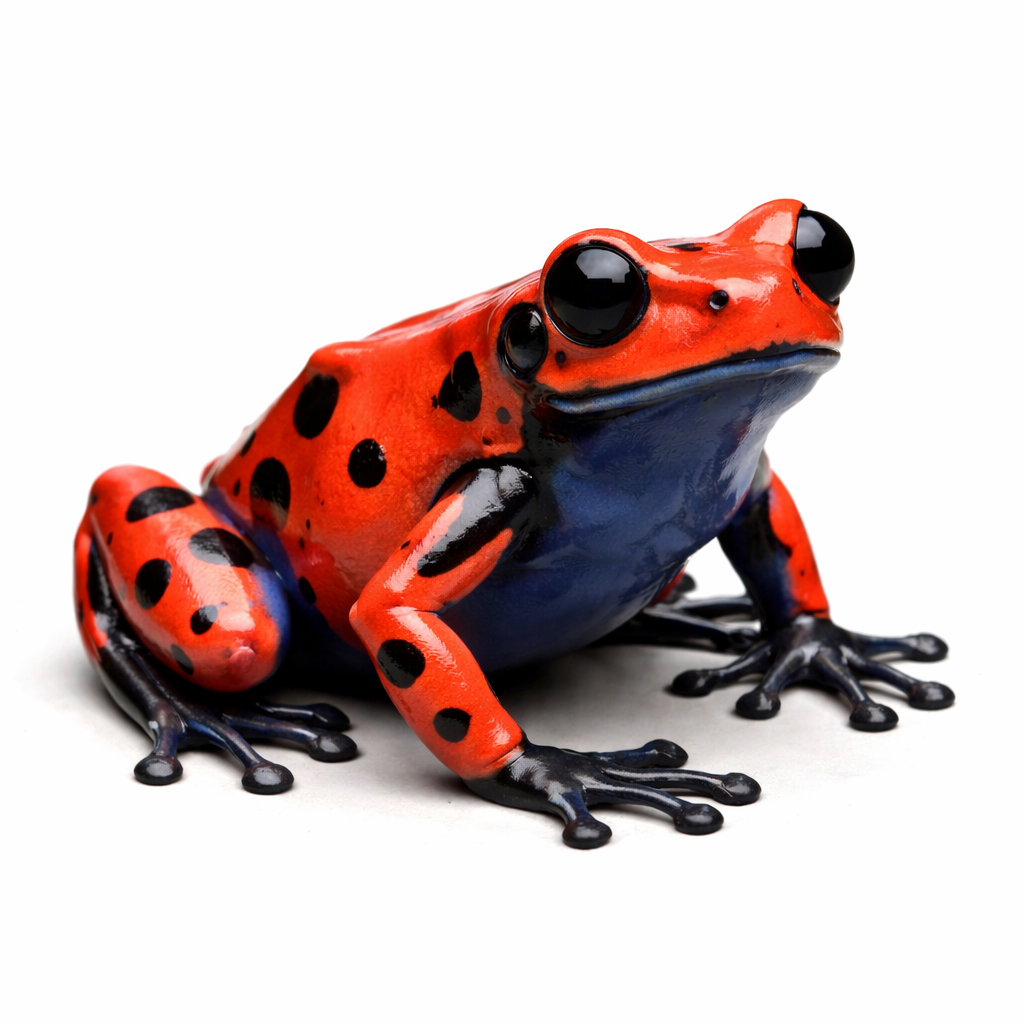
Bordered Poison Frog

A bright warning hidden in the Bordrad Marshes

The Bordrad Marshes are rich with life, much of it dangerous. Among the most notorious inhabitants are the colourful poison frogs whose skin secretes a powerful toxin capable of paralysing or even killing on contact.

These amphibians are both feared and respected by the swamp-dwelling villagers, who have learned how to live around them. The marshes also contain bioluminescent fungi and toxin-resistant crystals, which are studied for their possible protective value against the spread of taint from the north.

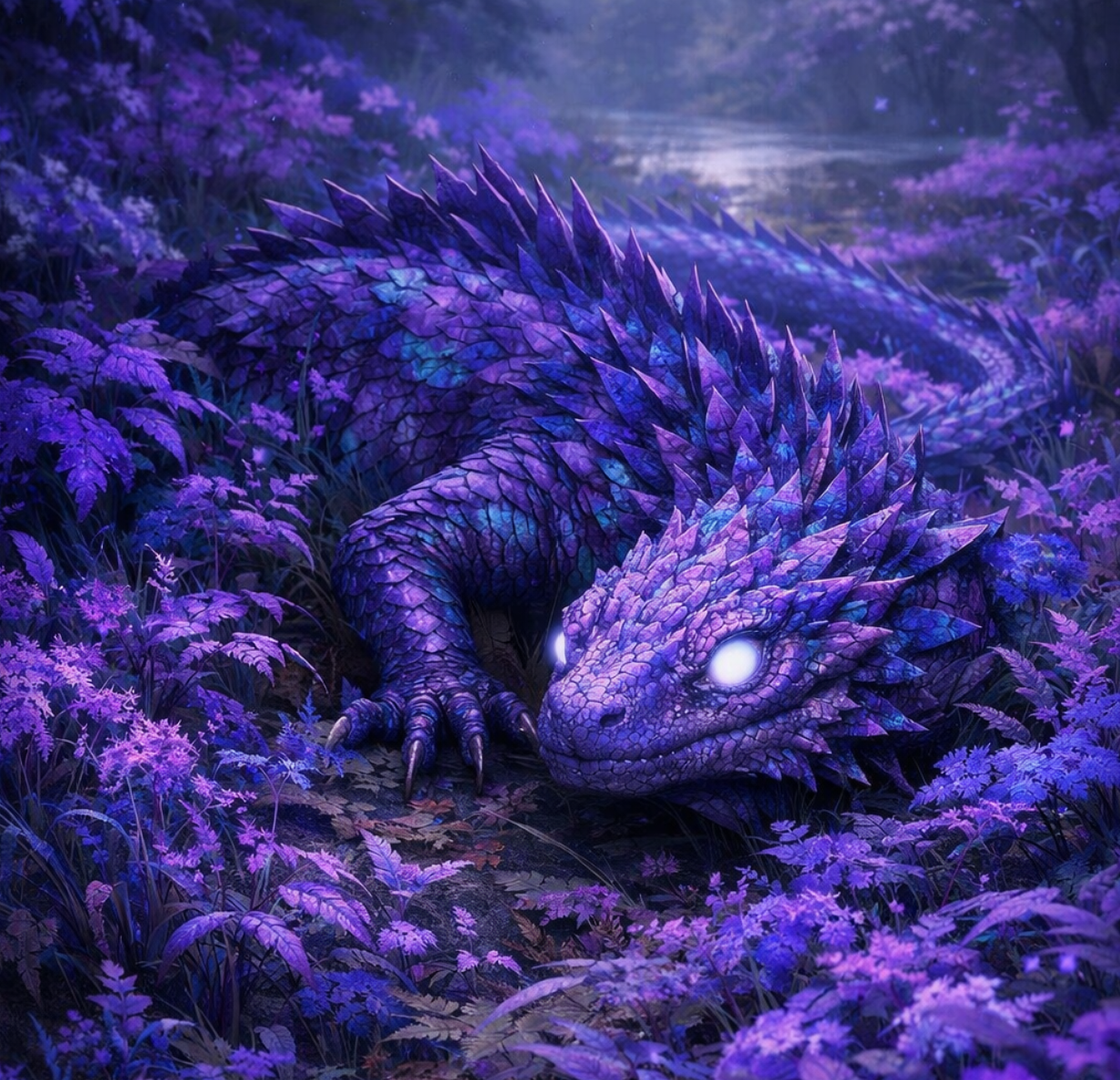
Scaleback Runner

Crystal-eyed reptile of forest waters and sea caves

Appearance

An adult Scaleback Runner stands roughly human height when on all four legs. Its skin is covered in large scales of blue, green, or purple. Freshwater varieties tend to be darker and duller, while sea-dwelling runners often display brighter colouring.

Their white eyes glow softly in the dark and are used to lure prey closer.

Ecology

Scaleback Runners live near forests and freshwater sources, while sea varieties prefer islands, stony beaches, and cave systems along the coast. Freshwater runners burrow near rivers and lakes. Sea runners dwell in sea caves and coastal hollows.

Their diet consists mainly of fish and small amphibians. They may drive away humans or large creatures from their territory, but they rarely seek full battle unless pressed.

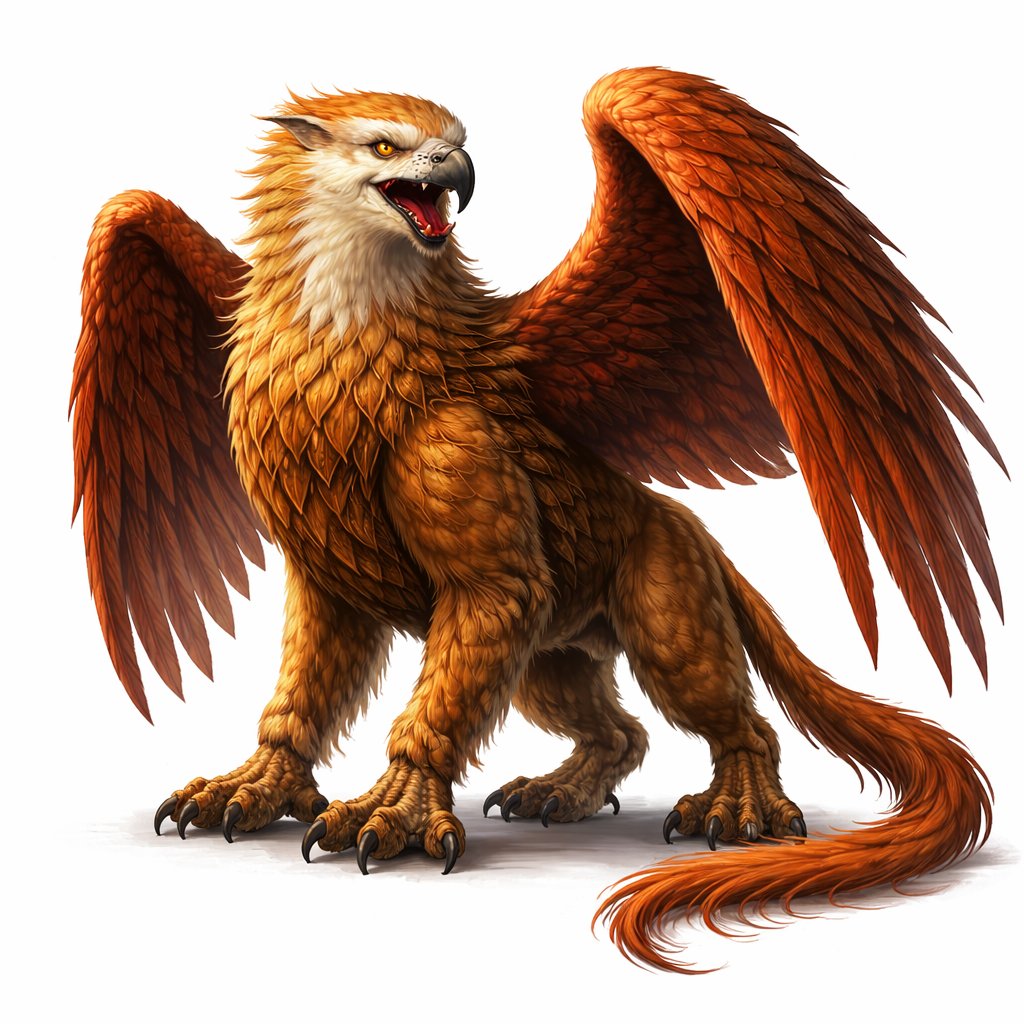
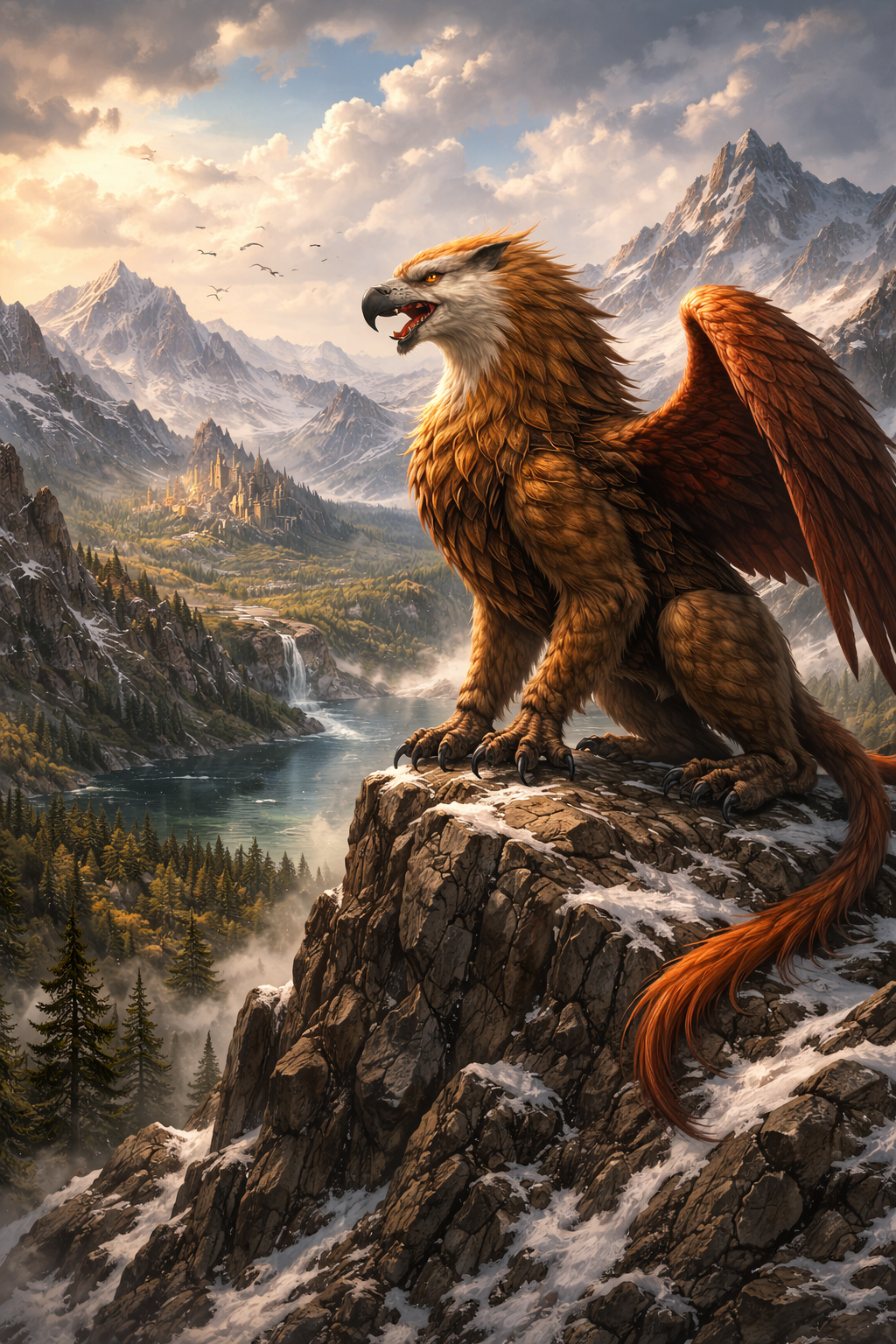
Hertorg (Griffon)

Noble cliff-dweller of the Emberwild Dominion

Hertorgs are the noble feathered griffons of the Emberwild Dominion, predating the Pre-Sundering colonies. These immense half-bird predators were once feared for their ability to seize people or livestock from the lowlands with terrifying ease.

With wingspans greater than 8 metres and talons sharp as knives on two, and sometimes four, formidable legs, they are both majestic and deadly. Their nests are built high along cliff tops from strong branches and soft lining, giving them both safety and a perfect hunting vantage.

Over time, the people of the Emberwild established a careful symbiotic bond with the Hertorgs. Through training, respect, and partnership, these once-feared predators became the noble companions of the Riders of the Emberwild Dominion.

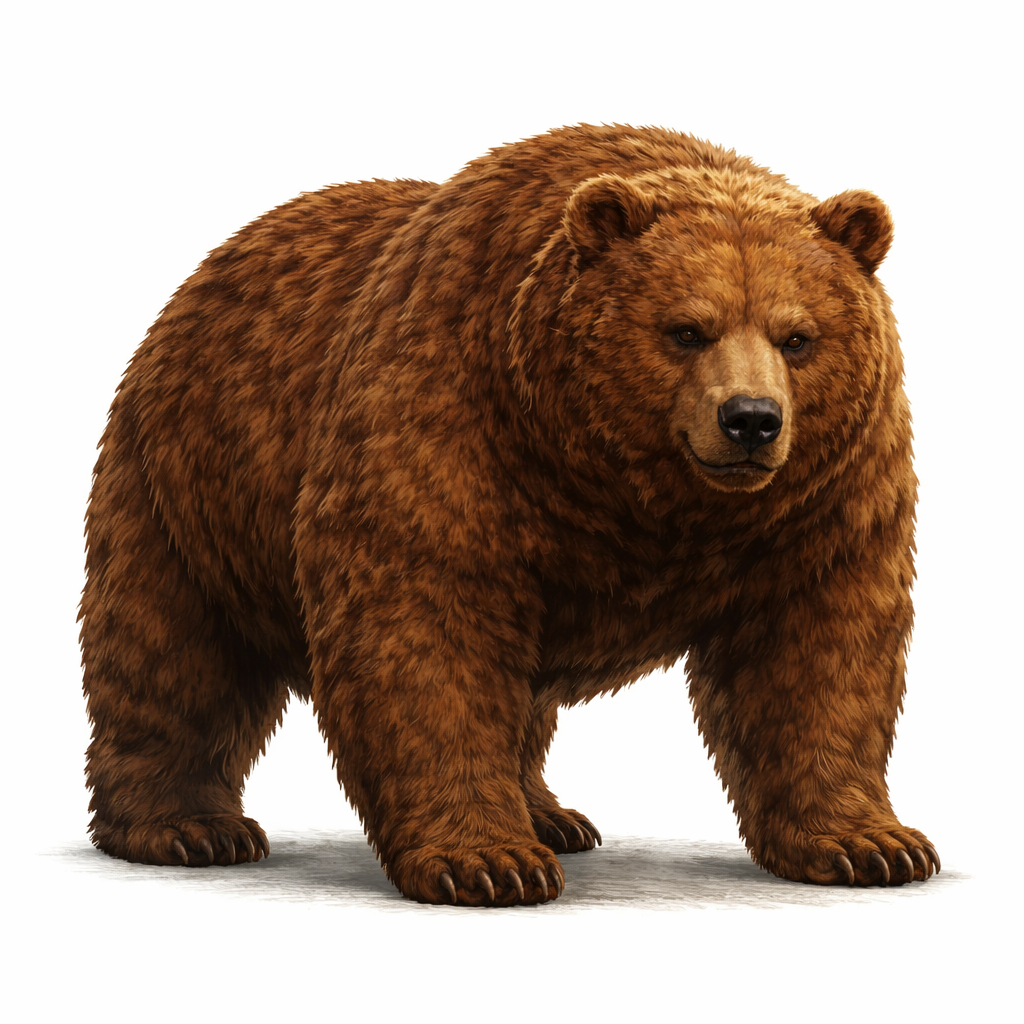
Great Northern Ironroot Bear

A powerful forest bear of the Saviours Range

The Great Northern Ironroot Bear lives south of the Saviours Range in the forests between the mountains and the plains. Though Aethoria’s expansion is steadily encroaching on its habitat, it still roams the deeper wooded regions freely.

During winter it hibernates in the Saviours Range, retreating into sheltered mountain spaces until the thaw returns.

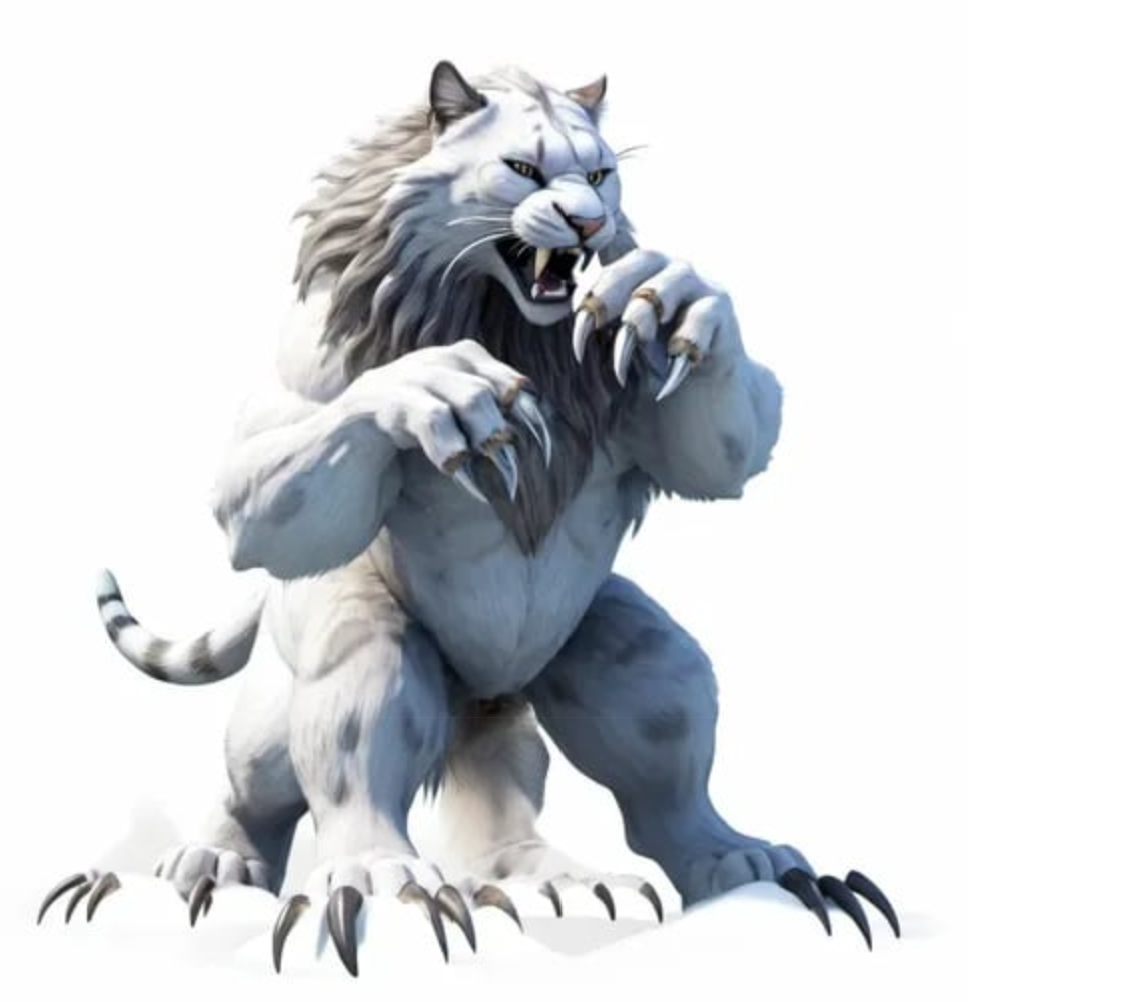
Sabremaw

Six-legged mountain predator of Kefar and the Mosaic Archipelago

Habitat

The Sabremaw is native to the mountains of Kefar, Argent, and the broader Mosaic Archipelago.

Description

A massive feline-like predator, the Sabremaw is somewhat related to the Shadowfang and Snowlynx. It has six legs and can rear up on its rear four, giving it a terrifyingly agile and imposing form. Its most notable features are its giant claws and two enormous fang teeth that reach almost to the base of its jaw.

Appearance

In summer it wears brown fur. In winter it sheds into white, blending with snow and ice.

Diet and Behaviour

Sabremaws are carnivores, feeding on Zargos hexafins in winter when they descend to the coast, as well as on rodents and other smaller prey. They are highly aggressive and cannot be domesticated despite repeated attempts.

Climate and Rarity

They prefer cool to cold climates and are rarely seen, which only adds to their danger and mystique.

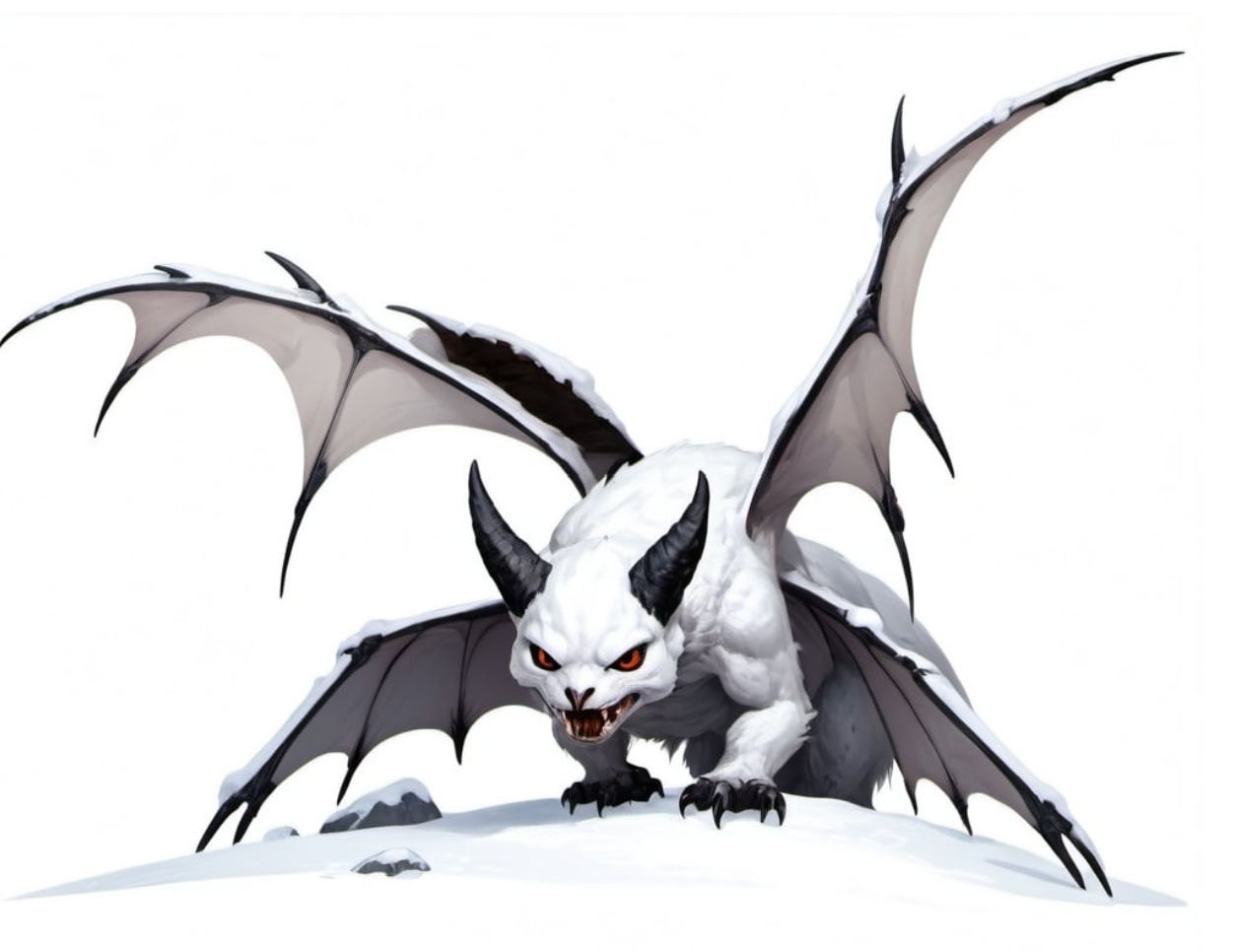
Giant Snowbat

Night hunter of the caves of Pre-Sundering Island

Habitat

Giant Snowbats dwell in the caves of Pre-Sundering Island in the central Mosaic Archipelago, and in ancient times they were also known in Ironroot.

Description

This fearsome apex predator has a wingspan of up to 5 metres and combines the traits of a giant bat with the hulking build of a snow-dwelling man-creature. Thick white fur, silent wings, sharp claws, and a powerful frame make it one of the most formidable lifeforms in the region.

Diet and Behaviour

The Giant Snowbat hunts only at night and uses silence and surprise to strike weakened Sabremaws and Snowlynx. It is fierce, solitary, and rarely seen by humans.

Rarity

Extremely rare, the Giant Snowbat survives mainly in legend, cave whispers, and very poor expedition planning.

Zargos (Hexafin)

A six-armed ocean creature of cold northern waters

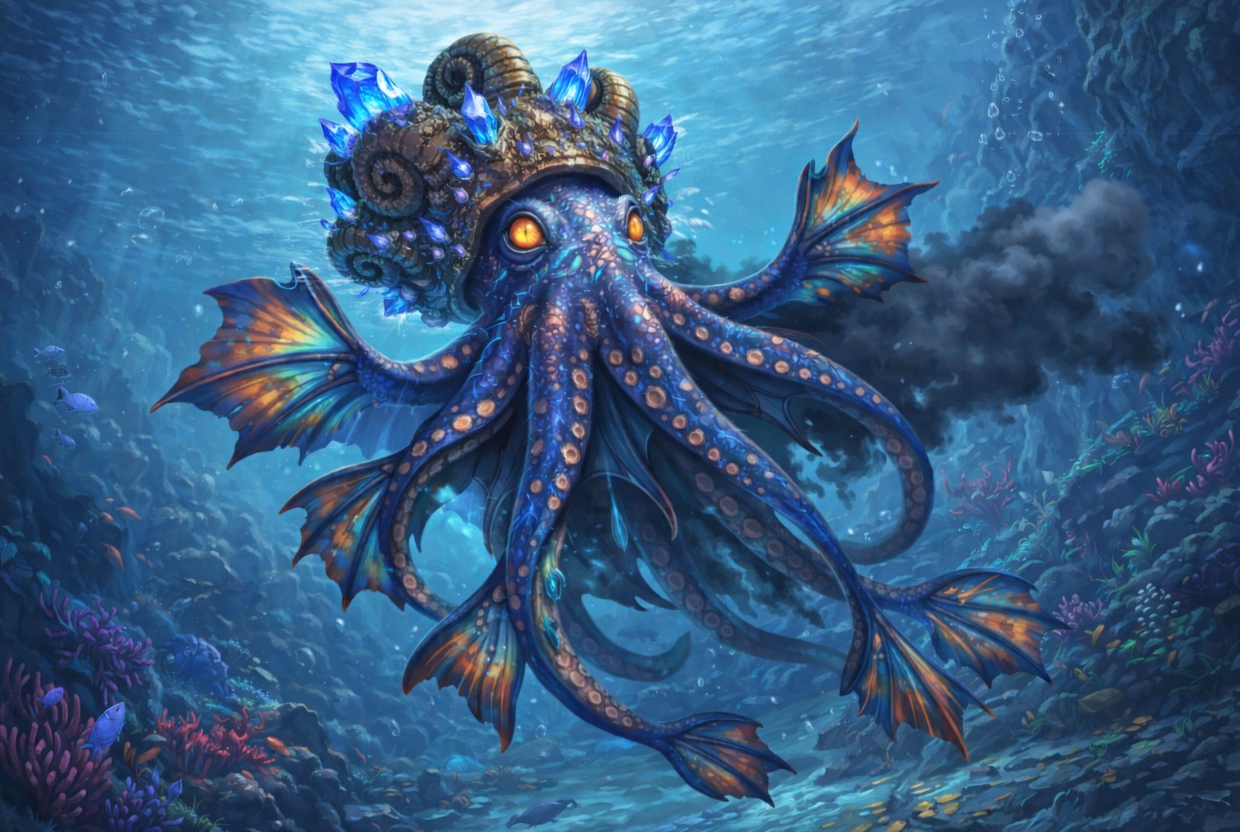
Zargos is a hexafin common to the cold ocean waters around Virielia, Thaloria, and the Argent Islands. It takes its name from its six arms and the unusual fin structures on two of them.

Appearance

Hexafins are soft-bodied reef and cave dwellers. Their shells grow organically from their heads as they age and are often decorated with crystals. Many also notice the mysterious six-coiled pattern of their shells.

Ecology

Solitary by nature, they feed on fish, clams, and smaller ocean creatures. They swim with great skill and can release ink either to hide from danger or trap prey. Some sailors insist they also guard ancient treasures in the deep.

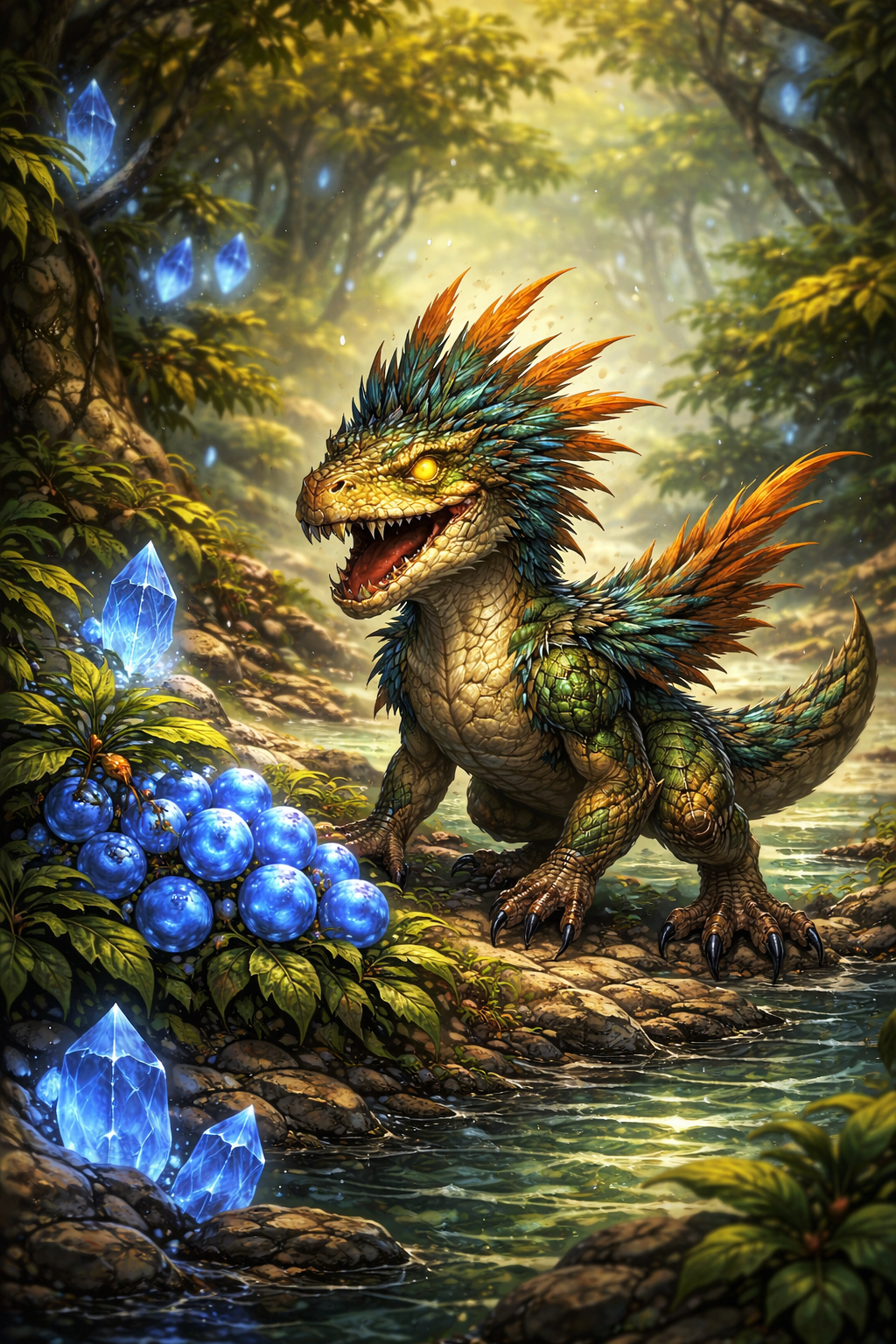
Longmouth Tyra

An adaptable amphibious scaleapon of the Emberwild

Longmouth Tyra is a type of scaleapon living in the Emberwild Dominion. It is a shy amphibious creature found near lakes, undergrowth, and climbable terrain, though it can be dangerous when cornered.

Appearance

Unlike most scaleapons, it is bipedal and bears slimy feather-like growths on its head and forelimbs. These are believed to be vestigial wings. Its colouring and feathering may act as camouflage among grasses, shrubs, and bird nesting grounds.

Behaviour

Though not especially good swimmers anymore, Longmouth Tyras are excellent climbers and fast runners. Their claws grip rock, bark, and cliff faces with ease. They can be active by day or by night, likely to keep prey uncertain.

Ecology

Surprisingly omnivorous, they eat eggs, small creatures, berries, nuts, and especially Crystal Berries. These berries are thought to contribute to their night vision.

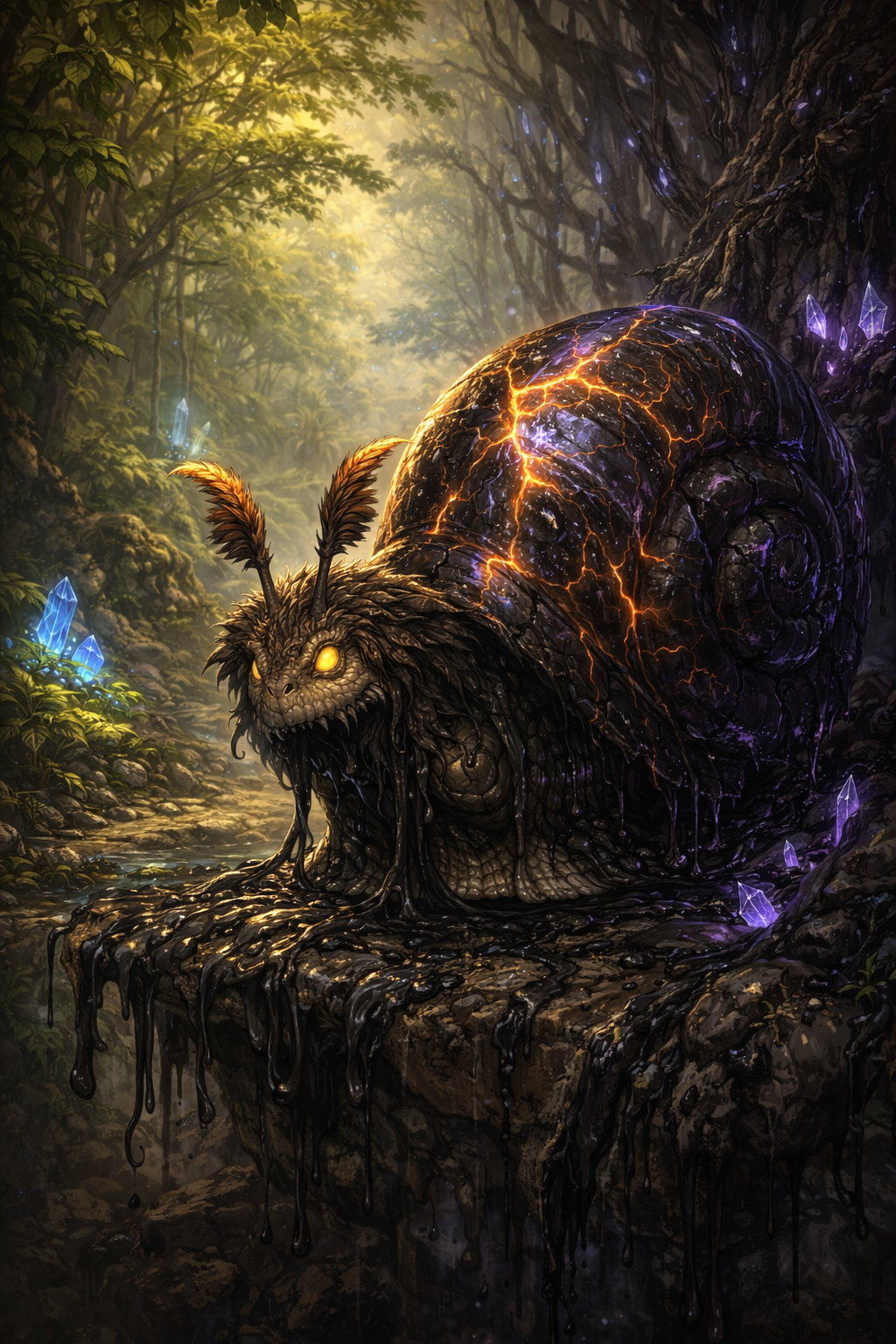
Snula

A shell-backed snailslimer of damp forests and cliff walls

Snula is a snailslimer common to the western Dereliction and Free Lands of Ironroot. It is often seen on cliff walls, in dense vegetation, and anywhere damp and warm conditions persist. Curiously, the corruption of the Dereliction seems to suit it unusually well.

Appearance

The ooze produced by snailslimers is highly adhesive, allowing them to climb vertical surfaces and even move upside down. Their shells protect soft bodies and may incubate insect-like wings during later life stages.

Ecology

Snailslimers are herbivores, feeding mainly on algae and leafy vegetation found in wet forests and mossy stone.

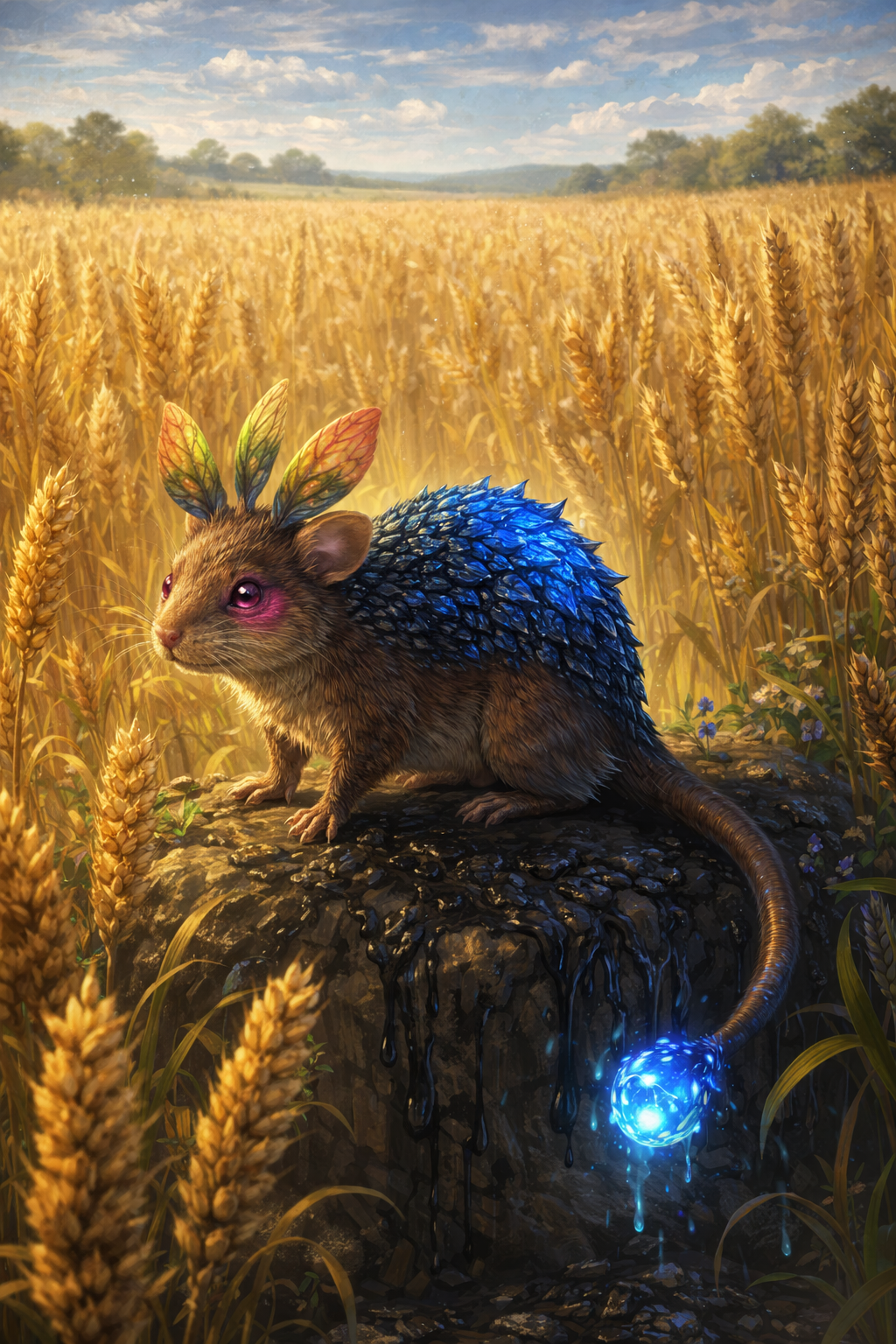
Armoured Blushing Bluerat

A clever lure-hunter of Ironroot grasslands

The Armoured Blushing Bluerat is a small mammal common to the grasslands of Ironroot, though a crop-threatening variant has also appeared in Virielia Bloomlands. It gets its name from the hardened blue secretion that stiffens the fur on its back into a crude natural armour.

Appearance

These creatures are mostly brown and tan, with vivid fur around the eyes, leafy appendages on the head, and bright secretions on their back and tail tip. These secretions can vary in colour depending on diet, though blue and black are most common.

Behaviour and Ecology

Highly intelligent, they use shiny bait-like secretions to lure insect prey into small traps made of grass, twigs, and even discarded Aethorian materials. Their diet includes seeds, fruit, grain, insects, fish, snails, mussels, and occasionally very small birds or reptiles.

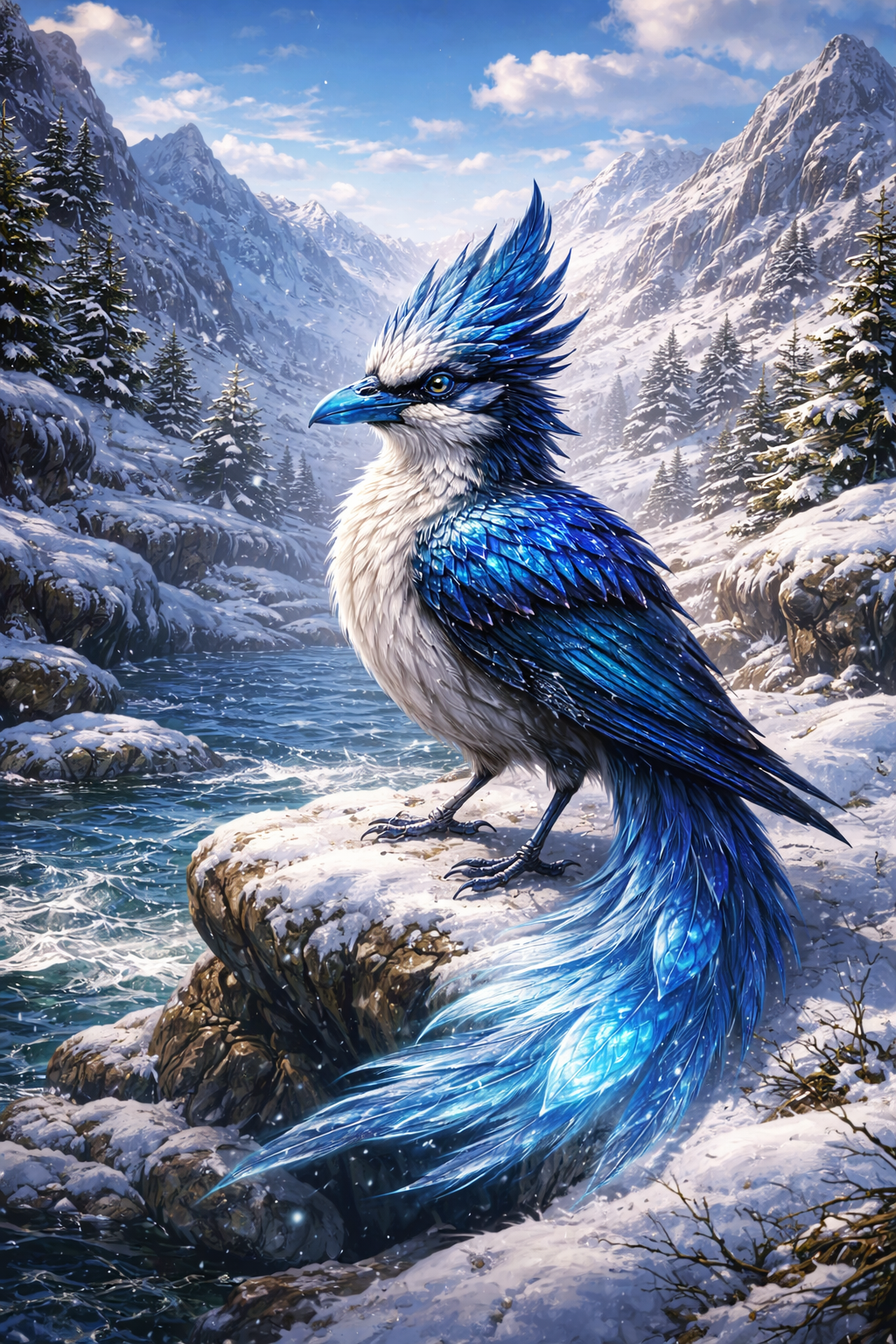
Bluebeak Farom

A proud cold-water bird of the Alfadin Mountains

The Bluebeak Farom thrives in the cold mountain regions of the Alfadin, especially near frozen streams and lakes.

Appearance

Its feathers insulate it against icy winds and water, while its diet of snowdrops appears to give it an unusually bracing metabolism. It is a proud and capricious bird, quick to display its head and tail plumage and even quicker to quarrel over food.

Ecology

Its beak and claws are as hard as crystal, allowing it to crack ice and hard snow. It is an accomplished runner and diver, chasing prey on land and fishing beneath the water for short periods with impressive determination.

Longsnout Snowpyma

A massive cave beast of the deepest Alfadin snows

The Longsnout Snowpyma dwells in the deepest and coldest regions of the Alfadin Mountains. It usually lives in caves but sometimes prowls the foothills during blizzards when snow cover is thickest.

Appearance

Despite its size, it is well-camouflaged by white and blue fur. Though it moves mainly on four legs, it can stand or walk on its hind legs to intimidate threats, overcome obstacles, or reach higher objects. Its huge forepaws make it an excellent climber and a dangerous opponent.

Ecology

Snowpymas hunt mammals and small birds using strength, speed, claws, and powerful teeth. They require huge caloric intake but are able to hibernate for long periods, which contributes to their elusive reputation.

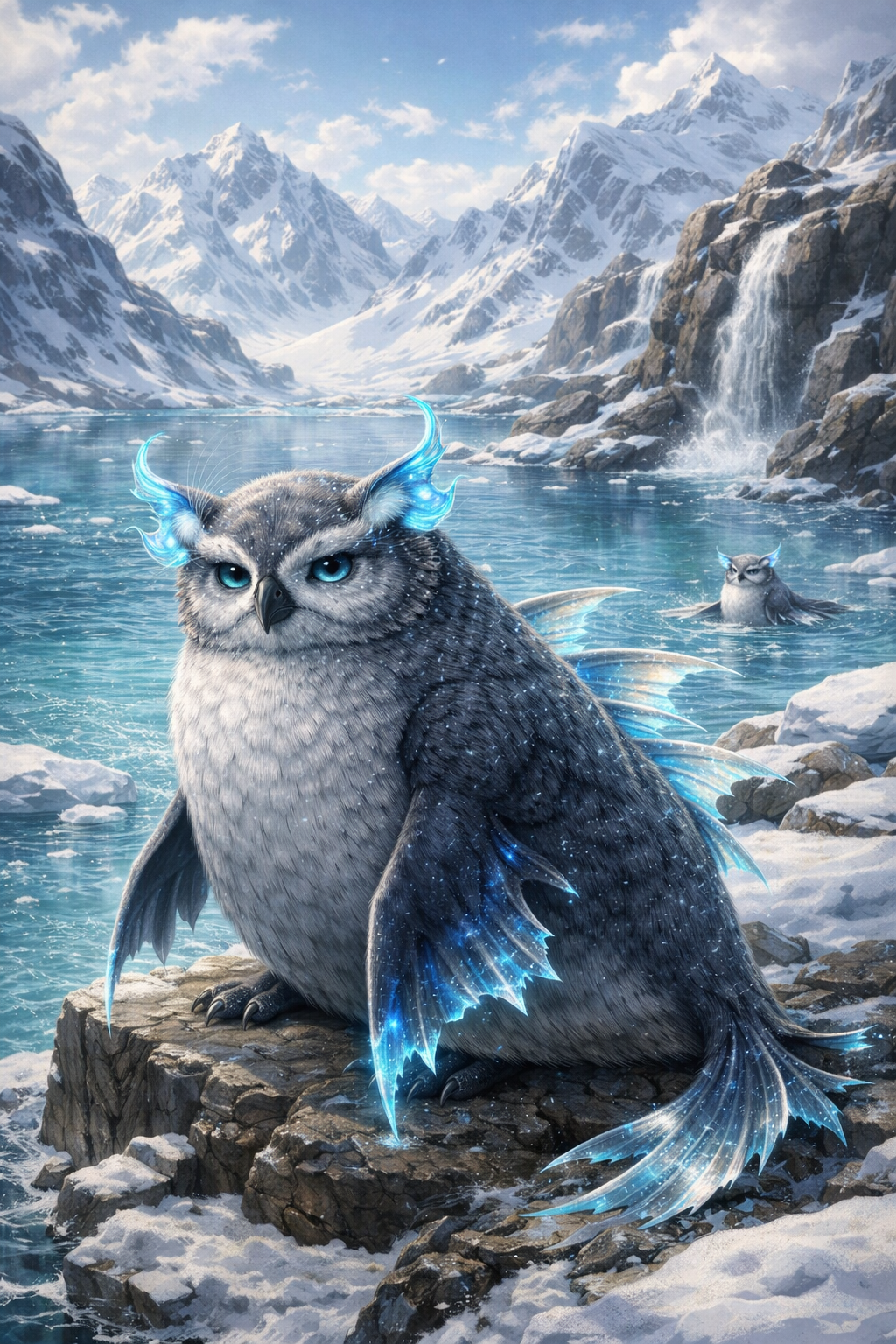
Luffy Waterbird

A rocky-looking colonial hunter of icy waters

Once common throughout colder regions of Aethoria, Luffy Waterbirds retreated to higher, colder climates after the warming, especially the icy cliffs and waters of the Alfadin Mountains and sub-polar zones.

Appearance

Their feathers and blubber keep them warm even when submerged in icy water. Because of their size, colour, and shape, sleeping Luffy Waterbirds are often mistaken for rocks.

This misunderstanding becomes considerably less funny the moment one wakes up under somebody’s backside.

Behaviour and Ecology

They are loyal, territorial, and protective of one another. Their wing edges and spur tips can spear prey, stun fish, or break ice to create swimming holes. They live in moderate colonies and often hunt cooperatively.

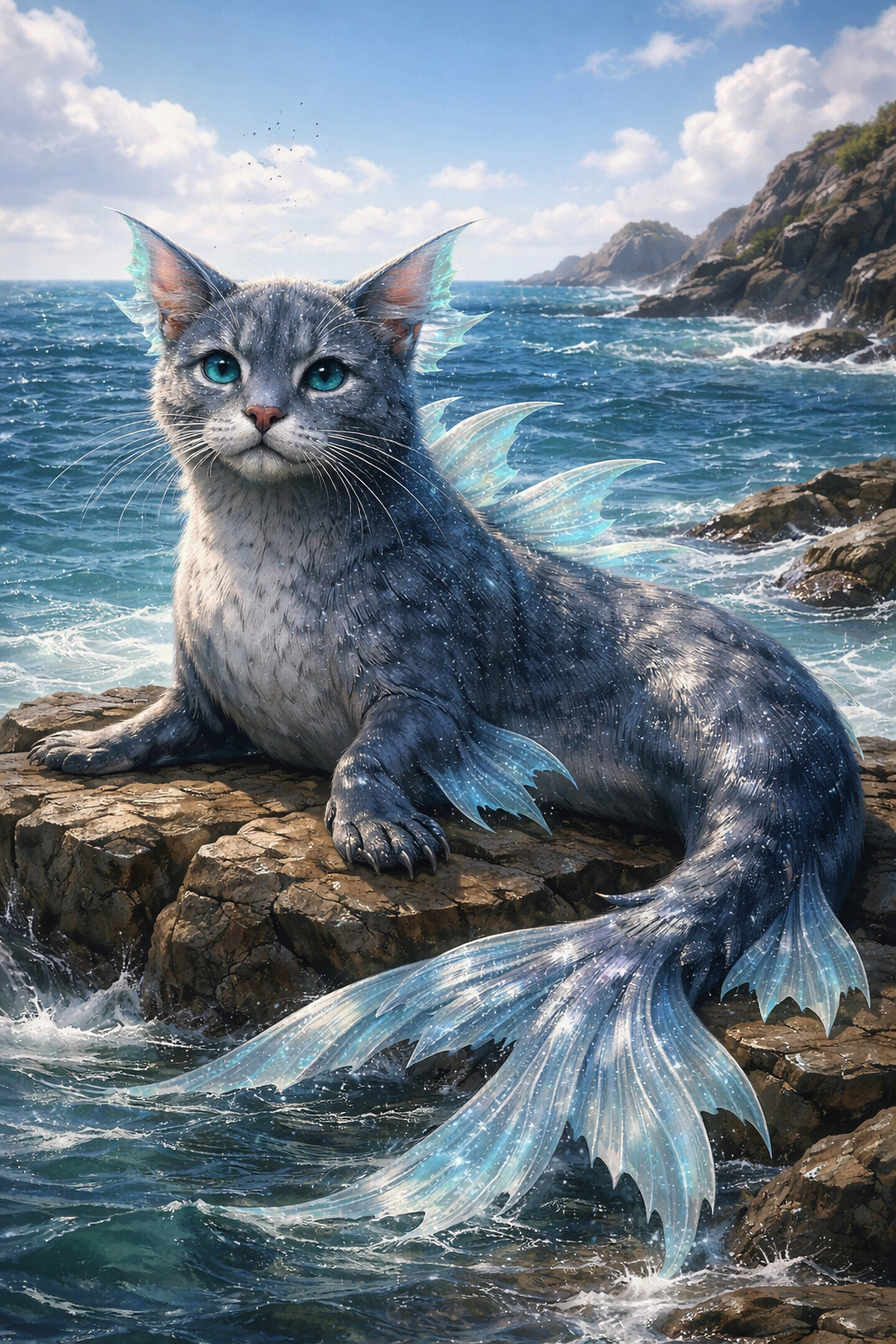
Fesealon

An aquacat of lava rivers, waterfalls, and fast current

Fesealon is a lavaspring mammal that dwells in the lava-saturated waters of Argent Island and the seas around Thaloria. These creatures are often seen in rivers, waterfalls, grassy watercourses, and rocky canyons.

Appearance

Aquacats have translucent fins extending from their tails, front legs, back, and head. Their blue-grey skin is thought to result from crystal infusion in the deep waters around Argent and Thaloria. Thick hide, powerful muscles, and gripping claws make them excellent swimmers and climbers.

Ecology

They eat vegetation from riverbeds, small fish, and a variety of other foods, making them opportunistic omnivores. Mischievous by nature, they are fond of tricks and the theft of unattended meals from travellers.

Slimeback Gigan

A cave mammal of roots, crystal slime, and underground heat

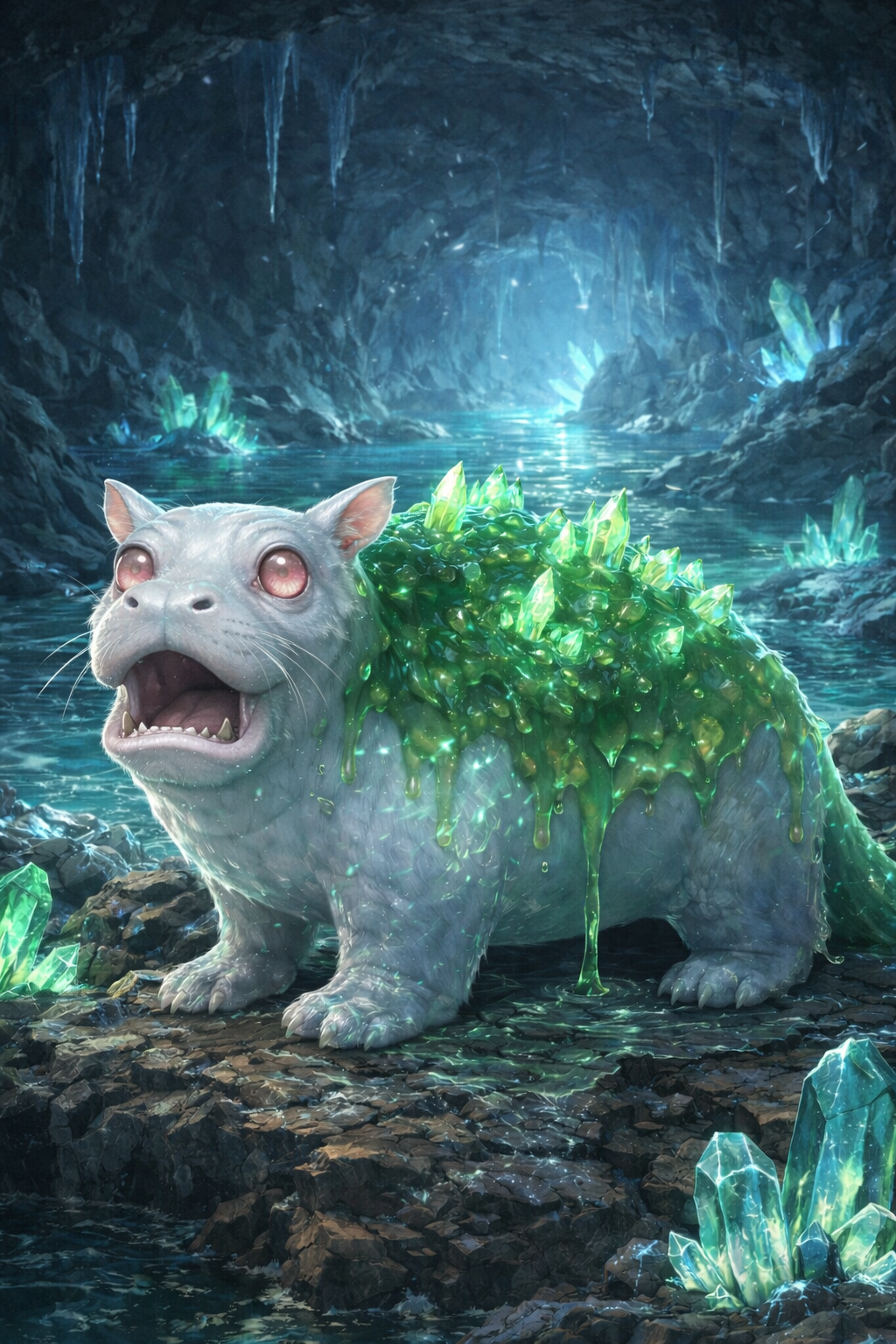
Slimeback Gigan is a mammal found in crystal caves across all explored lands. It prefers underground waters, hot springs, crystal chambers, and lava-warmed caverns.

Appearance

Fully grown Slimeback Gigans stand roughly knee height, but can weigh up to twice as much as a person due to dense fat stores. Their skin is semi-translucent from life in darkness, and their large eyes absorb what little light exists underground.

The crystals of their cave habitats encourage the growth of green slime across their backs. This slimy layer protects them and helps camouflage them when they sleep among moss, roots, and mineral growth.

Ecology

Slimeback Gigans feed largely on the roots of Aethoria trees and on blubs, a favourite underground treat. Some Healers believe they play a vital ecological role by helping maintain the relationship between underground roots, cave soils, and crystal formation.

They rarely emerge to the surface because sunlight badly damages their skin and eyes.

Field Notes of the Tome

The creatures of Aethoria are not separate from the world’s story — they are part of it. Crystal growth, taint, warming seas, mountain cold, ancient forests, and the lives of Guardians, Healers, and Mages all shape the beasts that endure here. To know Aethoria truly, one must also know what walks, climbs, glides, burrows, stalks, and splashes through it.