Snowdrops & Frostdrops
High-Altitude Medicinal Herb • Mosaic Ranges & Ironroot Bastion
Description
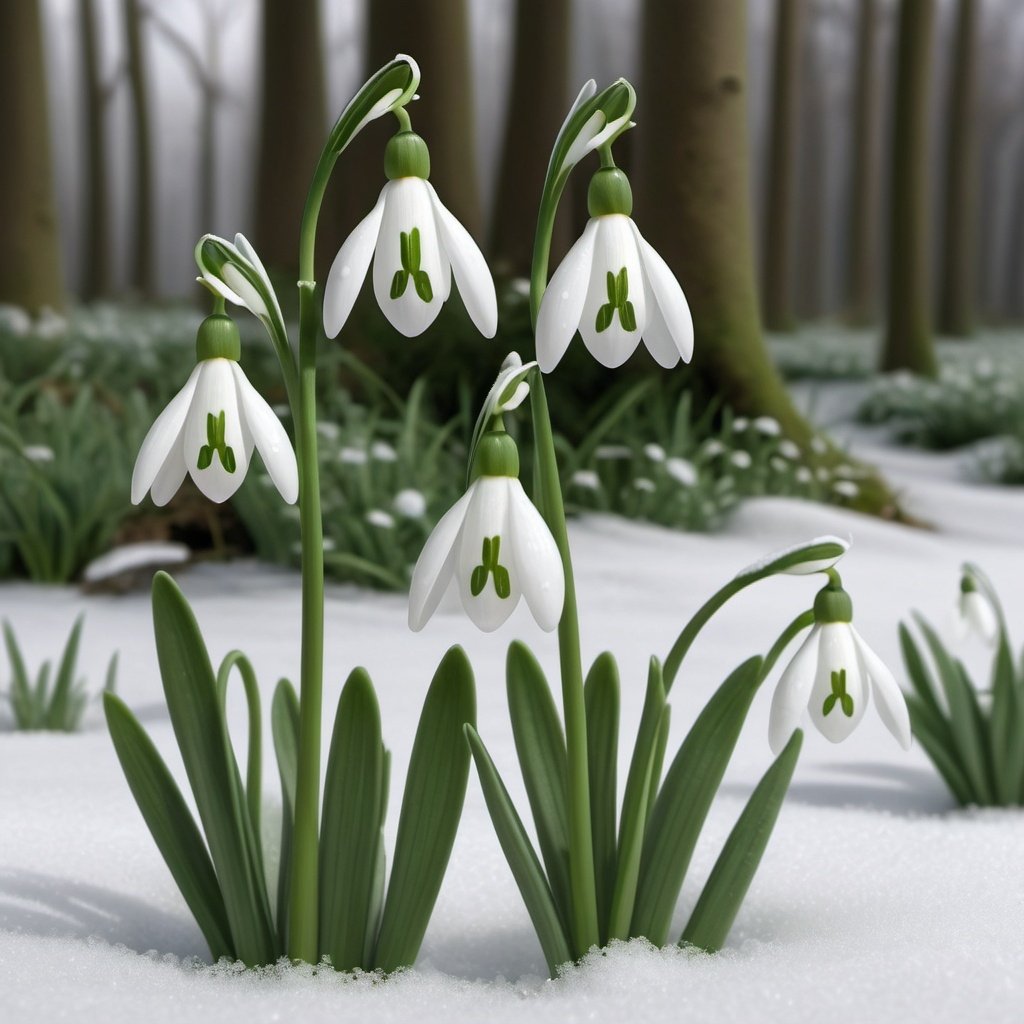
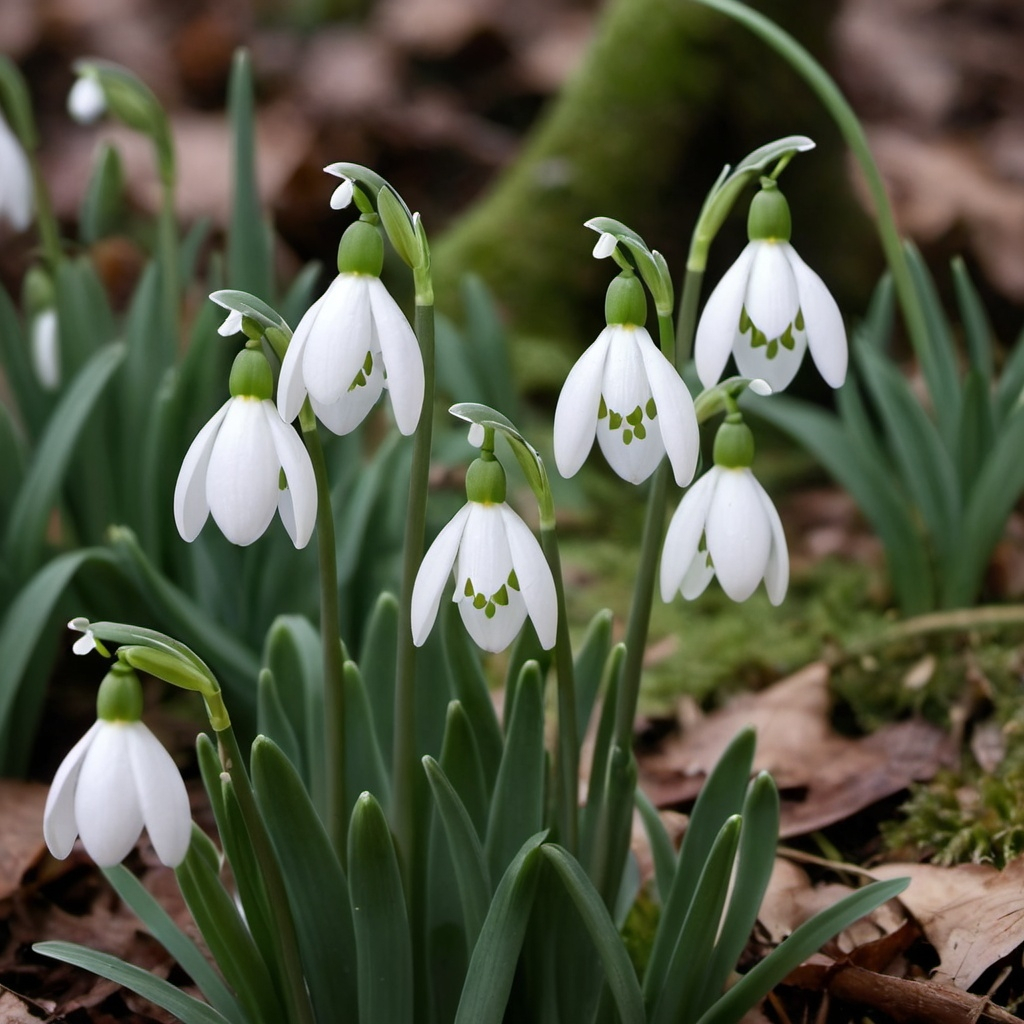
White Snowdrops are delicate yet resilient herbs found primarily in the high-altitude regions near the summits of mountain ranges across the Mosaics and in the northern Saviours of the Ironroot Bastion. Their related flowers are Frostdrops, which grow in lower altitudes. Their small bell-shaped blossoms resemble drops of snow clinging to thin green stems.
Appearance
Snowdrops and Frostdrops are characterised by slender green stems reaching up to five centimetres high. Each plant produces three to five pure white flowers that hang downward like frozen droplets suspended in the air.
Habitat
These herbs thrive in cold, rocky terrain in the upper mountain regions where temperatures remain cool and moisture gathers in mossy stone outcrops. They are commonly found along high trails and among the rock-clinging brush near Fool’s Gap in the Afladin Mountains.
Medicinal Properties
The petals may be brewed into tea that alleviates altitude sickness. The roots can be ground into a paste used to soothe frostbite and other cold-related injuries.
Magical Properties
Snowdrops are believed to contain elemental resistance to freezing. Mages frequently include them in potions requiring frost or cold components.
Collection
Harvesting Snowdrops requires careful handling as the petals bruise easily. They are best collected in the early morning while frost still coats the flowers, preserving their potency.
Uses
Potion Crafting • Cold-resistance enchantments • Healing salves for frostbite • Alchemical enhancements for frost weapons.
Cultural Significance
In regions surrounding Mt. Peak, Snowdrops symbolise resilience and purity. Warriors once carried them as protective talismans during mountain campaigns.
Warnings
Overconsumption of Snowdrop tea may lead to symptoms similar to hypothermia. Improper handling of the roots may cause skin irritation.
Recent Discovery
At the Stepstones, the Pathway of the Gods, a rare yellow variant of the Snowdrop grows hidden deep within moss-covered stones. This variant appears to possess strong warming properties useful for surviving extreme cold.
Forestine Fruit & Fruit Burrs
Climbing Resource • Whispering Woods of Pyprast Bastion
Description
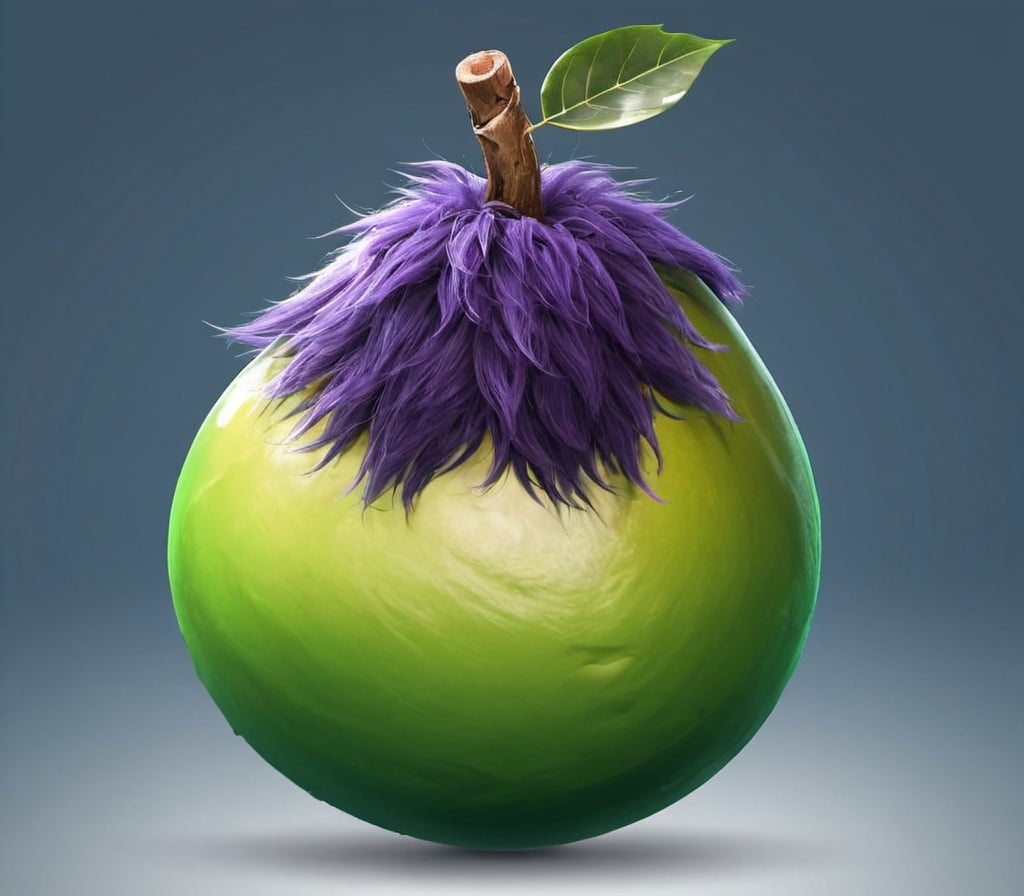
The Forestine Fruit grows on trees within the Whispering Woods of Pyprast Bastion. The fruit is deep green with a tough, leather-like skin and grows a tuft of purple fur that forms natural burrs used for propagation.
Season
The fruit ripens in late summer with peak harvest from mid-August to early September.
Uses
Climbing Aid
Fruit Burrs provide exceptional grip. Climbers often wrap dried skins around their hands to help maintain a hold on icy cliffs and steep rock faces.
Crafting Material
The durable fruit skin can be processed into leather-like materials used for clothing, containers, and tool handles.
Medicinal Properties
The pulp inside the fruit is nutrient-rich and provides energy and stamina for travellers moving through the dense Whispering Woods.
Binding Agent
The adhesive burrs can bind materials together and are used by artisans for intricate designs.
Lore
Legend claims the Forestine Fruit was gifted by forest spirits to help the people of Ironroot survive and explore the Whispering Woods. Its burrs symbolise resilience and adaptability.
Regional Significance
Within the Auric Exchange territories the interaction between flora, fauna, and the ocean winds has produced many unique species. Guardians of the Exchange train against these creatures in traditional coming-of-age trials.
Nongnut Tree
Riverbank Food Tree • Losden River System, Solaryn Reliquary
Description
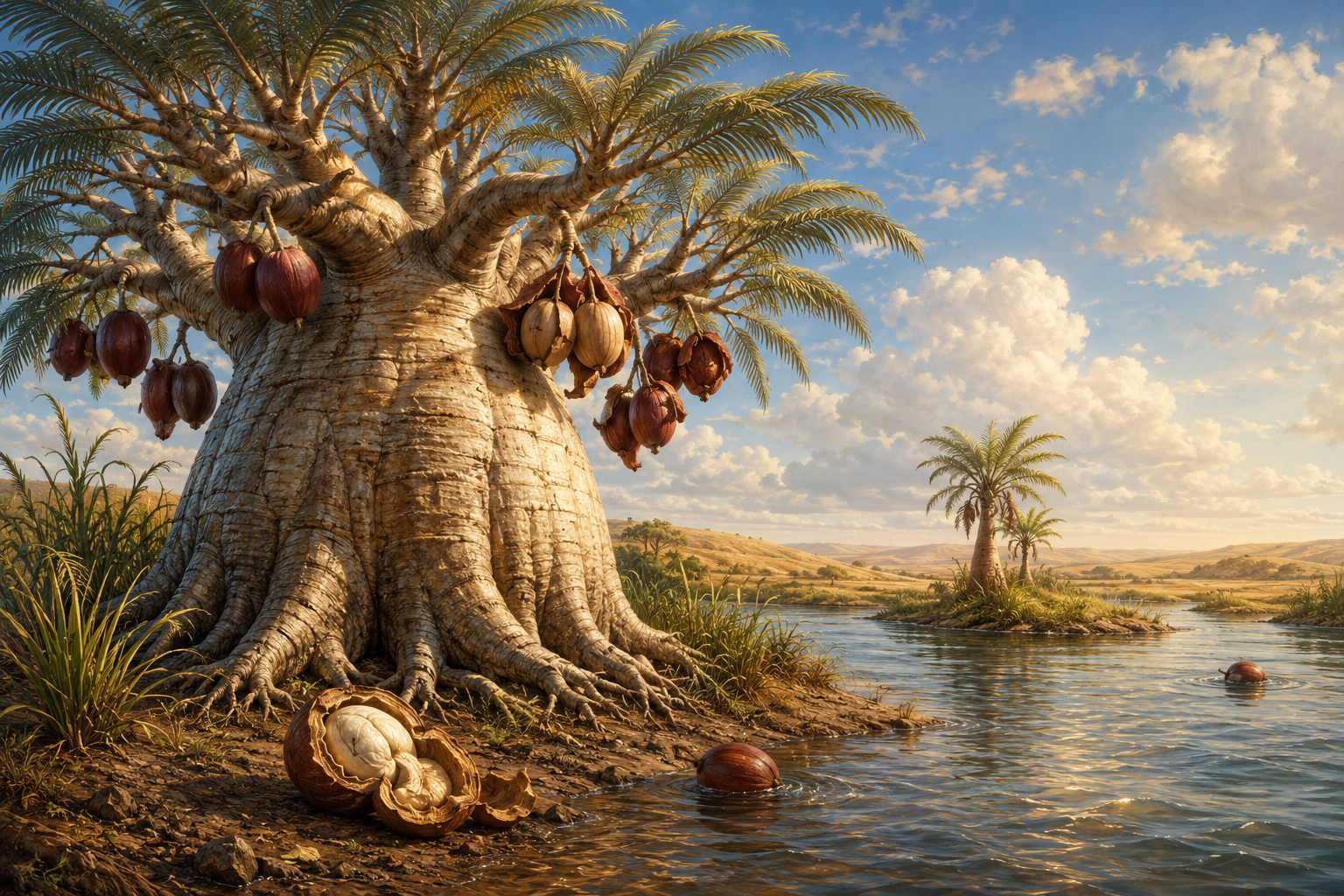
The Nongnut Tree is a large riverbank species found throughout the warmer
regions of the Solaryn Reliquary. Its unusual form combines a broad,
water-storing trunk with a crown of long, palm-like leaves. Mature trees
produce heavy nuts prized for their nutritious kernels and distinctive
salty malt flavour.
Appearance
A mature Nongnut Tree has an immense, swollen trunk covered in pale grey
or sandy-brown bark. Thick roots spread through the riverbank, anchoring
the tree against floods and erosion. Sturdy branches rise from the upper
trunk and support a crown of long, arching fronds.
Fruit
Nongnuts are larger than coconuts and grow in small clusters beneath the
tree’s crown. Each nut develops inside a thick, reddish-brown outer skin.
When the fruit ripens, this skin dries and peels away in broad curling
strips, revealing a hard tan shell beneath.
Habitat
Nongnut Trees grow along the Losden River and its tributaries, particularly
where fertile riverbanks meet the dry, yellow grasslands of central and
southern Solaryn. Their swollen trunks store water during dry periods,
while their extensive roots draw moisture from deep beneath the riverbank.
River Dispersal
Unopened Nongnuts are buoyant. When a mature nut falls into the river, its
sealed outer covering allows it to float downstream without spoiling. The
current may carry it for many leagues before it becomes lodged in mud,
reeds, or a quiet bend. Once the outer skin breaks down, the nut can take
root and establish a new tree.
Food Value
Inside the shell is a dense, cream-coloured kernel with a firm,
cashew-like bite and a naturally salty malt flavour. Nongnuts are rich in
energy and remain edible for long periods while sealed inside their shells,
making them valuable provisions for travellers, river crews, and caravans.
Uses
Travel provisions • Ground meal • Thickening for stews • Pressed cooking
oil • Roasted snacks • Animal feed • Carved bowls and containers
Harvesting
Ripe Nongnuts are normally collected after their reddish-brown skin begins
to peel. Harvesters use hooked poles to bring down mature clusters or
gather fallen nuts from river shallows. Attempting to climb an old tree is
discouraged, as its smooth upper trunk and heavy fruit make the activity
an excellent way to advance the study of falling.
Cultural Significance
Solaryn river communities regard the Nongnut Tree as a symbol of useful
knowledge spreading beyond its place of origin. Scholars sometimes compare
its floating nuts to ideas: both may travel far from their source before
finding suitable ground in which to grow.
Trade
Roasted Nongnuts are sold in markets throughout Helion and carried north
along the Losden toward Bymotha. Solaryn academies also purchase Nongnut
oil for kitchens, lamps, and alchemical experiments. Whether all three uses
should involve the same barrel remains a subject of surprisingly heated
scholarly debate.
Warnings
Newly fallen nuts are extremely heavy and can cause serious injury.
Travellers are advised not to rest beneath fruit-bearing branches during
harvest season. Nuts recovered from stagnant water should also be inspected
for cracks before being eaten.
Tree Turnips
Temperate Forest Nutritional and Medicinal Vegetable • Whispering Woods of Pyprast Bastion
Description
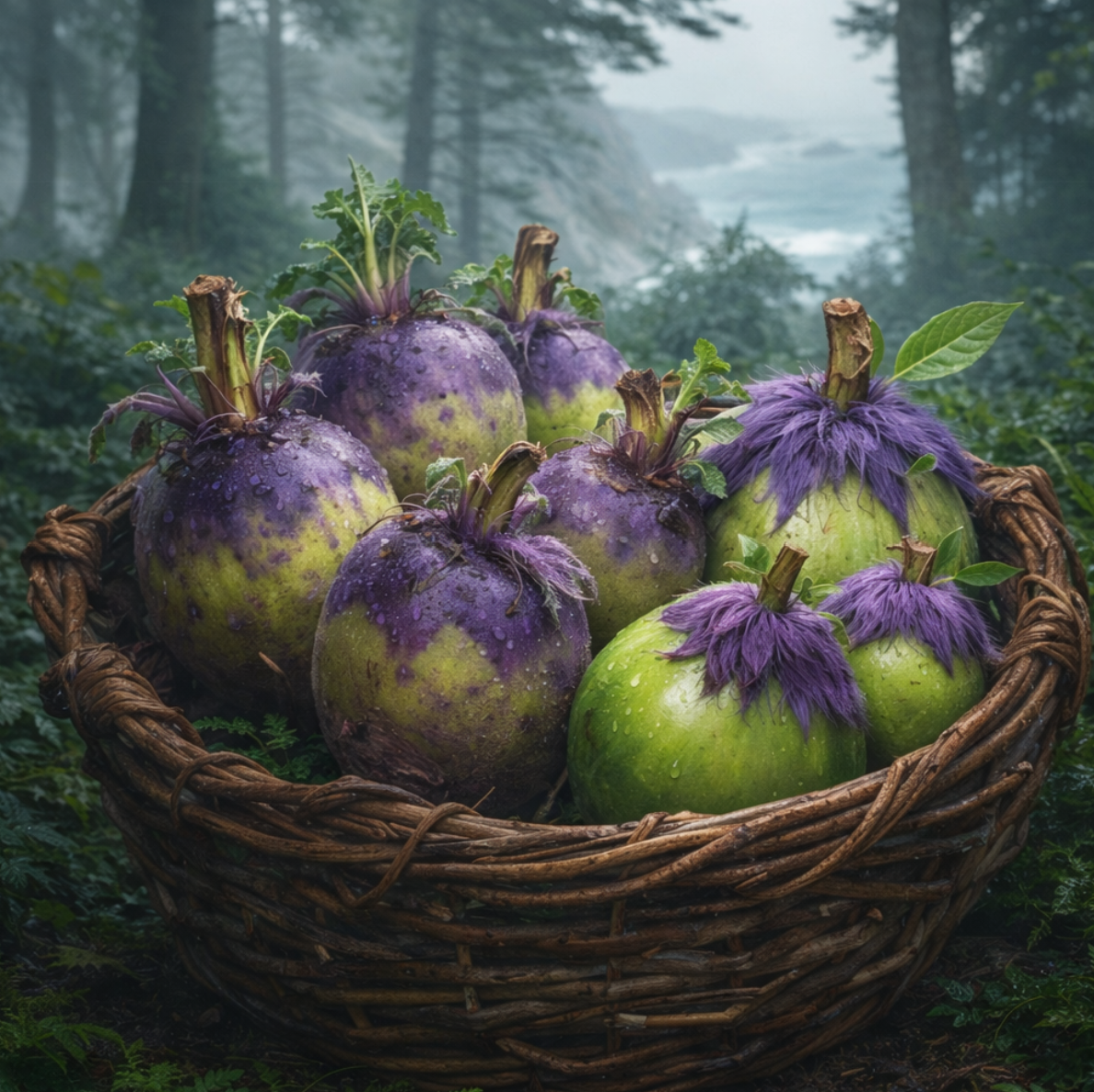
Seen above in a basket with Forestine Fruit the Tree Turnips are a nourishing green and purple vegetable that is valued for its flavour and medicinal properties.
Appearance
Tree Turnips are green vegetable with a purple hue up to the stem. They are round and solid with a firm light green flesh.
Habitat
These vegetables grow on trees high in the canopy of the moist forests in Whispering Woods. They grow quickly in the water laden air of that region. Their production of ripe turnips at height is the only protection making them inaccessible to most creatures. The forest is an excellent source of tree turnips, a sought-after plant that flourishes in the cool, mist-laden environment.
Medicinal Properties
The flesh may be boiled into softer mash that alleviates provides an immunity boost.
Collection
Harvesting Tree Turnips is a dangerous affair and it requires experienced foresters with climbing equipment to work quickly in the harvest season. They are ripe in late summer and can be stored for the winter months.
Aethorian Grasses
Common Meadow Flora • Found Across the Crestrealms of Aethoria
Description
Aethorian grasses are among the most widespread plant life across the plains, hills, and forest clearings of the world. Though often overlooked beside more dramatic flora, these grasses form a vital foundation of many ecosystems and serve as a key food source for numerous creatures.
Appearance
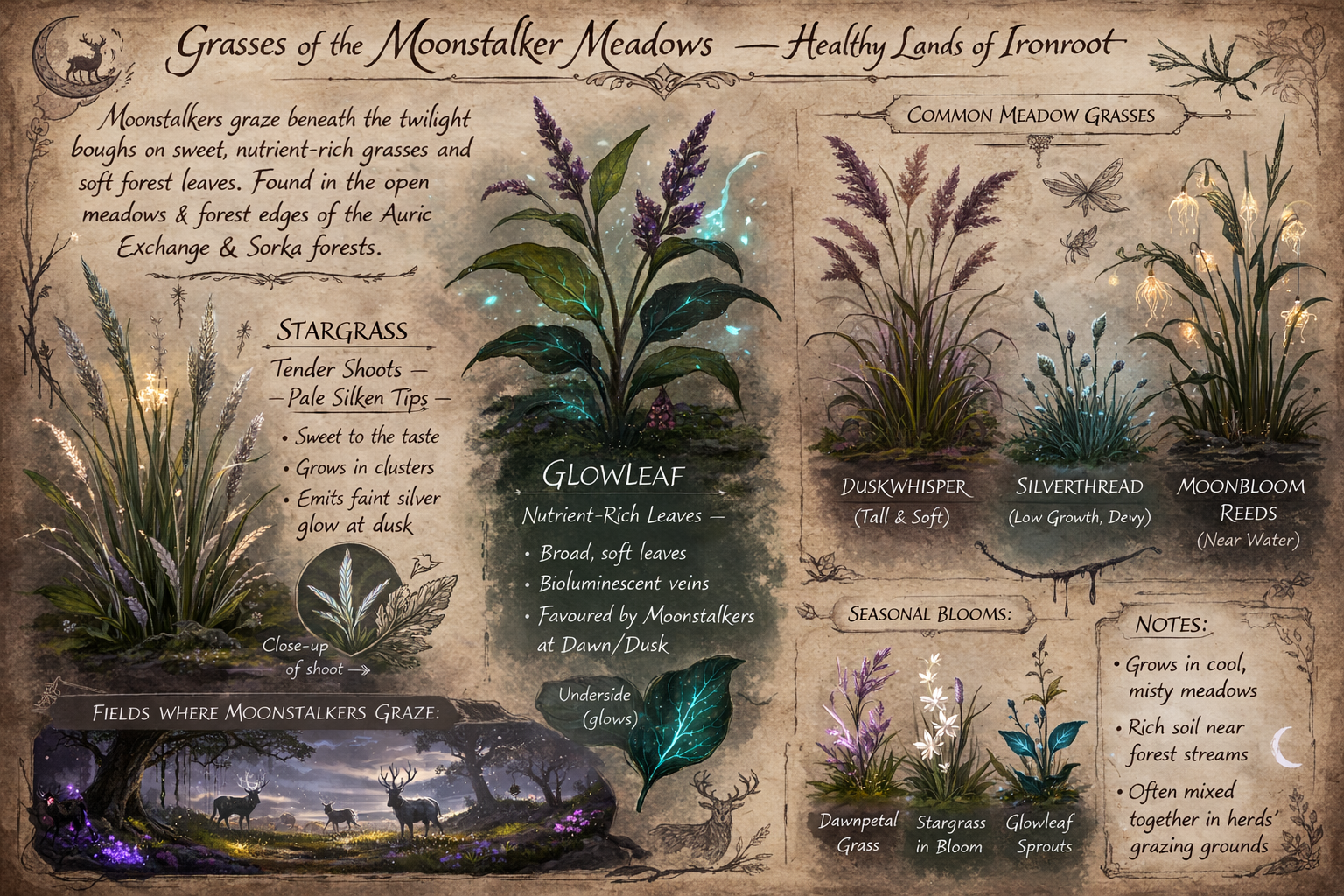
Several varieties grow throughout Aethoria, the most notable being the soft glowing leaves of the Glowleaf plant and the delicate green shoots of Stargrass. These grasses range from low ground cover to waist-high meadows that shimmer softly in moonlight.
Habitat
Aethorian grasses thrive in open meadows, forest edges, and the fertile soils of island clearings. They grow particularly well in regions where regular coastal mist and seasonal rains enrich the soil.
Ecological Role
These grasses provide essential nourishment for several creatures of Aethoria. They are commonly grazed upon by Moonstalkers and Armoured Blushing Bluerats. When the grasses dry during the warmer months they also become useful nesting material for the Bluebeak Farom, which weaves them into protective high-branch nests.
Use by Aethorians
While rarely cultivated directly by the people of Aethoria, wild grasses are occasionally harvested for bedding, fodder for animals, and lightweight thatching in temporary forest shelters.