Places & Landmarks of Aethoria
Return to Aethorian Tome ⬅ Back to Village Square

PLACES & LANDMARKS OF AETHORIA

Beyond the eleven Crestrealms, Aethoria is shaped by ancient cities, sacred mountains, wild frontiers, ruined towers, great libraries, crystal markets, observatories, monasteries, and places older than memory itself. Some are centres of learning and trade. Others are scars left by the world before the Sundering.

Known Entries

Mosaic Archipelago

A chain of volcanic islands where crystal trade, ancient forests, and powerful cities shape the heart of the Aethorian world
Type: Island archipelago
Known For: Crystal trade, volcanic landscapes, ancient forests, powerful cities
Region: Great Ocean north of the Thalorian Sea
Major Islands: Argent, Kefar, Thaloria, Virielia Bloomlands

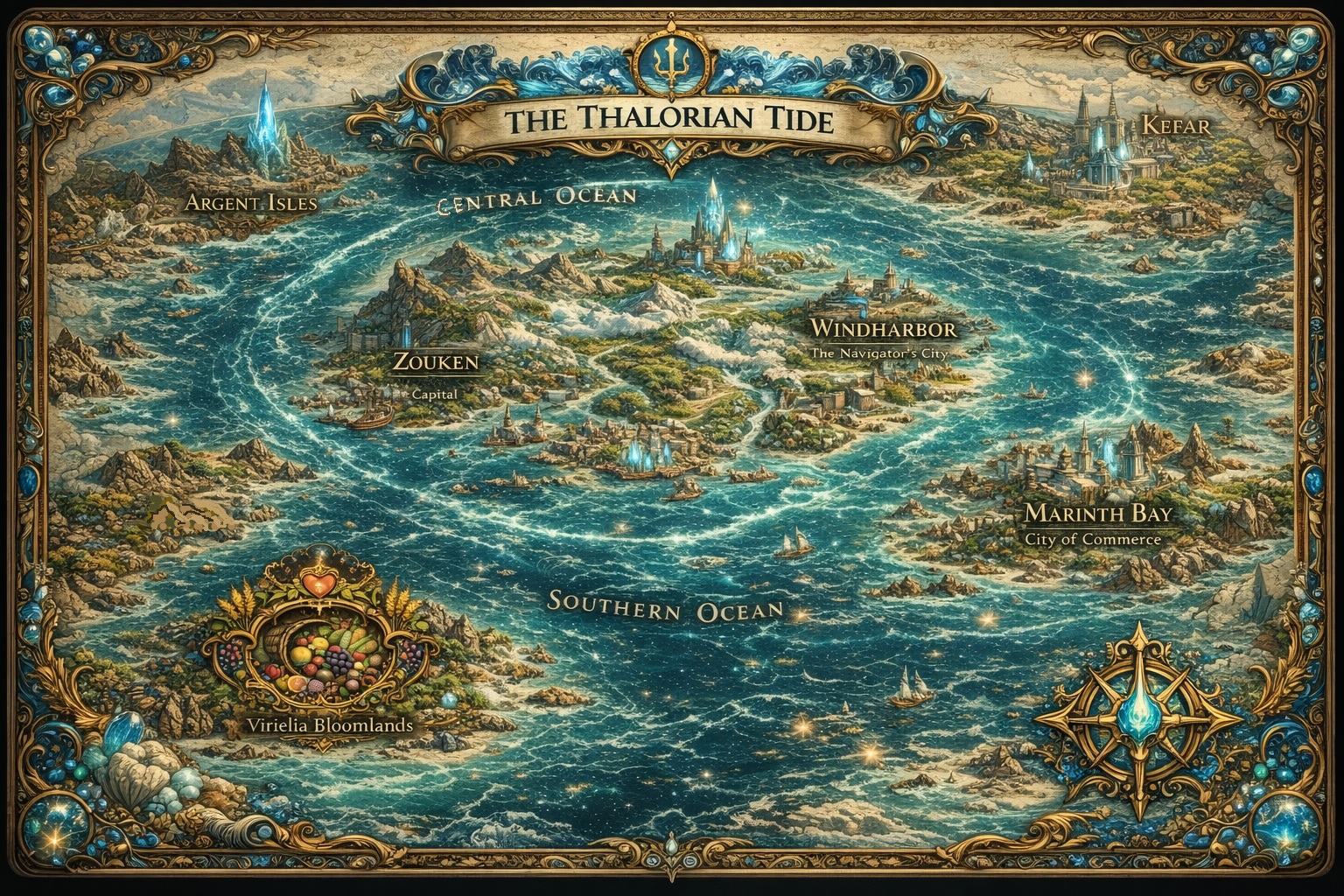
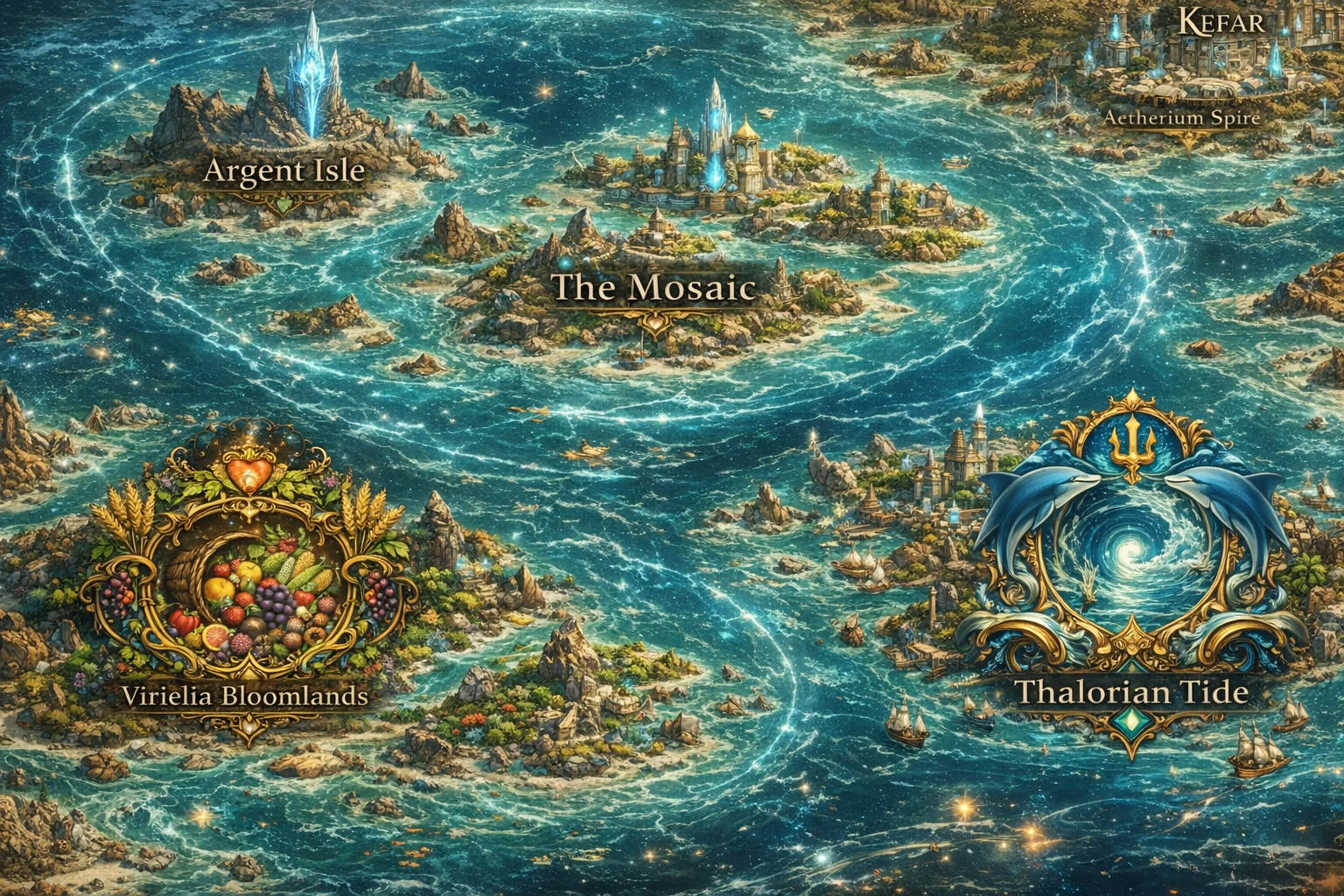
The Mosaic Archipelago lies in the vast Great Ocean north of the Thalorian Sea. It is composed of five major islands and many smaller scattered isles that together form one of the most culturally and economically important regions in all of Aethoria.

The archipelago includes a group of magnificent medium sized islands and the larger islands of Argent, Kefar, along with numerous smaller islands and their coastal settlements. Each island possesses its own distinct geography, cultures, and magical traditions, yet together they form a connected network of trade, travel, and shared history.

At the center of the archipelago’s power stands the city of Kefar, whose influence extends across the islands through crystal trade, magical learning, and technological innovation. Ships from across Aethoria pass through these waters, making the Mosaic Islands a crossroads of cultures and commerce.

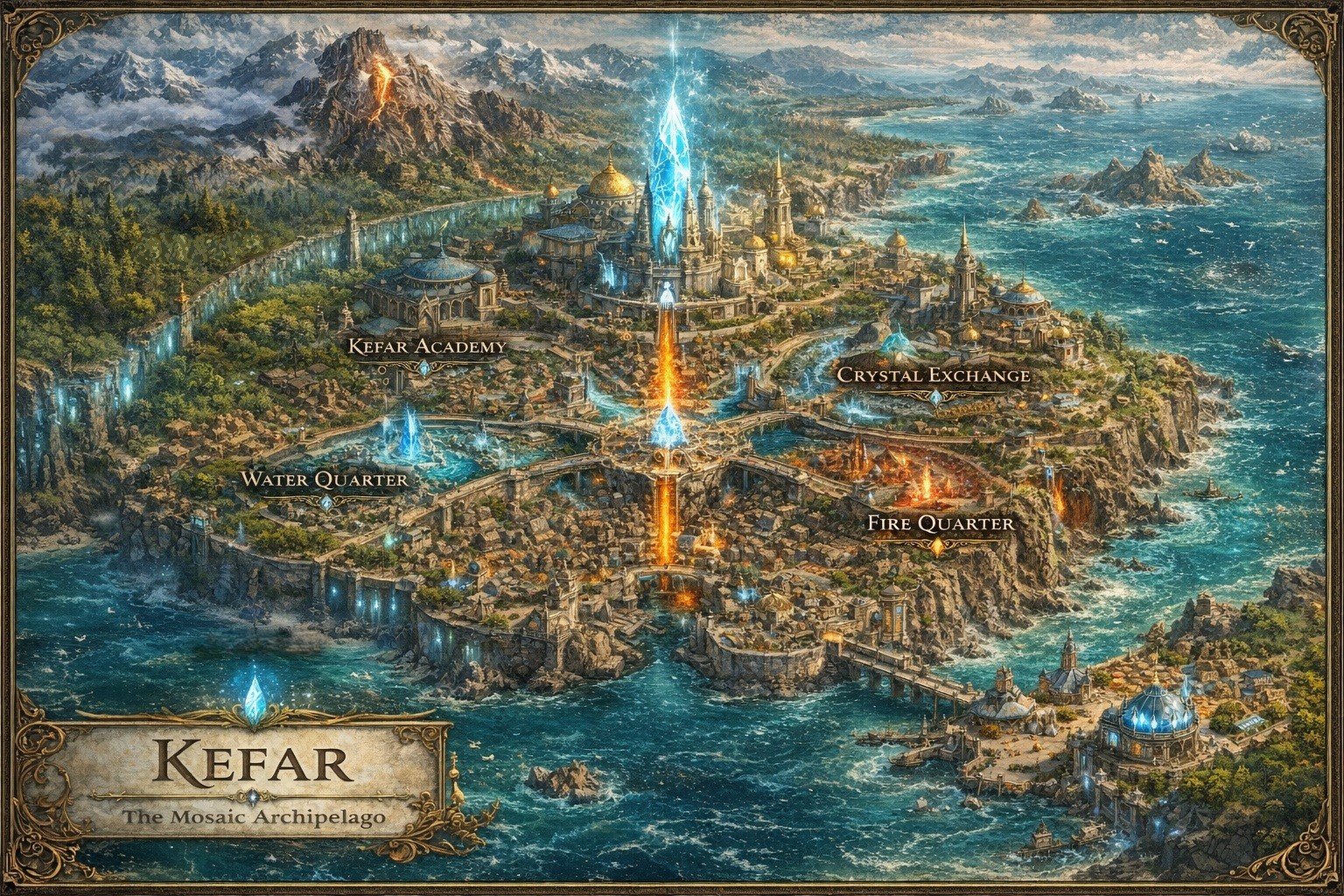
Kefar Island lies in the northeastern region of the archipelago and is home to the Kefarn people, now the citizens of Kefar. Snow-covered mountains dominate the north, while a fertile coastal valley spreads outward toward an ancient lava plain where the great city of Kefar stands.

Beneath the city, molten lava flows constantly through channels that run alongside crystal deposits, providing energy that powers the city’s industries and magical research. The island is rich in diverse flora and an abundance of crystals, many of which are unearthed from the underground passages, lava tubes, and tunnels that run deep beneath the island.

The eastern reaches of Kefar Island meet the northern edges of the Sorka Forests, a vast woodland region known for its vibrant vegetation and mysterious ruins.

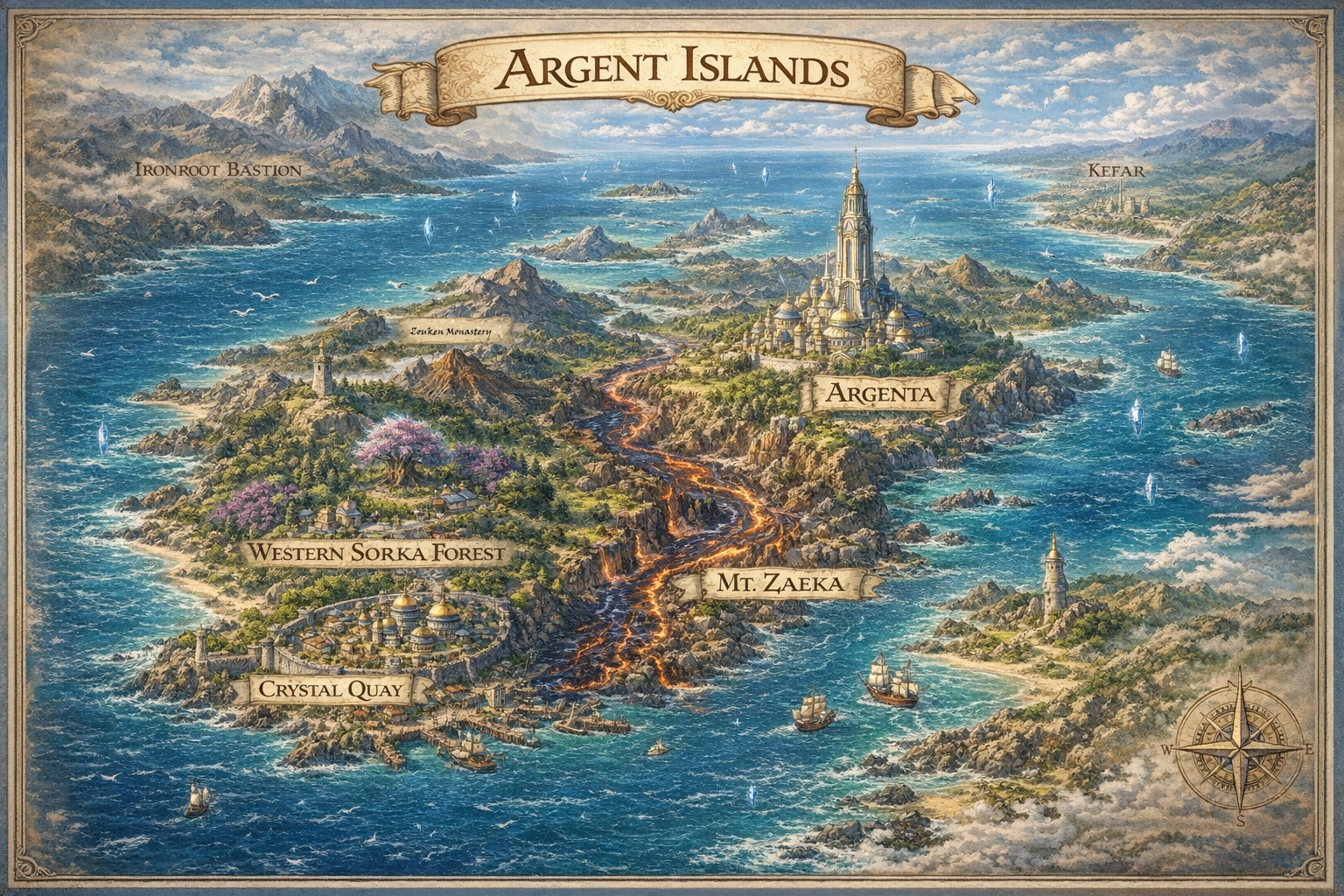
To the northwest lie the Argent Islands, home to the Argentian people. Argent contains two primary cities: the capital Argenta and the port city of Crystal Quay. While the western Sorka forests of Argent remain largely uncolonized, many towns and villages flourish in the lands between the two great cities.

A small but active volcanic range runs across Argent, feeding lava into an underground lake that warms natural springs and waterways across the island. These waters eventually flow into a great river that crosses the island, passing through the dense purple forests of eastern Sorka where mineral-rich soil gives the trees their remarkable colours.

The eastern beaches of Argent are widely considered among the most beautiful in the entire archipelago — though travelers from Thaloria strongly dispute this claim whenever the topic arises.

Together, the islands of the Mosaic Archipelago form a vibrant and ever-changing region where trade, magic, nature, and ancient history constantly intersect. For adventurers, scholars, and merchants alike, these islands represent both opportunity and mystery, standing as one of the most influential regions in the Aethorian world.

Argent Islands

Island power of mages, trade, mineral waters, volcanoes, and old elemental mystery
Type: Great island power
Main Cities: Argenta, Crystal Quay
Region: Northwestern Mosaic Archipelago
Known For: Trade, scholarship, maritime influence, elemental study
Landmarks: Great Argent Tower, Mount Zaeka, Changett River, Sorka Forests
Nearby Powers: Kefar to the east, Ironroot Bastion to the west

The Argent Islands lie in the northwestern region of the Mosaic Archipelago, west of Kefar and east of the continental lands of the Ironroot Bastion. Argent is home to two great cities. Argenta is known for its size, its age, and for hosting the Mage School of Argentian Excellence. Crystal Quay, by contrast, is famed as a protected seaport of trade, security, and maritime wealth.

Though many Argentians now live in the highly advanced eastern city of Kefar, the islands remain one of the most important ancestral homes of mage learning in Aethoria. Between the two great cities lie smaller villages, coastal towns, and inland settlements, while much of the western Sorka forests remain only lightly colonized.

The geography of Argent is unlike anywhere else in the Mosaics. A signature ancient tower, built more than a thousand years ago, rises at the base of the island’s main mountainous mass. One of these peaks, Mount Zaeka, remains volcanic. Lava from the island’s active range feeds underground lakes, warms natural springs and waterways, and contributes to the strange mineral-rich currents that become the Changett River, a dark blue and purple waterway that spans the island and empties into the southern sea.

History

Argentian tradition holds that an ancient protector has watched over the islands for millennia, keeping the elements in harmony. Legend says this guardian once doused the fires of Mount Prata, leaving only its twin, Mount Zaeka, as an active volcano. That balance between lava and water is believed to be one of the great reasons life on the island flourishes.

The Mages of Argent gained a widespread elemental affinity only after the Pre-Sundering era, when the peoples of the Mosaic Islands reached astonishing heights of magical and technological knowledge. Some islanders believe that generations of drinking Argent’s lava-infused waters strengthened the people of the islands, sharpening natural aptitude whether one became Mage, Healer, or Guardian.

The Pre-Sundering age also helped drive expansion eastward toward what would eventually become the densely populated city of Kefar. Argentian scholars developed a particular fascination with lava, regarding it as a mysterious fifth element. Modern Argentians still study its properties and its interaction with the known elements, though the old records suggest the Pre-Sundering peoples may have wielded it with a mastery that has since been lost. Which is very rude of history, really.

Landscape and Settlements

While the eastern beaches of Argent are considered among the most beautiful in the Mosaic Archipelago, the interior offers dramatic contrast. Mineralised waterways flow past the dense purple eastern Sorka forests, giving them their unusual colours. Farther inland and westward, the land becomes rougher, drier, and more remote, especially near Winruk Canyon and the western reaches beyond the major cities.

Along these less-settled coasts and forest edges, Argentians live in smaller communities tied closely to springs, fisheries, river trade, and old local traditions. These villages preserve much of the island’s older character and remain deeply connected to its myths, waterways, and volcanic lands.

Zouken and Crystal Quay

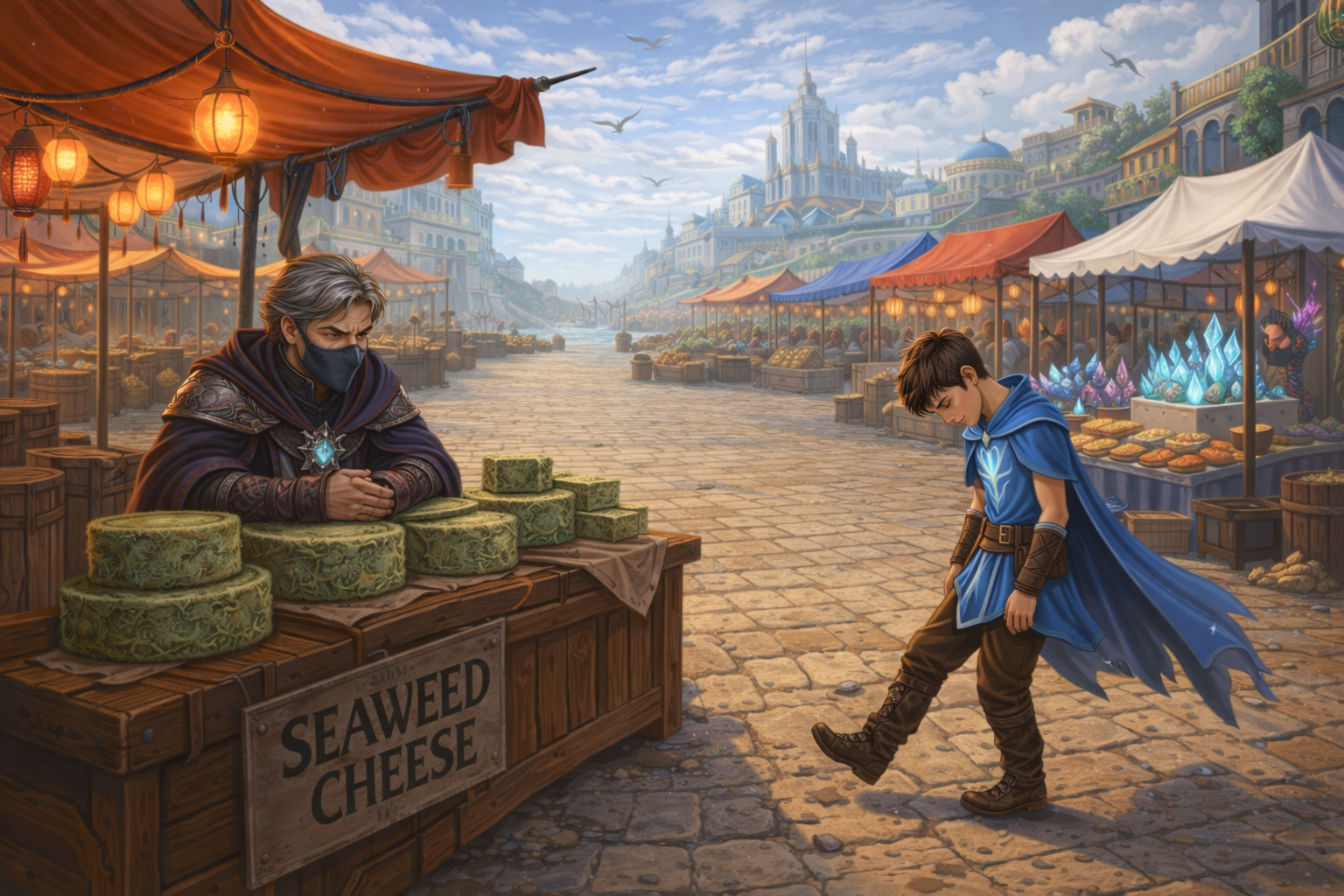
Argent is also home to the renowned Zouken Monastery, a place not open to the public but famous throughout the islands. One of its best-known contributions is its celebrated seaweed cheese, sold in the markets of Crystal Quay.

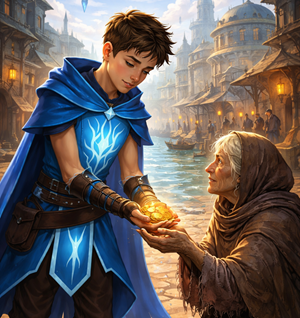
In the port city, stories are still told of monastery orphans and attendants using proceeds from those sales to offer alms to the poor. Such acts have helped shape Crystal Quay’s reputation as a city not only of commerce and security, but of visible generosity amid great wealth.

Flora and Fauna

Argent is home to eccentric and often striking wildlife. Many of its creatures have adapted to the island’s mineral-infused waters, lava-warmed springs, and crystal-rich environment. This has made them resilient to change and given many of them vivid hues of purple, pink, and blue, lending the natural world of Argent an appearance as vibrant as it is unusual.

Kefar

Ancient central island, mage capital, crystal tower city, and heart of the Mosaic Archipelago
Type: Great city / central island power
Known For: Mage learning, ancient crystal technology, beaches, waterfalls
Region: Mosaic Archipelago — Lands without a Crest
Landmarks: Crystal Tower, Kefar Academy, Planetarium
Notable Feature: Mega Shield Shard protecting the Mosaic Islands

Kefar is the largest island in the Mosaic Archipelago and is often described by its modern inhabitants as the original birthplace of the Pre-Sundering peoples, the legendary tribes who settled among the Mosaics several millennia ago. As the island grew more populated, groups spread outward into the Argent Isles, the Thalorian Tide, and later the fertile lands of the Virielia Bloomlands. Those migrations shaped both conflict and cooperation among the peoples of the outer islands, planting the earliest dreams of unity long before the Crestrealms took their later forms.

Kefar itself is large, volcanic in origin, and rich in crystal seams buried beneath its stony surface. While many of the smaller surrounding islands are little more than rocky outcrops, minor mountain ranges, lava pools, and isolated green coasts, Kefar became the great centre from which much of the archipelago’s civilisation expanded. Its most notable feature, both in ancient times and today, is the Crystal Tower at the city’s core.

History

The Pre-Sundering peoples built the first great tower of the archipelago on Kefar. Crystal caches and deep veins beneath the island provided the energy for this original structure, which served as a central beacon and power source for the towers that would later rise across the Mosaic Islands. It is believed that this first tower sent pulses of energy and light outward to stabilise and connect the surrounding lands.

Near the end of the Pre-Sundering era, violent volcanic upheaval caused much of Kefar to sink back into the ocean. Tremors destroyed coastal lands, and evidence suggests that ancient land bridges linking Kefar to Argent and Thaloria were lost to the Great Central Ocean. A millennium later, rising volcanic pressure lifted much of the island chain again. Many believe that this re-emergence is tied to the old prophecies of Heartwell Reunification, and that the return of long-lost lands signals that the Sundered peoples have somehow returned and are waiting to be found.

Little remains of Kefar’s earliest history, and much knowledge of its technological past was lost during the Great Sundering. Even so, the central tower appears to have once served as a gathering point for many tribes, making Kefar not only a seat of power, but perhaps the ancient meeting place of the archipelago itself.

The Modern City

Modern Kefar is a highly advanced and densely populated city east of the Argent Islands. It is divided in two by a flow of water infused with lava from the volcanic mountains to the north. Though the city faces the open ocean, it stands high above the cliffs and is protected by a crystal-embedded wall overlooking the expanse of the Eastern Sorka Forest.

Millennia ago, Kefar expanded rapidly during a great technological renaissance, helped by travelers, scholars, and innovators from across Aethoria who crossed the seas and passed through the Mosaics. That exchange of knowledge helped transform the city into one of the greatest centres of learning and innovation in the world.

Crystal Tower of Kefar

At the heart of old Kefar stands the ancient Crystal Tower, surrounded by rocky ground and strange purple lava flows. In the modern age, the original structure has been built around and encased within a great thirty-storey stone tower, but its crystal core still blazes with a radiant purple beacon. The tower once served as the central pivot for the network of towers across the Mosaic Archipelago.

More than a landmark, the Crystal Tower remains essential to the protection and functioning of the islands. It houses the mega shield shard, a powerful artefact that generates the protective barrier surrounding the Mosaic Islands and tempers the energy pulses sent between towers. For that reason, it is considered one of the most sacred and restricted places in the archipelago, sealed to all but the city’s most powerful and trusted figures.

Places of Interest

Kefar is home to the renowned Kefar Academy, founded by the First Mage, Syterra. The academy still towers above the city as both a centre of learning and the seat of governance. It welcomes Mages from many schools to gather, study, and exchange knowledge, though over time the four elemental schools of fire, water, earth, and air have grown increasingly independent, and tensions between them are not unknown.

The academy is also the residence of the Head Mage, who governs the city. The current Head Mage, Omara, is said to be a descendant of Syterra herself. Nearby, a statue of Syterra stands watch over Kefar, a reminder of the city’s ancient roots and continuing purpose.

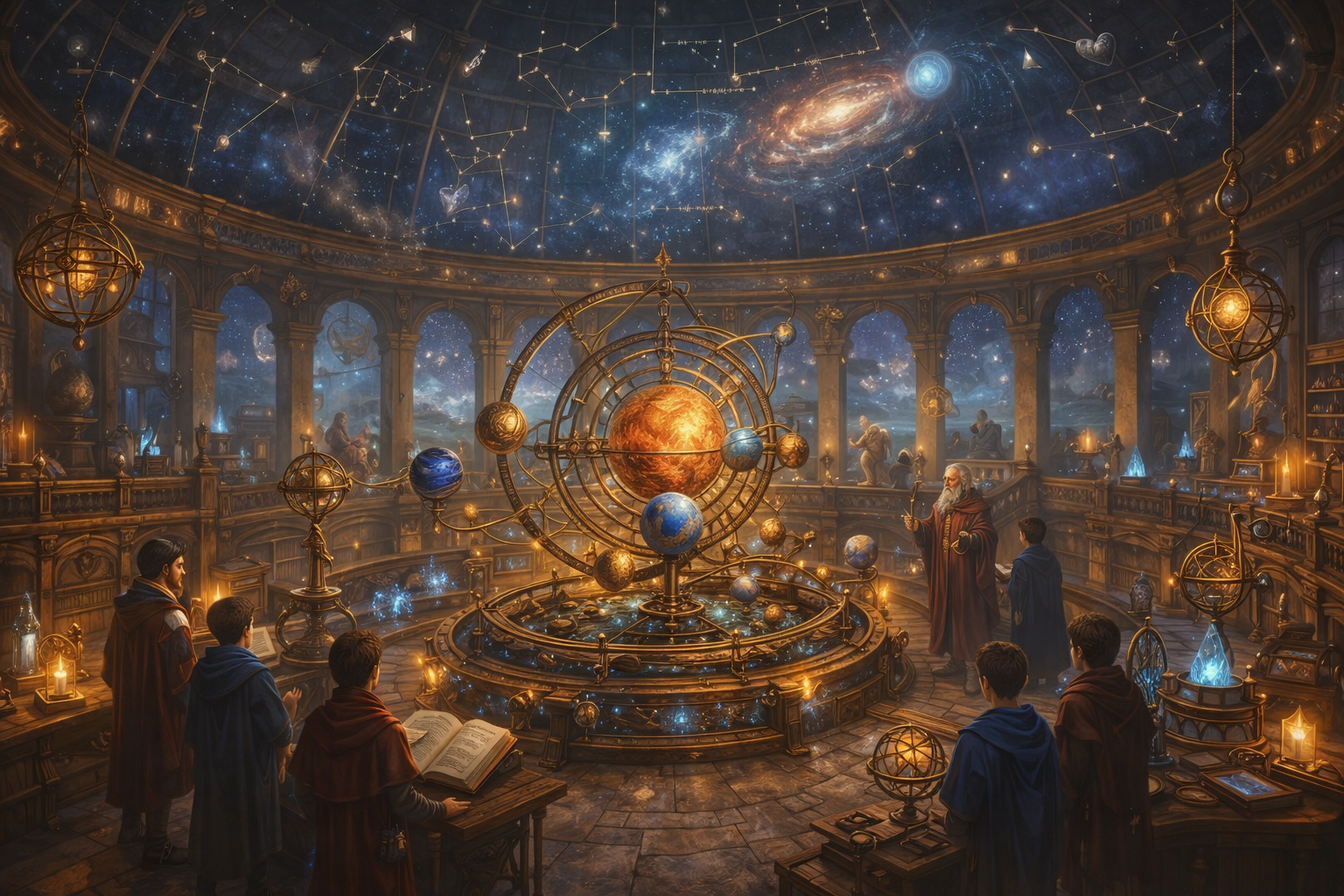
Among the academy’s best-known wonders is the Planetarium of Kefar Academy, a place of learning, astronomy, and shared knowledge. Though some claim it cannot rival the great Astrologers Observatory in the Alfadin Mountains, its accessibility and prestige make it one of the most important public centres of study in the Mosaic Archipelago.

Beyond its schools and towers, Kefar is also known for its beautiful beaches, dramatic waterfalls, and the many smaller mage schools and domains scattered throughout the city. It is a place where ancient power, political authority, elemental study, and everyday life exist side by side — usually with just enough tension to keep things academically unpleasant.

Flora and Fauna

Kefar’s inland life is less varied than that of some neighbouring islands, and much of its older biodiversity has been diminished by its long settlement and volcanic character. Even so, its rocky shores and beaches teem with sea-dwelling life, including creatures such as hexafins and fesealons, which wash ashore or thrive along the coasts. The island’s harsher terrain gives it a more austere beauty than the greener outer islands, though its sea-cliffs, beaches, and waterfalls remain some of the most striking in the Mosaics.
Alfadin Mountains

Frozen northern peaks of Kefar, known for harsh winters, sacred sites, and ancient mysteries
Type: Mountain range
Known For: Extreme cold, sacred pilgrimages, ancient ruins, remote exploration
Region: Northern Kefar
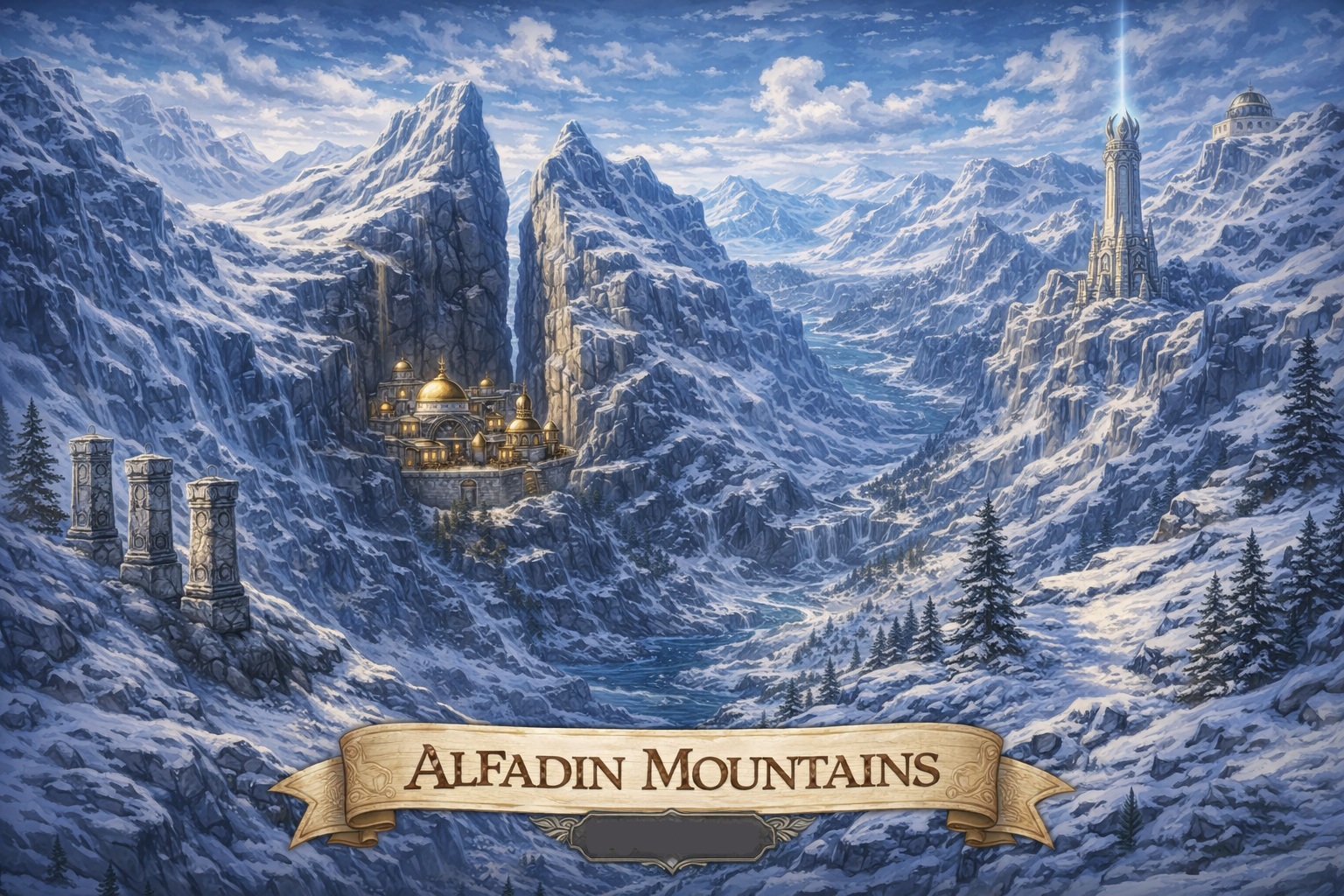
Landmarks: Fool’s Gap, Alfadin Tower, mountain temple, observatory

The Alfadin Mountains rise across the northern reaches of Kefar, towering above the shores and islands of the Mosaics. Their great elevation brings long, bitter winters, with snow, ice, and blizzards threatening travelers through almost every season of the year.

Only a brief summer of roughly two months softens the range enough for easier travel, allowing limited plant and animal life to emerge in sheltered valleys and thawed pockets of land. Even then, the terrain remains harsh, with frozen waterways, steep cliffs, and dangerous passes making travel difficult for all but skilled explorers and determined pilgrims.

The Alfadin are famed not only for their beauty, but for the mysteries hidden among their peaks. Ancient shrines, sacred sites, and isolated towers lie scattered across the mountains, and many old legends connect the region to powerful Veylborn, forgotten temple traditions, and the earliest ages of Aethoria.

Alfadin Mountain Temple

A high pilgrimage sanctuary beneath Fool’s Gap, where mages seek silence, discipline, and spiritual renewal
Type: Pilgrimage temple
Known For: Meditation, mountain pilgrimage, spiritual retreat, views of Monolith Peak
Region: Alfadin Mountains, Kefar
Nearby Landmark: Fool’s Gap

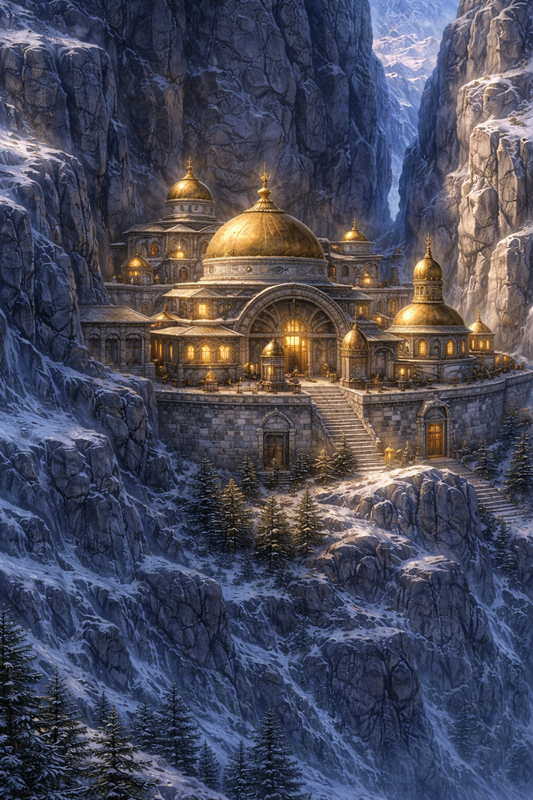
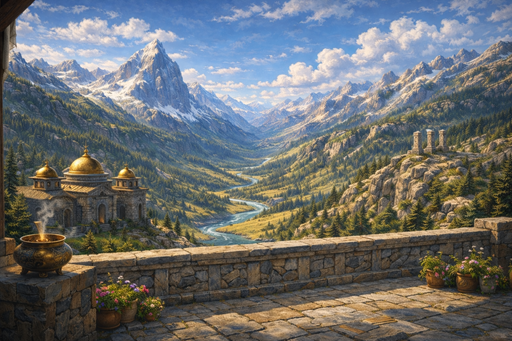
Nestled high in the rugged Alfadin range, the Alfadin Mountain Temple has stood for more than four centuries as a place of contemplation, renewal, and disciplined spiritual practice. The temple rests beneath the dramatic split in the mountains known as Fool’s Gap, whose natural shelter and immense stone walls give the sanctuary both protection and grandeur.

Reaching the temple requires a demanding four-day journey along treacherous mountain paths, a trial considered part of the pilgrimage itself. Built from local stone, the complex blends into the stark landscape and includes a main hall, smaller shrines, meditation chambers, and quiet spaces for solitary reflection.

Pilgrims and residents live by a rhythm of prayer, meditation, simple meals, and contemplation. From its terraces and windows, visitors can look across the valley toward the mighty Monolith Peak, whose presence has inspired generations of seekers who come to the temple in search of clarity and higher understanding.

Alfadin Tower

A mysterious northern tower of stone and light, rediscovered in the frozen heights beyond Kefar
Type: Ancient tower
Known For: Crystal core, glyph-sealed entrance, healer legends, remote rediscovery
Region: Northern Alfadin Mountains
Nearby Landmark: Ancient shrine

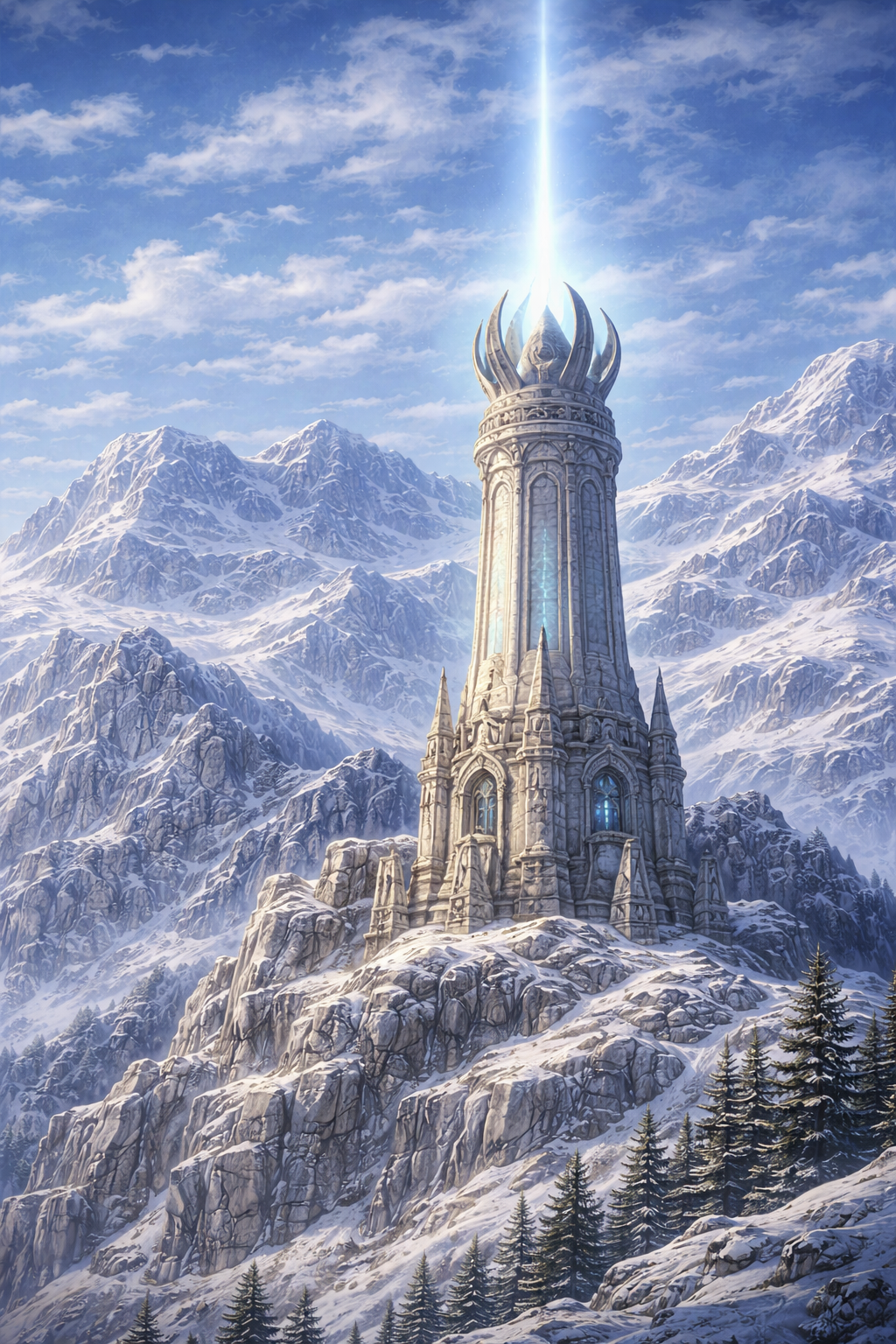
The Alfadin Tower is a second, mysterious tower discovered in the far northern reaches of the Alfadin Mountains. According to legend, it was revealed after a beam of light once shot out from Kefar thousands of years ago, though whether that tale is history, prophecy, or mountain nonsense depends on who is telling it.

The tower stands near an ancient shrine and resembles the earliest tower structures known from Kefar. Its grey-white stone exterior is so pristine that it nearly vanishes into the snow around it, were it not for its towering height and unmistakable presence. A glyph-covered door seals the interior, preventing entry and deepening its reputation as one of the most enigmatic sites in the Mosaics.

Among Healers especially, the tower holds deep importance. Their legends speak of a powerful ancient Veylborn known as the original Light Keeper, said to dwell in a great mountain temple and to be attended by four lesser Veylborn known as the Sparks of Light. These beings are believed to be drawn to the crystal core of the tower, and stories of them helped enkindle the tower’s enduring place in healer culture and northern myth.

Alfadin Mountain Observatory

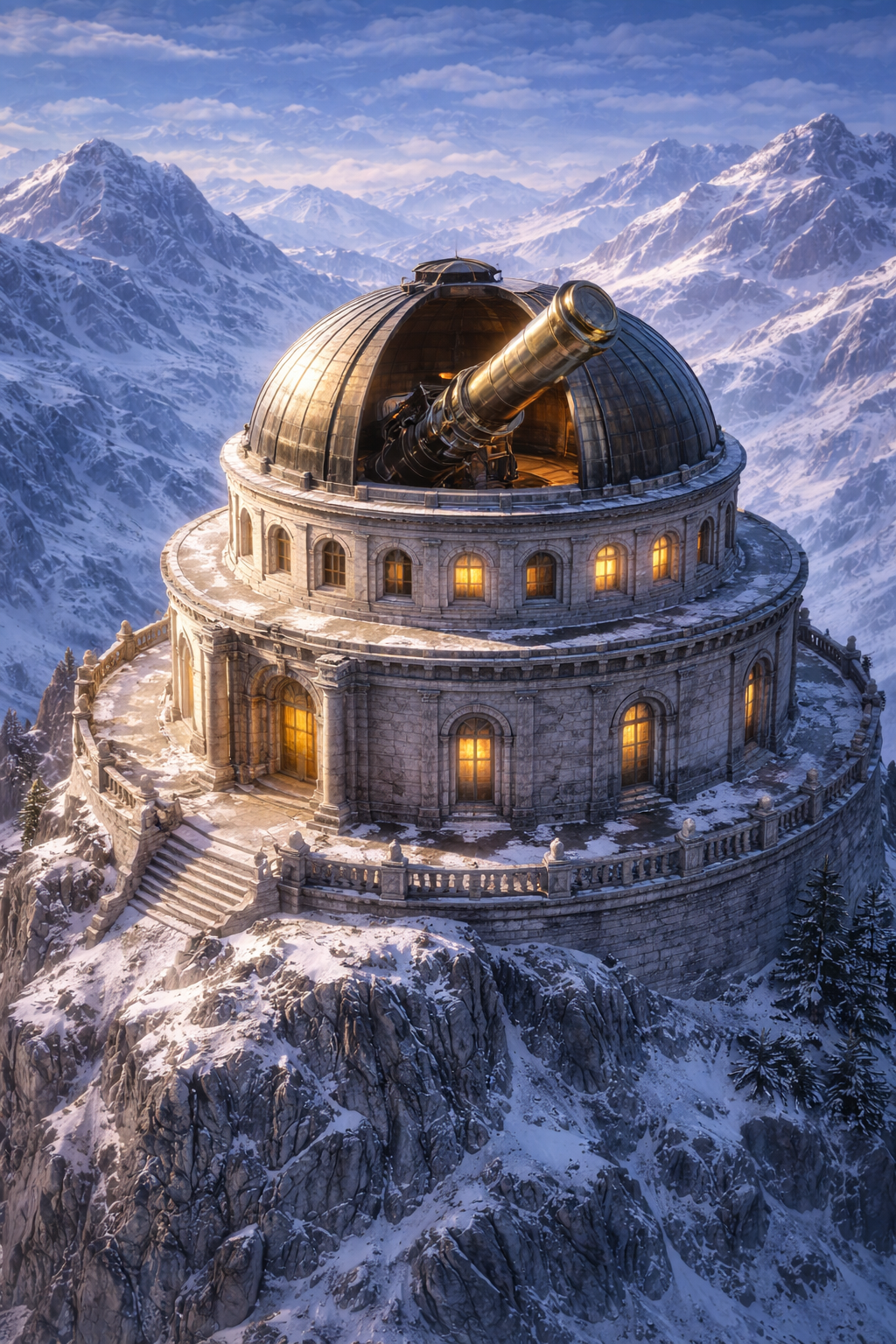
A remote high-altitude observatory where the short summer and clear skies reveal the deep night above Kefar
Type: Observatory
Known For: Stargazing, remote study, clear summer skies
Region: Central Alfadin Mountains
Best Season: The short summer thaw

The Alfadin Mountain Observatory sits atop a remote peak in the central Alfadin Mountains north of Kefar. Isolated, wind-scoured, and inaccessible for much of the year, it remains one of the most challenging scholarly destinations in the region.

During the short two-month summer, however, the mountain becomes reachable and the skies above it clear to remarkable brilliance. These conditions make it an ideal place for observing the night sky, charting stars, and studying celestial patterns far from the smoke, light, and distractions of the lowlands.

Though less famous than the temple or the tower, the observatory is highly respected by astronomers, scholars, and mystics alike. In a land full of ancient energy and old stories, it remains one of the clearest windows into the heavens above Aethoria.

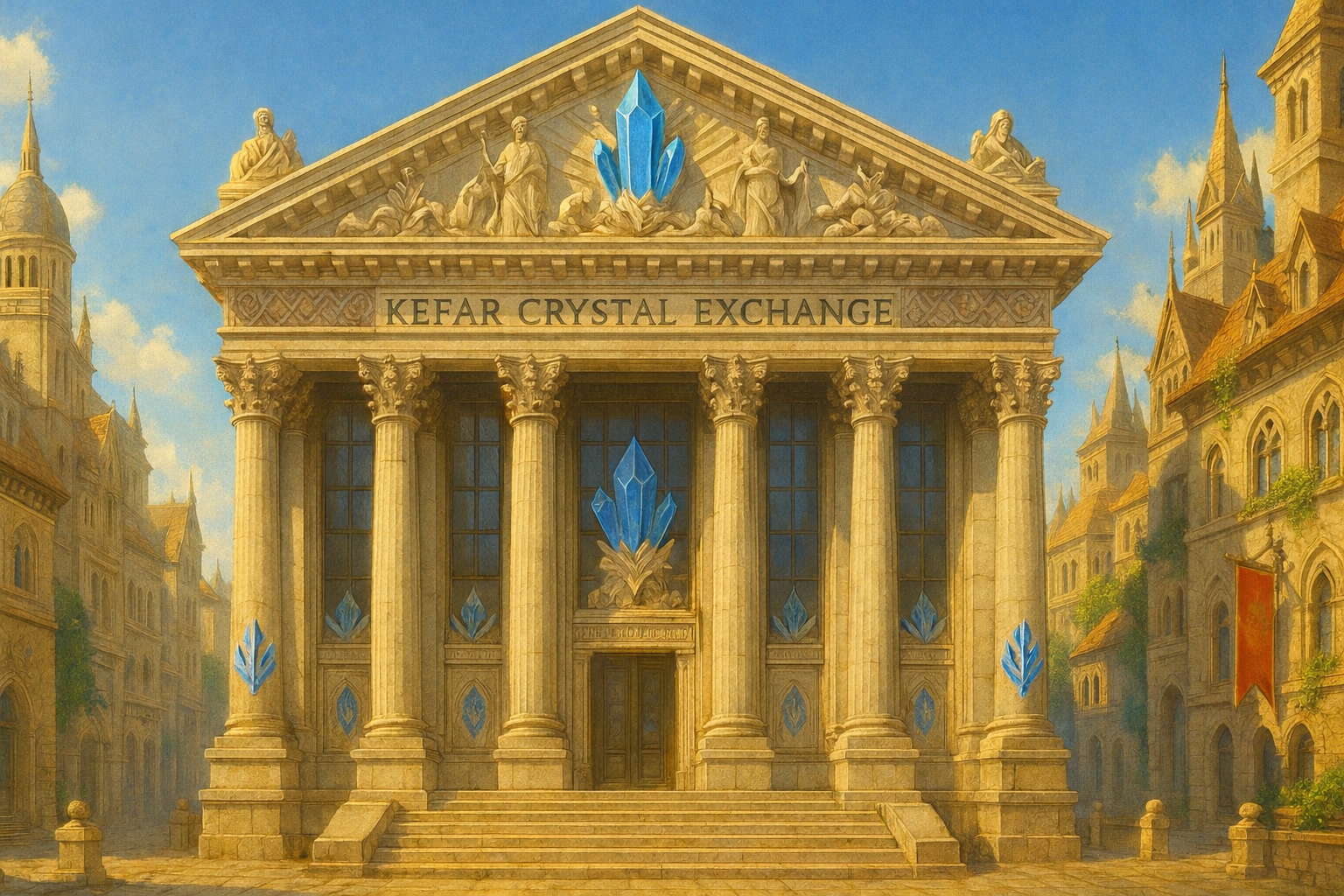
Kefar Crystal Exchange (KCE)

The great marketplace of magical resources where fortunes rise and fall with the crystal markets
Type: Crystal exchange and arcane marketplace
Known For: Crystal trading, Red Crystal speculation, volatile markets
Region: Kefar, Mosaic Archipelago
Nearby Landmark: Kefar Academy

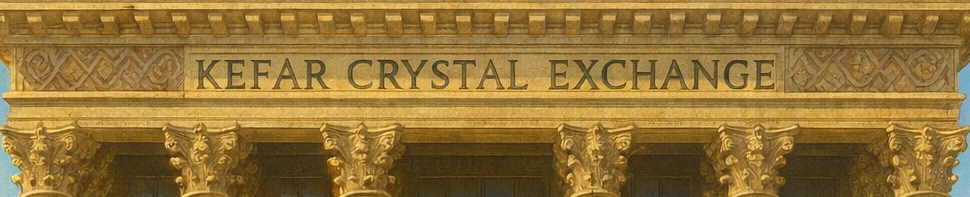
Nestled in the vibrant heart of Kefar, beneath the towering halls of the Kefar Academy and along the glowing lava-fed canals that power the city, stands the legendary Kefar Crystal Exchange, often referred to simply as the KCE.

The Exchange rose to prominence as the most vital economic hub in all of Kefar. Originally established by elemental scholars and traders seeking a stable system for managing the flow of magical resources, the institution quickly evolved into a marketplace of immense strategic power. What began as careful regulation of crystal trade soon became a complex and ever-changing arena of speculation.

Within its halls Mages, Guardians, and Healers trade infused crystals whose values fluctuate with discovery, rumor, magical research, and sheer daring. As Kefar entered its golden age of arcane advancement, the Exchange formalized its trading systems and expanded alongside the great schools of elemental magic.

Today the KCE stands not only as a center of commerce but of cunning. Its price fluctuations ripple across the Mosaic Archipelago and influence markets throughout the wider Aethorian economy. Every young adventurer who visits Kefar dreams of catching the market at just the right moment and walking away with a fortune in crystals.

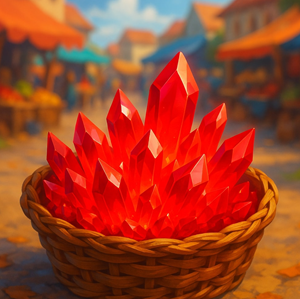
Among the most coveted resources traded here are the legendary Red Crystals. Market traders and street merchants alike tell stories of a power source once wielded only by the elusive Time Mage. These rare, radiant shards of energy are said to originate from the hearts of certain ancient Aethoria trees.

Normally clear and dormant, Red Crystals transform into a deep crimson when charged, pulsing with temporal energy drawn from the living essence of the forests and the planet itself. Yet their power is unstable. A charged crystal can hold its energy for only a short time — mere weeks — before the energy fades and the crystal reverts to its natural translucent form.

In their charged state they are among the most valuable relics in all of Kefar. Their scarcity and volatile nature make them both a fortune and a gamble for those brave enough to trade them.

Once their energy dissipates, their value plummets. What was once a vessel of immense arcane potential becomes little more than a beautiful shard of crystal. Still, every Red Crystal carries a story… and perhaps the faintest trace of power waiting to awaken again.

Aethorian Underground and Crystal Mines

A vast hidden world of crystal caverns, deep waters, and ancient Veylborn pathways beneath the lands of Aethoria
Type: Subterranean crystal network and cave system
Known For: Crystal concentrations, Veylborn movement, healer legends, ancient sanctuary
Region: Found across Aethoria, most significantly beneath Kefar Island
Nearby Landmark: Lake Veritas

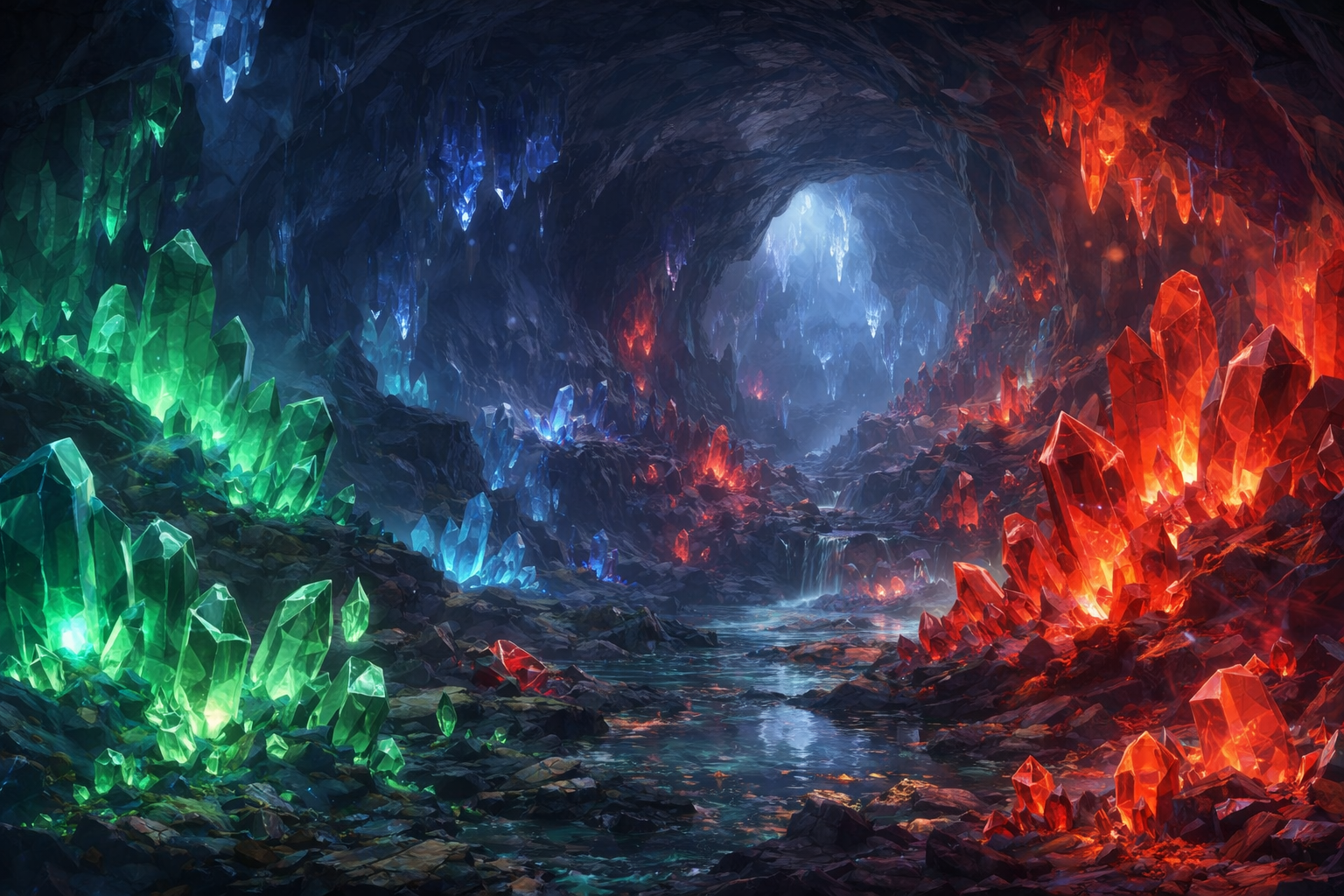
The Aethorian Underground, sometimes called the Crystal Underground, exists in many forms beneath the lands of Aethoria, but nowhere is it more significant than beneath Kefar Island. It is a hidden realm of caves, crystal veins, deep-running waters, and ancient passages that few surface dwellers have ever seen.

Within these underground spaces, crystal concentrations gather in extraordinary abundance. Such places are closely associated with the Veylborn, who are believed to congregate there and move through the world by travelling along crystals, the roots of Aethoria, or deep-running waters beneath the earth. This is one reason why locations such as Lake Veritas are said to have such a strong Veylborn presence.

Very few humans willingly descend into the Underground. It is widely regarded as a place reserved for Veylborn, ancient creatures, and the native flora and fauna that have adapted to its hidden ecosystems. Yet fragments of old stories and scattered evidence suggest that, long ago, humans sometimes ventured below and may even have found sanctuary there in times of danger.

The Underground holds a special place in healer culture. Many Kefar legends refer to it not merely as a hidden world below the island, but as a living foundation of the land itself. Healers, who credit much of their power to their bond with crystals, believe that the health of the Underground is directly tied to the well-being of Kefarn society above.

For this reason, healers place great importance on protecting Kefar’s natural waters, landscapes, and ecosystems. To poison a spring, disturb the roots of the island, or damage the crystal networks below is seen as more than reckless — it is an offense against the living balance that sustains both people and magic.

Though some speak of crystal mines in connection with the Underground, such efforts remain limited and controversial. To many, extracting too deeply from these sacred spaces risks awakening forces or disturbing ancient pathways better left untouched.

Sorka Forests

A vast and colourful wilderness of ancient trees, hidden ruins, and dangerous beauty stretching across Argent and Kefar
Type: Ancient forest region
Known For: Veylborn presence, hidden ruins, rogue bandits, the Sorkathe Tree
Region: Argent Islands and northern Kefar Island, Mosaic Archipelago
Nearby Landmark: Sorkathe Tree

The Sorka Forests stretch across two islands of the Mosaic Archipelago, running through the middle of Argent and across the northern reaches of Kefar Island. On Kefar, the forest helps divide the western lands from the eastern plains where the city of Kefar rises.

Largely uninhabited by humans, the Sorka Forests are dense, wild, and full of hidden life. They provide sanctuary for many important creatures, including Veylborn, and are whispered about as a perfect refuge for rogue mage and guardian bandits. Travellers are warned not to enter the woods alone unless they are particularly fond of being lost, ambushed, or dramatically humbled by nature.

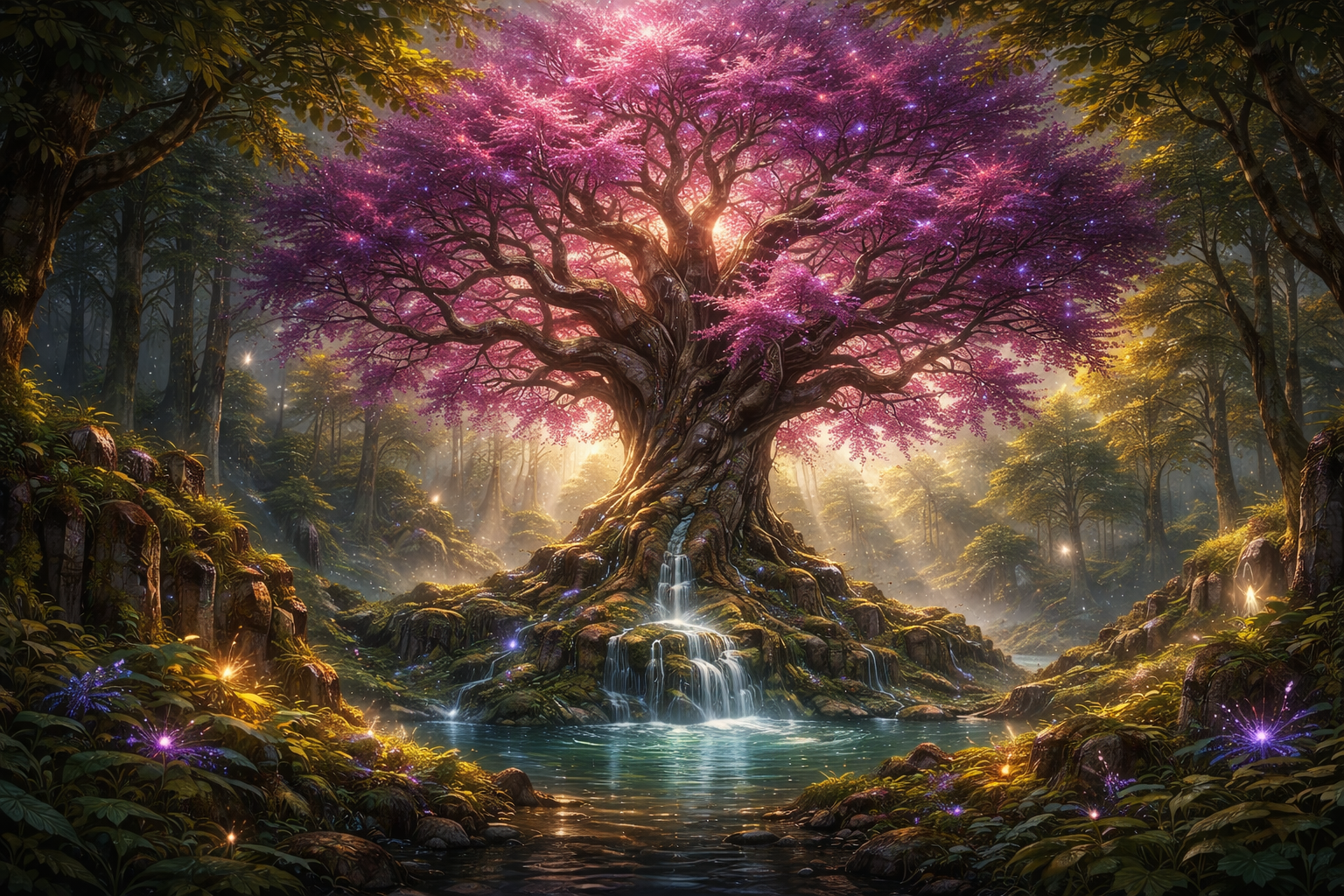
The geography of the forest is mostly flat, broken by gentle hills and occasional mountain ridges. In the north, the land is bordered by water, where a large lake rests close to the shore. This lake nourishes the legendary Sorkathe Tree, the oldest known tree on the Argent Islands and one of the most mysterious living landmarks in the archipelago.

The flora of the Sorka Forests is especially striking. Many of its trees display brilliant green, gold, yellow, and sometimes even purple hues. It is believed these vivid colours developed in response to the lava and volcanic soil carried from Mount Zaeka, a volcano on Argent the splits that island and one that influences the northern lands of the archipelago. That the forest has survived and thrived under such conditions is often cited as proof of the resilience and adaptability of life on Argent and Kefar.

Countless creatures make their home beneath the forest canopy, and many ancient stories speak of Veylborn moving silently through its deeper reaches. The forest is also said to conceal numerous Pre-Sundering ruins, though most remain locked for preservation or are so old, unstable, and dangerous that they are considered inaccessible.

Among its greatest wonders is the Sorkathe Tree, a colossal magenta tree believed to possess strange and magical powers. According to legend, the great mage Syterra spent time at the Sorkathe Tree during her journey to master the four primary elements, and some believe she may even have lived in the Sorka Forests for a time while studying the old magic of the land.

The Pedestal of the Mages

An ancient elemental monument hidden near a roaring waterfall deep within the Sorka Forests
Type: Elemental ceremonial monument
Known For: Elemental rituals, mage gatherings, hidden cave passage
Region: Sorka Forests, Mosaic Archipelago
Nearby Landmark: Roaring Waterfall

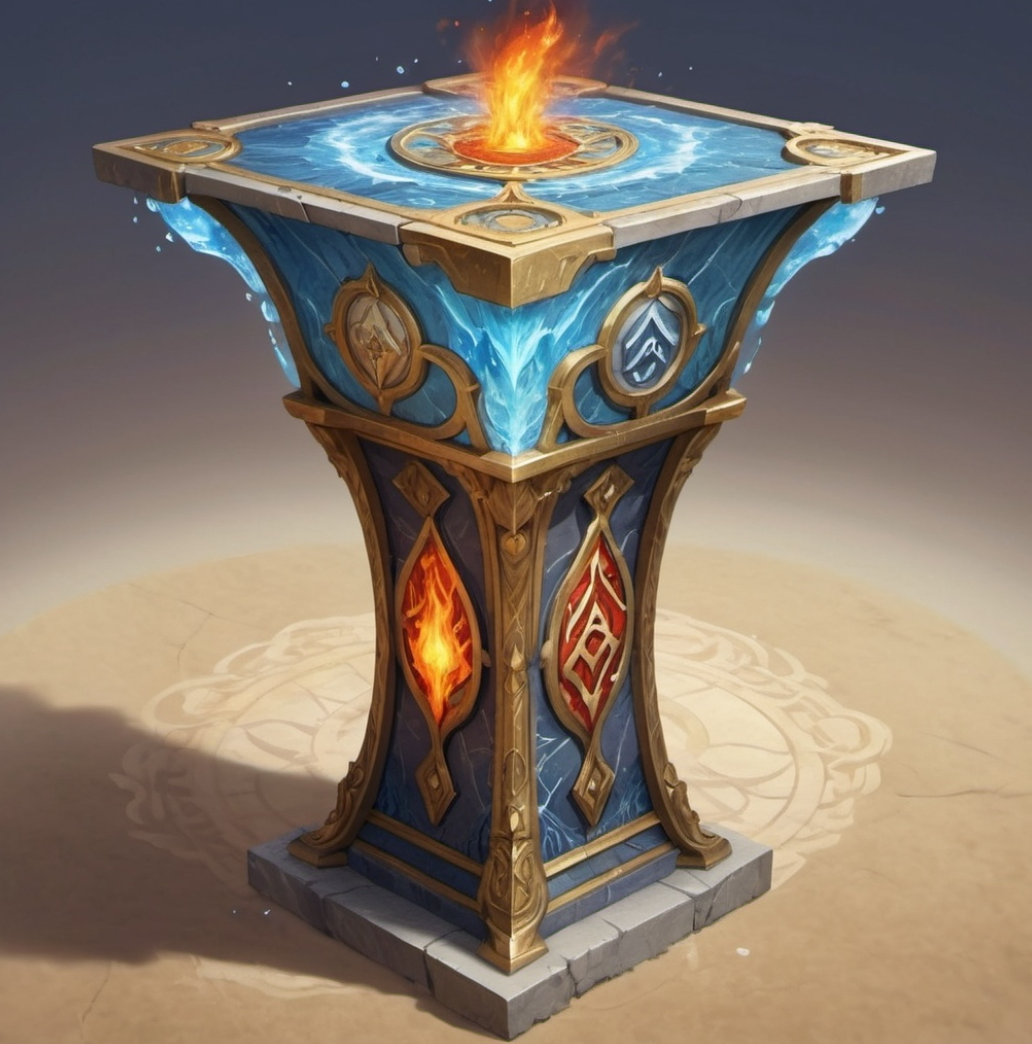
The Pedestal of the Mages stands as a timeless relic of elemental mastery and unity, deeply revered throughout the history of Aethoria. Hidden within the dense reaches of the Sorka Forests, the ancient stone monument rests beside a powerful roaring waterfall, where mist, stone, and flowing water create an atmosphere of constant elemental motion.

The pedestal itself is carved from a single block of ancient stone and bears the carefully inscribed symbols of the four primary elements: fire, water, earth, and air. Each symbol is etched with remarkable precision, radiating a quiet but unmistakable aura of ancient magical power.

Through the ages, the pedestal has served as a central point in the rituals and traditions of the mage communities of Kefar and the surrounding islands. It is not merely a monument, but a symbol of the mages’ collective strength and their enduring commitment to maintaining balance within the natural world.

During times of great need, elemental leaders have gathered at the pedestal to unite their powers and restore harmony when the balance of Aethoria was threatened. In these moments, the pedestal acts as a focal point, amplifying the combined magic of those who stand around it.

Ceremonies at the pedestal are steeped in ancient tradition. The most important oaths among mage orders are sworn here, and some of the most powerful elemental spells ever recorded were cast upon its surface. During the solstices and equinoxes, mages gather to channel their powers together in rituals that renew their elemental connection and strengthen the bonds between their orders.

The pedestal also serves as a guide when the mages unite for a common purpose. Its elemental symbols remind each mage of the balance they must maintain within themselves and with one another. When activated, the pedestal’s ancient mechanisms reveal hidden paths and solutions, offering insight during times of crisis.

One of the most mysterious legends connected to the pedestal is the story of the mage Syterra. According to a memory shard preserved by the mages, Syterra was last seen standing beside the pedestal, her hand resting upon it near the roaring waterfall. When the pedestal was activated, it revealed a hidden entrance to a cave concealed behind the falling water.

What Syterra discovered beyond that passage remains unknown. Some believe she found a deeper understanding of the elemental forces themselves, while others believe the event marked the beginning of a new era for the mages of Aethoria.

Today the Pedestal of the Mages remains both a sacred site and a powerful symbol of unity. Standing where stone, water, air, and fire converge, it continues to embody the harmony and balance that the mages of Aethoria strive to protect.

The Legendary Hut of Syterra

A humble woodland dwelling tied to one of the greatest elemental mages in Aethorian history
Type: Historical mage dwelling
Known For: Syterra’s residence, preserved artist drawings, elemental lore
Region: Western Sorka Forest, Argent Islands
Nearby Landmark: Sorkathe Tree

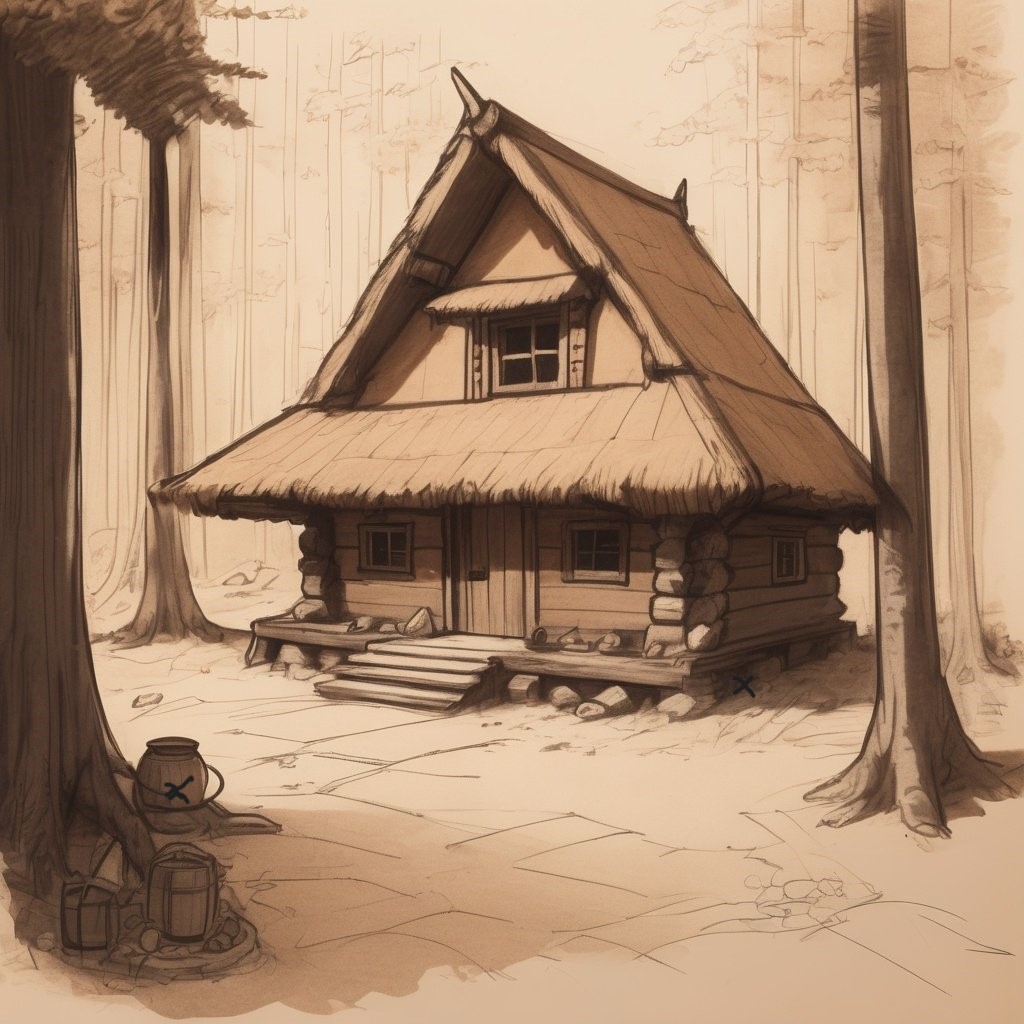
The Legendary Hut of Syterra is a modest woodland dwelling surrounded by mystery and legend. Although no living person claims to have seen it in modern times, two preserved artists’ drawings provide rare glimpses into what this humble structure once looked like.

These drawings are carefully preserved within the Library of the Astryx Arcanum, where scholars and historians study them for clues about the life of the legendary mage Syterra. While simple, the drawings offer valuable insight into both the hut itself and the magical landscape that surrounded it.

According to the surviving records, the hut was constructed from aged wood, its walls formed from rough-hewn logs and weathered planks. Several small windows dotted the structure, their glass panes fogged with age, allowing soft filtered light to enter the interior.

Inside, the dwelling was modest and practical. Witness accounts describe a wooden table and chairs, a simple bed covered with a quilted blanket, and shelves lined with ancient books and scrolls. A small fireplace served as the heart of the main room, its embers often glowing softly during Syterra’s long hours of study.

A narrow wooden staircase led to a small upstairs loft which likely served as a sleeping area or quiet space for contemplation. A small window in this upper room looked out across the canopy of the surrounding forest, offering a tranquil view of the violet-tinted wilderness beyond.

The hut was said to stand deep within the Western Sorka Forest of Argent, surrounded by the forest’s distinctive purple-hued trees. These mineral-rich trees cast a gentle violet glow over the landscape, giving the area an otherworldly and serene atmosphere.

Lavender moss carpets the forest floor in this region, and the air is often thick with a sweet and mysterious scent carried through the mist that drifts quietly between the trees. It is a place where the natural world feels ancient and quietly alive.

Though simple in appearance, the hut has become one of the most enduring symbols of Syterra’s life and legacy. The surviving drawings preserve the memory of the place where one of Aethoria’s most influential elemental mages may have studied, lived, and contemplated the deeper forces of the world.

Library of the Astryx Arcanum

The Repository of Aethorian Memory and the sacred archive of the Healers
Type: Grand archival library and scholarly sanctuary
Known For: Healer records, arcane knowledge, historical archives
Region: Luminary Prime
Nearby Landmark: Heartwood Archive

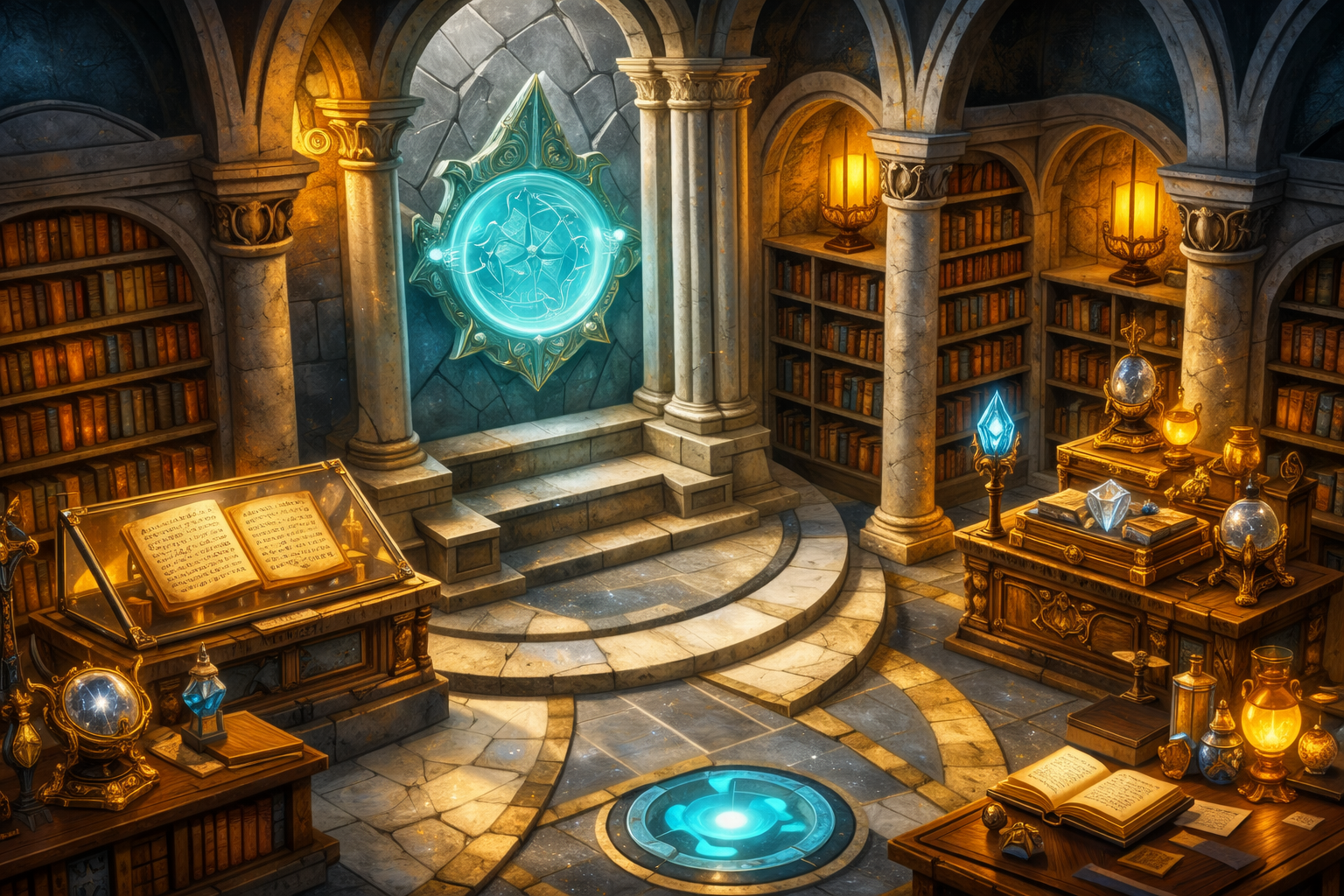
The Library of the Astryx Arcanum is far more than a collection of scrolls and texts. It is the living repository of Aethorian knowledge and the beating heart of the Healers’ collective memory. Its origins stretch back to the earliest days of the Astryx Arcanum society.

Within its sacred halls lies the vast sum of Aethorian knowledge: profound medical discoveries, complex arcane practices, meticulous historical records, and the deeply cherished traditions of the Healers.

Located in the grand capital of Luminary Prime, the library serves as the ultimate archive of the Astryx Arcanum. It was intentionally established beyond the political influence of the Isle of Kefar so that knowledge would remain protected from shifting powers.

The guardians of this vast repository are the Northerners of the Astryx Arcanum — dedicated scribes, historians, and scholars whose lives are devoted to recording and protecting the legacy of their people.

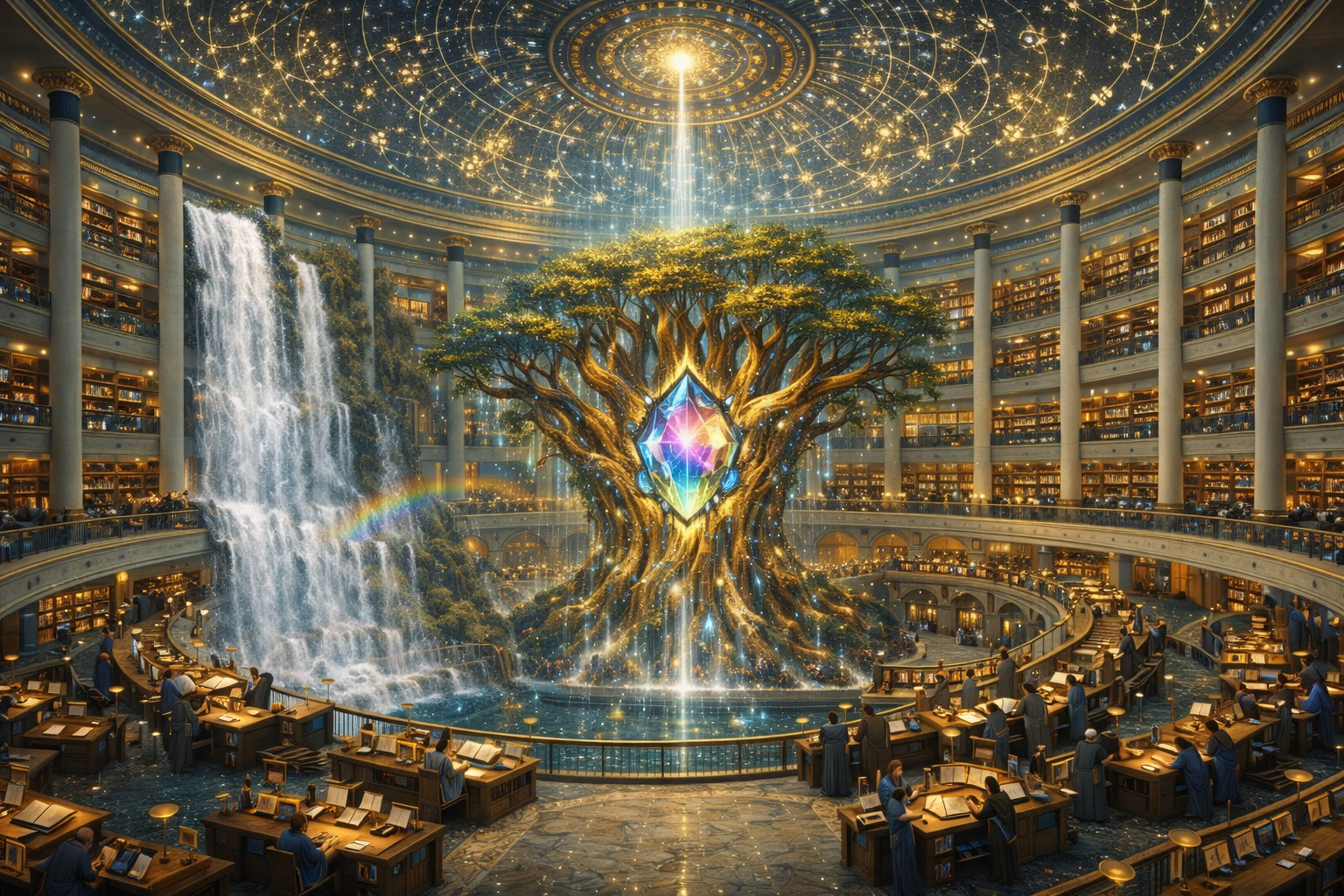
The most breathtaking feature of the library lies in its immense central chamber where a colossal Aethoria Tree grows within the structure itself, its ancient glowing limbs filling the spectacular round architecture of the hall.

At the heart of this great tree rests a gigantic multifaceted crystal. Slowly enveloped by the tree’s mystical growth over centuries, the crystal now serves as the physical and energetic core of the entire archive.

Known Tomes of the Astryx Arcanum

The Library holds one of the largest collections of knowledge in all of Aethoria. Scholars, healers, guardians, and mages travel from distant Crestrealms to study its works.

For Mages

  • The Life and Works of Syterra
  • Arcane Incantations of Eldoria
  • Chronicles of Elemental Mastery
  • Mysteries of the Astral Plane
  • The Tome of Infinite Wisdom
  • Grimoire of Ancient Runes
  • Codex of Enchanted Artefacts
  • Philosophies of Mana Manipulation
  • Guide to Arcane Symbolism
  • The Compendium of Illusions

For Guardian Warriors

  • Shielding Techniques of the Ancients
  • Tactical Defense Strategies
  • The Guardian's Manual of Fortitude
  • Encyclopaedia of Battle Stances
  • Treatise on Defensive Formations
  • The Art of Shield Crafting
  • Guardians' Legacy: Stories of Valor
  • Codex of Physical Endurance
  • Manual of Resilient Constructs
  • The Book of Barrier Creation
  • Warrior's Path: Mastering Combat
  • Compendium of Martial Arts
  • The Blade’s Journey: Techniques and Tales
  • Battlefield Tactics and Strategies
  • The Art of War: Ancient Techniques
  • Manual of Swordsmanship (including a chapter on the Lava Sword)
  • Encyclopaedia of Weapon Mastery
  • Chronicles of Legendary Warriors
  • The Book of Unyielding Strength
  • Warrior's Codex: Techniques of the Elite

For Healers

  • Spells of Restoration and Renewal
  • The Healer’s Handbook of Potions
  • Encyclopaedia of Medicinal Herbs
  • Compendium of Healing Rituals
  • Guide to Holistic Healing
  • Tome of Life-Preserving Spells
  • Manual of Alchemical Remedies
  • The Healer’s Guide to Energy Manipulation
  • Medic Garden’s Manual
  • The Book of Soothing Incantations
  • Potions that Heal and Harm

Works Studied by All Orders

  • Riding a Griffon and Taming the Wild
  • The Emberwild Dominion, a History of the Early Peoples
  • Volcanology and Lava Flows on the Mosaic Islands
  • Elmara and the Five Seas
  • The Deriliction: A Study of Its Effects and Hazards
  • Hieroglyphics and Decoding Ancient Texts
  • Discovery — The Science of Alderat
  • Memory Shards and Crystal Powers by Gyateh
  • History of Queen Gavernod

Together these works represent centuries of accumulated wisdom. Each generation of scholars contributes new discoveries, while the ancient texts remain carefully preserved within the living archives of the Astryx Arcanum.

The Vault

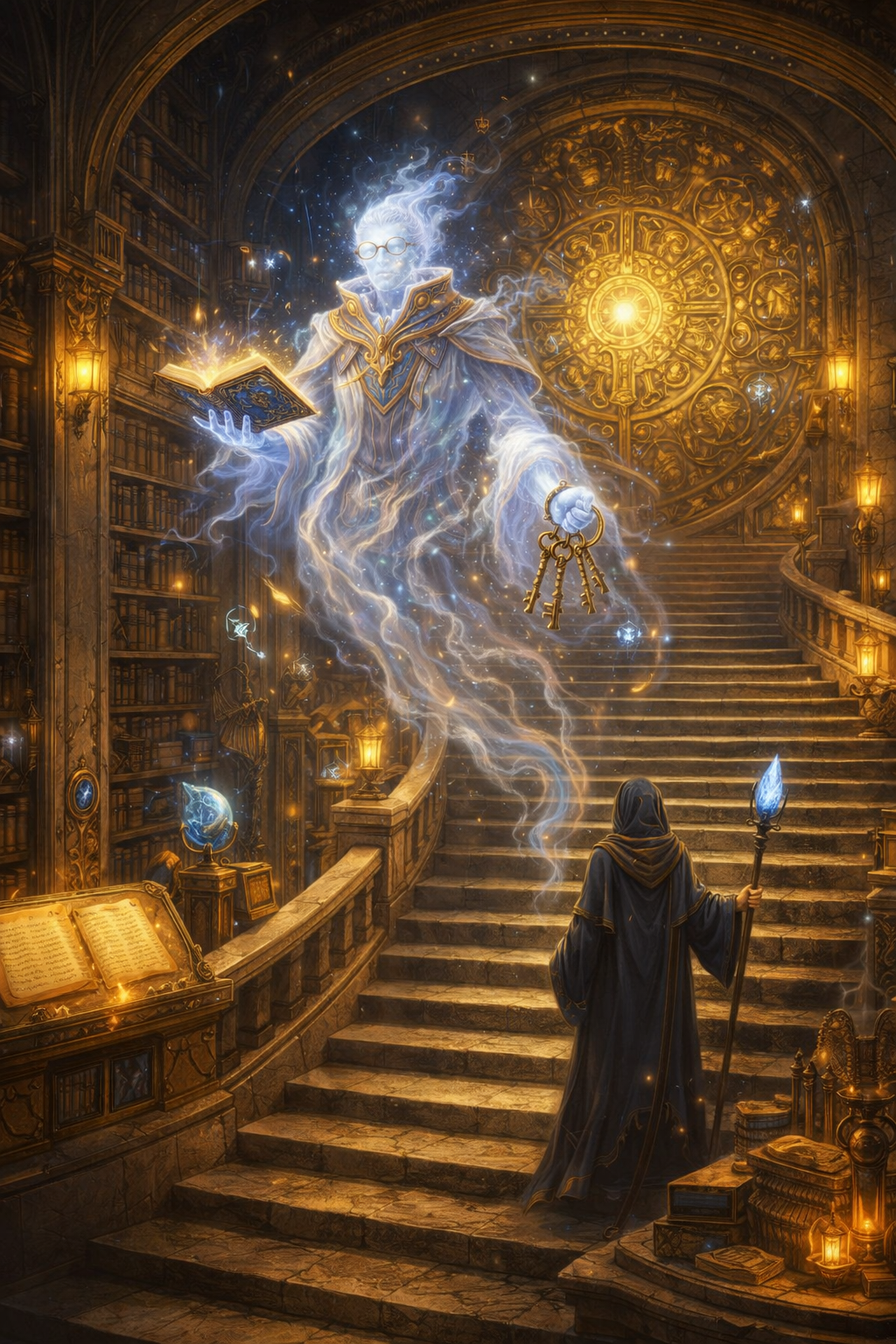
Above the great room of the library, a wide spiral staircase acescends toward a chamber known simply as The Vault.

Here the Healers preserve the rarest manuscripts ever recorded in Aethoria, including several original pages from the Book of Lyte, believed to have been written in the hand of Syterra herself.

Access is restricted to only a small circle of elders. The chamber is overseen by Master Minz along with his assistant Librus, a Veylborn devoted to protecting the knowledge of the Arcanum.

Those few who have entered speak of important knowledge of crystal use for good and for self, manuscripts bound in forgotten materials, and artefacts whose origins stretch back to the mysterious era before the Sundering.

Bank of Ironroot

The Guardian-founded institution of gold, stability, and honour that helped balance the Aethorian economy
Type: Founding bank, museum, and financial institution
Known For: Gold deposits, overdraft ledgers, treasury bills, Guardian banking tradition
Region: Kefar (founded by Ironroot interests)
Nearby Landmark: Kefar Crystal Exchange

The Bank of Ironroot stands as one of the most important financial institutions in the history of Aethoria. Though founded by the peoples of the Ironroot and Pyprast Bastions, its official charter was recognized under seal of the Kefar Crystal Exchange, approved by the Heartwell Council, and backed in principle by all eleven Crestrealms. It was created not simply as a place to store wealth, but as a stabilizing force in a changing world.

As recorded in the Book of Ledgers, the bank was founded in the twilight of the Pre-Sundering Era, when the crystal economy was shifting rapidly. While crystal-rich regions such as the Emberwild Dominion, Pyprast Bastion, and the islands of the Mosaic Archipelago rose in influence, the Ironroot homelands — rich in gold but poor in crystal — found themselves slipping behind in the emerging balance of trade.

In response, the first great council of the modern age persuaded the Ironroot leadership to move its gold reserves into the central vaults of Kefar. There, under the guidance of Chief Garmon, the decree was issued: “If we cannot mine crystal, we shall mint stability.” From that moment, the Bank of Ironroot was born.

Built upon Guardian principles of protection, foresight, and honour, the bank became a sanctuary for gold and a balancing weight against the growing dominance of crystal wealth. It was empowered to hold deposits in gold pieces, issue interest to prudent savers, extend carefully managed loans through an Overdraft Ledger, and circulate Ironroot Treasury Bills backed by the honour and military protection of Ironroot Guardians.

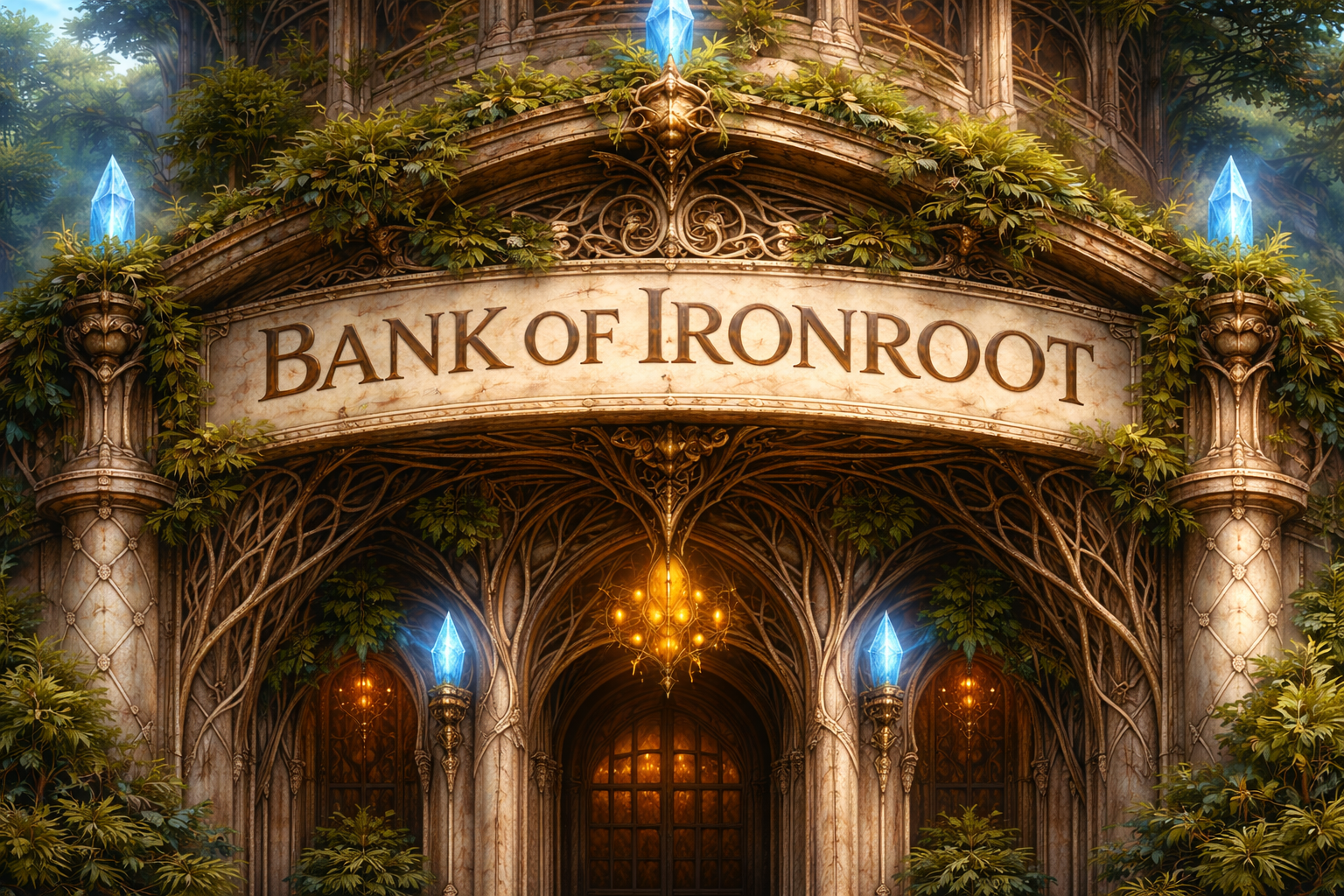
The original Bank of Ironroot was unlike the gleaming crystal halls of Kefar or Argent. Its earliest vaults were said to be rooted beneath Karvok, carved among living roots rather than cold stone, guarded by forest-trained wardens and shaded beneath flowering towers. It reflected the Guardian belief that wealth should be protected like a young tree — not hoarded in darkness, but cultivated with patience and strength.

Today, the first official Bank of Ironroot building is preserved as a museum. Visitors can view replicas of its founding charter, early ledgers, and decrees that shaped the gold economy of Aethoria. Though the modern central bank operates in a more practical style, the old structure remains a powerful symbol of the age when Ironroot answered crystal dominance not with surrender, but with disciplined financial invention.

The founding words of Chief Garmon are still displayed in the museum’s grand hall: “May our gold flow like rivers, may our honour hold like stone.”

Ironroot Treasury Bills

Guardian-backed financial instruments used to strengthen the gold economy of Ironroot
Type: Financial instrument and state-backed investment certificate
Known For: 12.5% one-month return, Guardian guarantee, KCE brokerage
Region: Ironroot and Kefar
Nearby Landmark: Bank of Ironroot

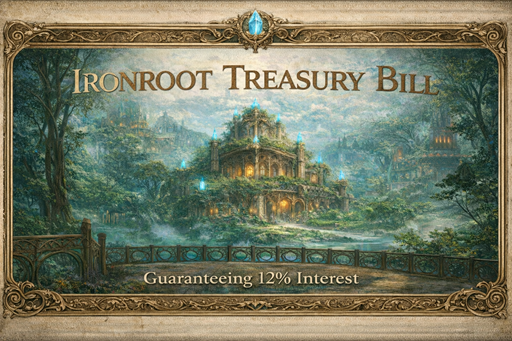
The Ironroot Treasury Bill is one of the most famous financial creations of the Bank of Ironroot. Designed to stimulate a gold-rich but crystal-poor economy, these bills allow adventurers and investors to place gold into the Ironroot system for a fixed term in exchange for a guaranteed return.

In modern Aethorian trade, Treasury Bills represent the practical side of Guardian banking philosophy. Rather than relying on crystal speculation alone, the Bank of Ironroot uses these instruments to channel gold into productive circulation while rewarding patient and disciplined savers.

The Kefar Crystal Exchange agreed to broker the sale of these Treasury Bills, further binding the crystal economy of Kefar to the gold economy of Ironroot. In exchange for this service, the Exchange collects a 25 GP fee when a bill matures and is paid out.

The standard minimum purchase price for an Ironroot Treasury Bill is 1000 GP. At the end of a one-month term, the Bank of Ironroot guarantees a 12.5% return, making the bills attractive to adventurers who prefer certainty over the unpredictable surges of the crystal markets.

To supporters, Treasury Bills are proof that the Ironroot people mastered a different kind of power: not crystal manipulation, but financial discipline. To critics, they are another sign that even the most honour-bound Guardians eventually learned to weaponize paperwork.

For students of Aethorian economics, Treasury Bills reveal an important truth: while crystals may dominate trade, gold still holds the realm together. Those wishing to understand the wider market often study the Bank of Ironroot alongside the Kefar Crystal Exchange, where the tension between stability and speculation defines much of the modern world.

Kefar Crystal Exchange (KCE)

The beating heart of Aethoria’s crystal markets and the most influential trading hub in the Mosaic Archipelago
Type: Global crystal trading exchange
Known For: Crystal markets, price fluctuations, economic strategy
Region: City of Kefar, Mosaic Archipelago
Nearby Landmark: Kefar Academy

The Kefar Crystal Exchange, commonly known simply as the KCE, is the most powerful economic institution in all of Aethoria. Situated in the vibrant heart of the city of Kefar, beneath the towers of the famed Kefar Academy and alongside the glowing lava-fed canals that power the city’s industry, the Exchange stands as the center of the world’s crystal trade.

The Exchange began humbly. In its earliest days it was little more than a gathering place for elemental scholars, merchants, and explorers who sought a reliable system for trading magically infused crystals. As the crystal economy expanded across the Mosaic Archipelago, these informal trades evolved into a structured marketplace where the value of crystals could rise and fall based on supply, discovery, and the unpredictable forces of magic itself.

As Kefar entered its golden age of magical and technological advancement, the Exchange formalized its systems. Traders from every Crestrealm — Mages, Guardians, and Healers alike — began exchanging infused crystals whose prices shifted constantly according to market demand. What began as a simple trade hall soon became a complex financial engine whose decisions could influence entire kingdoms.

Today the fluctuations of the KCE ripple far beyond the city of Kefar. A single surge in crystal value can reshape trade routes across the Mosaic Archipelago and influence the economies of distant Crestrealms. Entire expeditions are launched in search of new crystal veins based solely on rumours whispered across its trading floors.

Though the Exchange operates as an independent marketplace, its stability is quietly supported by two powerful Crestrealms whose influence underpins much of Aethorian finance. The financial guilds of the Auric Exchange oversee many of the trading standards and regulatory frameworks that keep the market functioning, while the vast gold reserves of the Ironroot Bastion provide the economic confidence that allows the system to endure even during volatile crystal cycles.

Together these Crestrealms act as the unseen pillars behind the Exchange. Their gold reserves, financial expertise, and long-standing political influence ensure that while the KCE may appear chaotic, it remains a trusted institution across Aethoria.

For adventurers, the KCE represents both opportunity and danger. A well-timed trade can bring enormous wealth, while a poor prediction can drain fortunes overnight. Every young explorer arriving in Kefar eventually finds their way to the Exchange, dreaming of catching the crystal markets at exactly the right moment.

In the words often whispered by veteran traders: “The crystals may hold the power, but the KCE decides their worth.”

Zouken Monastery

A cliffside sanctuary of Mage learning overlooking Crystal Quay and the Southern Ocean
Type: Mage monastery, boarding school, and orphan sanctuary
Known For: Arcane study, ocean views, Thalorian influence, dried seaweed cheese
Region: West coast of Argent, near Crystal Quay
Nearby Landmark: Crystal Quay

Perched high on the cliffs overlooking the western coast of Argent, beside the bustling port city of Crystal Quay, the Zouken Monastery stands as one of the most distinctive centers of Mage learning in all of Aethoria. Built of blue-grey stone and crowned with elegant golden-domed turrets, the monastery appears both fortified and serene, with several sea-facing rooms projecting dramatically out over the ocean itself.

Though modest in size, Zouken is a place of profound purpose. At any given time, it houses approximately fifty Mage students, all of whom live in near-complete separation from the lively rhythms of Crystal Quay below until they complete their studies. Within its rounded walls, students dedicate themselves to the disciplined pursuit of the mystic arts, guided by a life of contemplation, ritual, study, and silence broken only by the sea winds and the cries of gulls.

The monastery was originally established as a cultural bridge between Argent and the Thalorian Tide. The two regions share the waters of the Southern Ocean and a long history of seaborne trade, and the Tide saw in Argent an opportunity not only for cultural exchange but for subtle influence. By supporting arcane education on Argent’s coast, Thalorian leaders strengthened their presence in a region whose politics and trade routes ultimately help shape the fortunes of Kefar itself.

For this reason, the monastery receives some subsidy and material support from interests tied to the Thalorian Tide, though never so openly that Zouken can be accused of serving as a simple outpost of foreign ambition. Its existence rests in a delicate balance: part school, part sanctuary, part diplomatic gesture, and part quiet political investment.

Zouken also serves a deeply local purpose. As a service to the people of Argent, the monastery has long offered a home and education to many of the orphans of Crystal Quay. Some come to master magic. Others simply come to survive. In this way, the monastery is not only a place of scholarly refinement, but also an institution of care, rescue, and social duty.

To help sustain its operations, the monastery produces and sells a number of handcrafted goods in Crystal Quay, the most famous of which is its unusual dried seaweed cheese. This delicacy, strange to outsiders but beloved by many locals, has become one of Zouken’s most recognizable exports, helping fund the upkeep of its aging buildings and the support of its students.

The views from Zouken Monastery are among the most celebrated in Argent. From its ocean balconies and high stone walkways, one can see the bright life of Crystal Quay below, the restless sea stretching westward, and the trade routes that bind Argent to distant realms. The result is a place of tranquil isolation that nevertheless feels connected to the wider world in every direction.

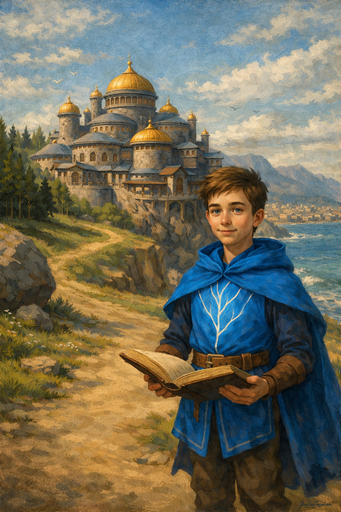
Among all who studied within its walls, no student is more famous than Zelnard. The painting Lost Boy, an oil and watercolour work created by the mage Gera many years later in Argent year 892, depicts Zelnard in the final year of his studies at Zouken. Gera, herself a master of water and artistic media magic, created the work as both portrait and remembrance. Today the painting is held in the Library of the Astryx Arcanum, where it remains one of the most discussed visual records of life at the monastery.

To many in Aethoria, Zouken Monastery represents more than a school. It is a place where isolation produces insight, where the ocean sharpens thought, and where power is taught not as spectacle, but as patience, control, and purpose.

Crystal Quay

Argent’s great circular port city and the maritime gateway of the western islands
Type: Coastal port city and trade hub
Known For: Maritime trade, fortified circular design, disciplined governance
Region: Argent Islands
Nearby Landmark: Zouken Monastery

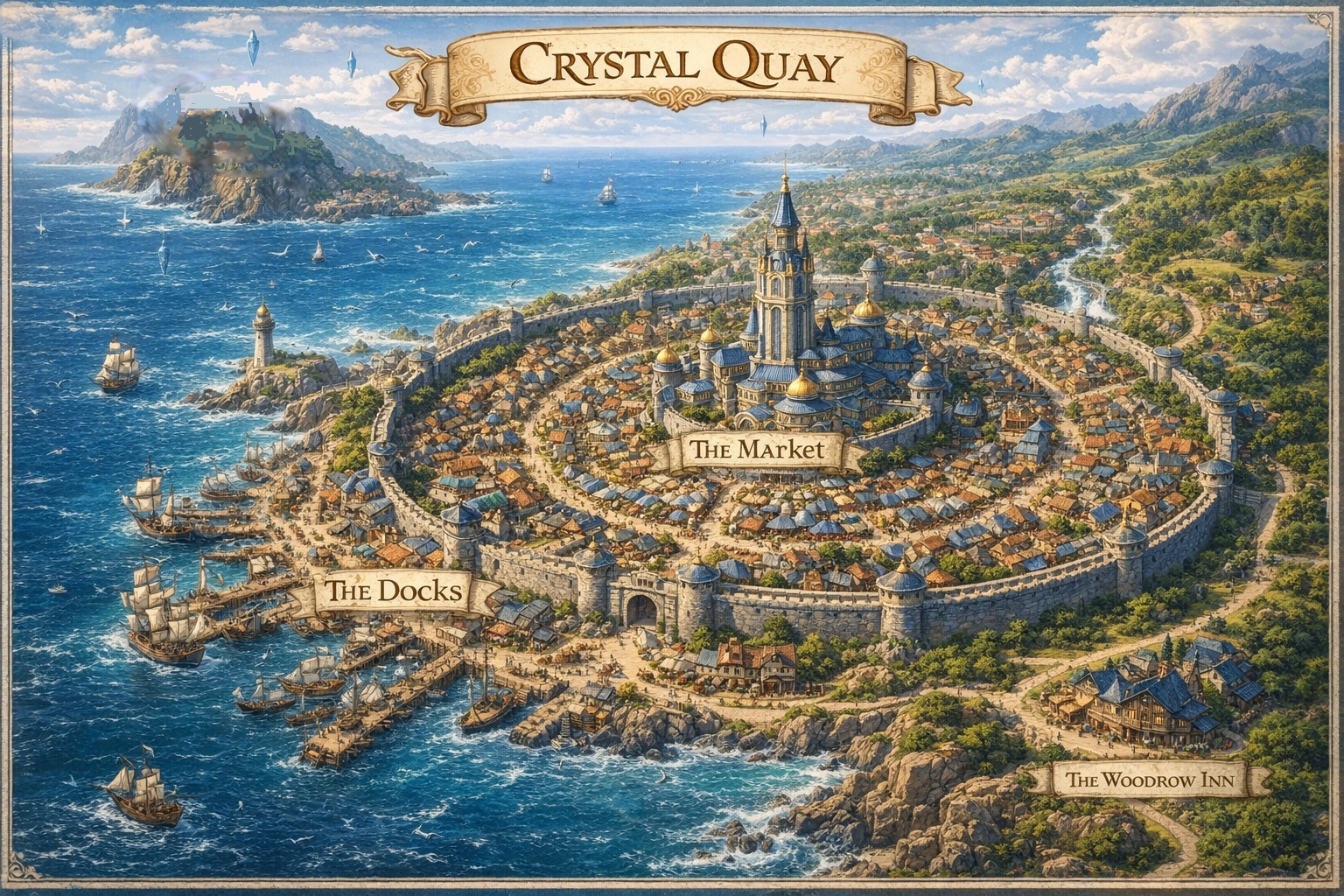
Crystal Quay, the second largest city of the Argent Islands, stands as one of the most remarkable examples of coastal engineering in all of Aethoria. Built in a precise circular design and enclosed within powerful blue-grey stone walls, the city presents a striking silhouette from the sea. A massive protective dome stretches over the inner districts, shielding the city from both storms and unwanted disturbances. To the cities southeast is the mouth of the Winruk Canyon where fire, water and lava all meet the ocean.

The city’s harbours are rarely quiet. Ships arrive and depart constantly, carrying cargo from every corner of the Mosaic Archipelago and beyond. Merchant vessels, fishing fleets, research ships, and private adventuring vessels crowd the docks, making Crystal Quay one of Argent’s busiest maritime hubs. From here, goods flow inland to the rest of the island and outward to distant Crestrealms across the Southern Ocean.

Despite the constant motion of its ports, the city itself is known for its strict internal order. Governance in Crystal Quay is continuous and highly organized, a tradition established generations ago to maintain stability in a city where wealth and trade move at tremendous speed. Its administrators are respected for efficiency, discipline, and an unwavering commitment to civic control.

This order has also shaped the city’s culture. While Crystal Quay thrives on international trade, its residents are famously cautious of outsiders. Visitors often find the city polite but distant, its people slow to trust and quick to close ranks when trouble appears. For those born within its walls, however, the city feels almost familial — a tightly woven community whose loyalty runs deep.

Far to the city’s north eastern cliffs stands the Zouken Monastery, whose students spend years studying the arcane arts while looking down upon the harbor below. Many of the monastery’s orphans and apprentices come from the streets of Crystal Quay itself, creating a quiet but enduring bond between the scholarly sanctuary above and the bustling city beneath.

To sailors crossing the Southern Ocean, the sight of Crystal Quay’s circular walls rising above the sea signals both safety and opportunity. It is a city of guarded gates, busy docks, and powerful traditions — a place where trade fuels prosperity, but trust must be earned slowly.

Zaeka Tower

A towering relic of the Pre-Sundering age rising from the volcanic cliffs of Mount Zaeka
Type: Pre-Sundering arcane tower and research site
Known For: Ancient crystal architecture, volcanic experiments, Mage research
Region: Mount Zaeka, Argent Islands
Nearby Landmark: Crystal Quay

Zaeka Tower is one of the most enigmatic structures remaining from the Pre-Sundering Era. Rising from the volcanic cliffs of Mount Zaeka on the Argent Islands, the tower stands as a reminder of a time when the ancient peoples of Aethoria possessed technologies and magical knowledge that modern scholars are still struggling to understand.

Historical records suggest that Zaeka Tower was the third great tower constructed by the Pre-Sundering civilization after the Argent Islands were first colonized. The second of these towers, Alfadin Tower, stands on nearby Kefar Island. Together they form part of a mysterious network of structures whose purpose remains only partially understood.

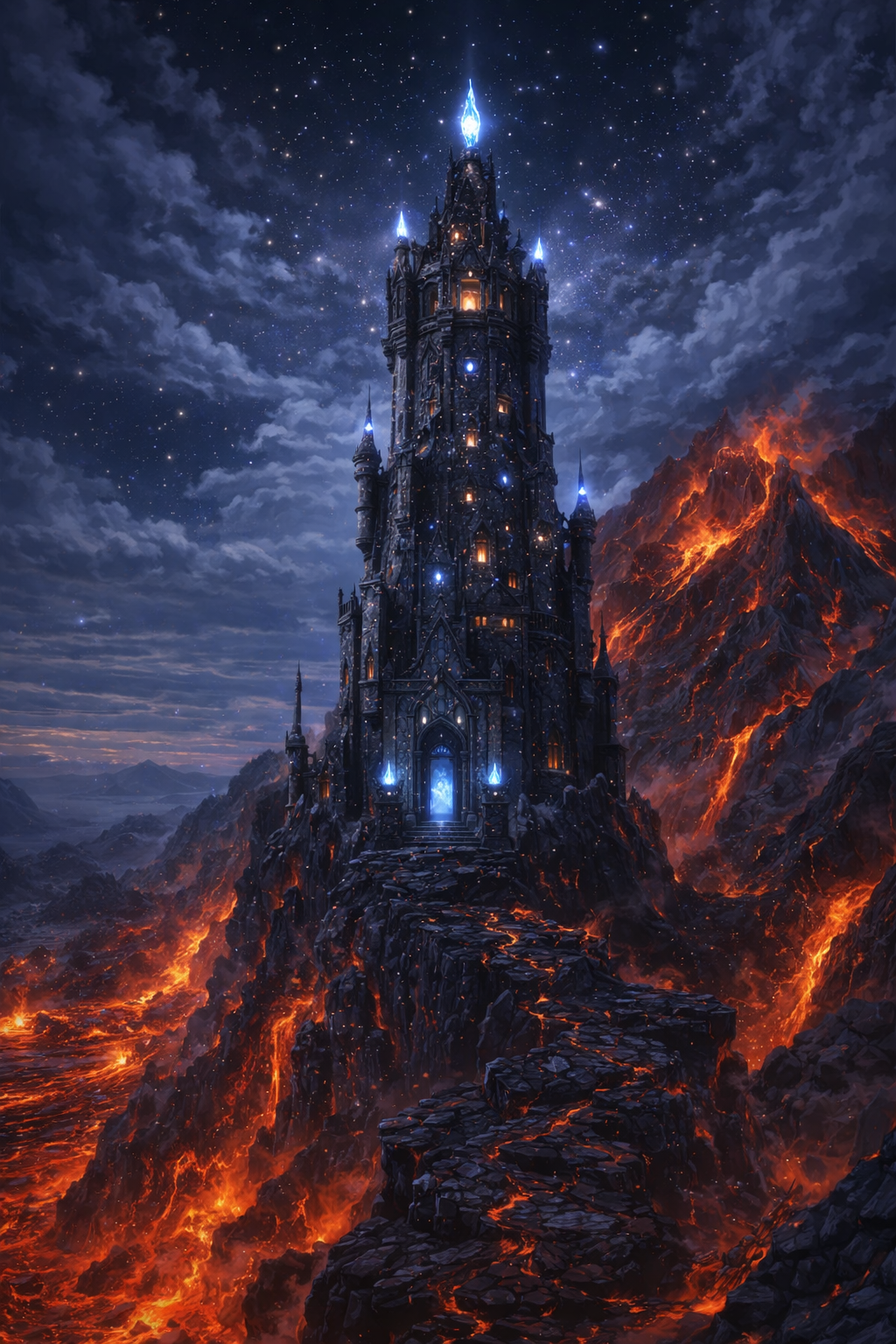
The tower itself is perched in an almost impossible location. Built directly into the volcanic cliffs of Mount Zaeka, its entrance paths are narrow and treacherous, making access extremely difficult even for experienced climbers. Despite the constant presence of flowing lava and volcanic heat nearby, the tower’s surface shows almost no signs of damage or weathering.

Constructed from enormous segments of dark volcanic basalt, the tower is embedded with naturally occurring crystals that shimmer within the stone. At night these crystals catch the light of the stars and moon, giving the entire structure the appearance of a towering fragment of the night sky. Early explorers believed the structure must have been built by giants, as the size and precision of the stone blocks seemed beyond the capability of ordinary builders.

Standing more than thirty stories high, the tower dominates the surrounding cliffs. Within its ancient chambers are corridors, observation halls, and arcane laboratories whose original purposes are still debated among scholars.

In modern times the tower has been reoccupied by the Argentian School of Mages, who see Zaeka as an invaluable site for studying Pre-Sundering technology. Researchers conduct experiments involving the tower’s mysterious crystal architecture as well as the volatile lava flows that surge down the slopes of Mount Zaeka.

These studies have already revealed hints that the tower was once connected to larger arcane systems capable of channeling immense crystal energies. Some believe Zaeka Tower may have served as a monitoring station, a research facility, or even part of a global magical network linking distant regions of Aethoria.

Whatever its original purpose, Zaeka Tower remains one of the most intriguing remnants of the ancient world — a place where modern mages seek to rediscover the forgotten knowledge of the civilization that existed before the Sundering reshaped the world.

Sorka Monastery

Sanctuary at the Center of the Forest
Type: Monastic sanctuary
Region: Sorka Forest, Argent Island
Founded: Centuries before the Sundering
Known For: Meditation gardens, ancient forest paths, and the hidden "Path Number"
Nearby Settlement: Bymotha

In the heart of the Sorka Forest, where the trees begin their gradual transition from the natural purple hues of Argent into vibrant shades of green, stands the peaceful sanctuary known as Sorka Monastery. Nestled along the forest’s edge, the monastery has long served as a beacon of tranquillity and enlightenment amidst the untamed wildlands of Argent Island.

History

Sorka Monastery was founded centuries ago by a small order of monks who sought solitude within the living energy of the Sorka Forest. These early scholars believed that the forest itself held ancient wisdom and that by living in harmony with it, they could better understand both nature and the deeper mysteries of Aethoria.

Over the generations the monastery became known not only as a place of meditation but also as a sanctuary for travellers, scholars, and wanderers seeking refuge from the turbulence of the wider world. Many who pass through Argent Island eventually hear whispers of the monastery’s quiet gardens and the wisdom of the monks who reside there.

Architecture

The monastery reflects the understated elegance of traditional Argentian design. Constructed from locally quarried stone and timber, its white-clad walls blend gently with the surrounding landscape. Sweeping roof eaves and intricately carved wooden beams give the structure a timeless presence, as if it has always belonged to the forest itself.

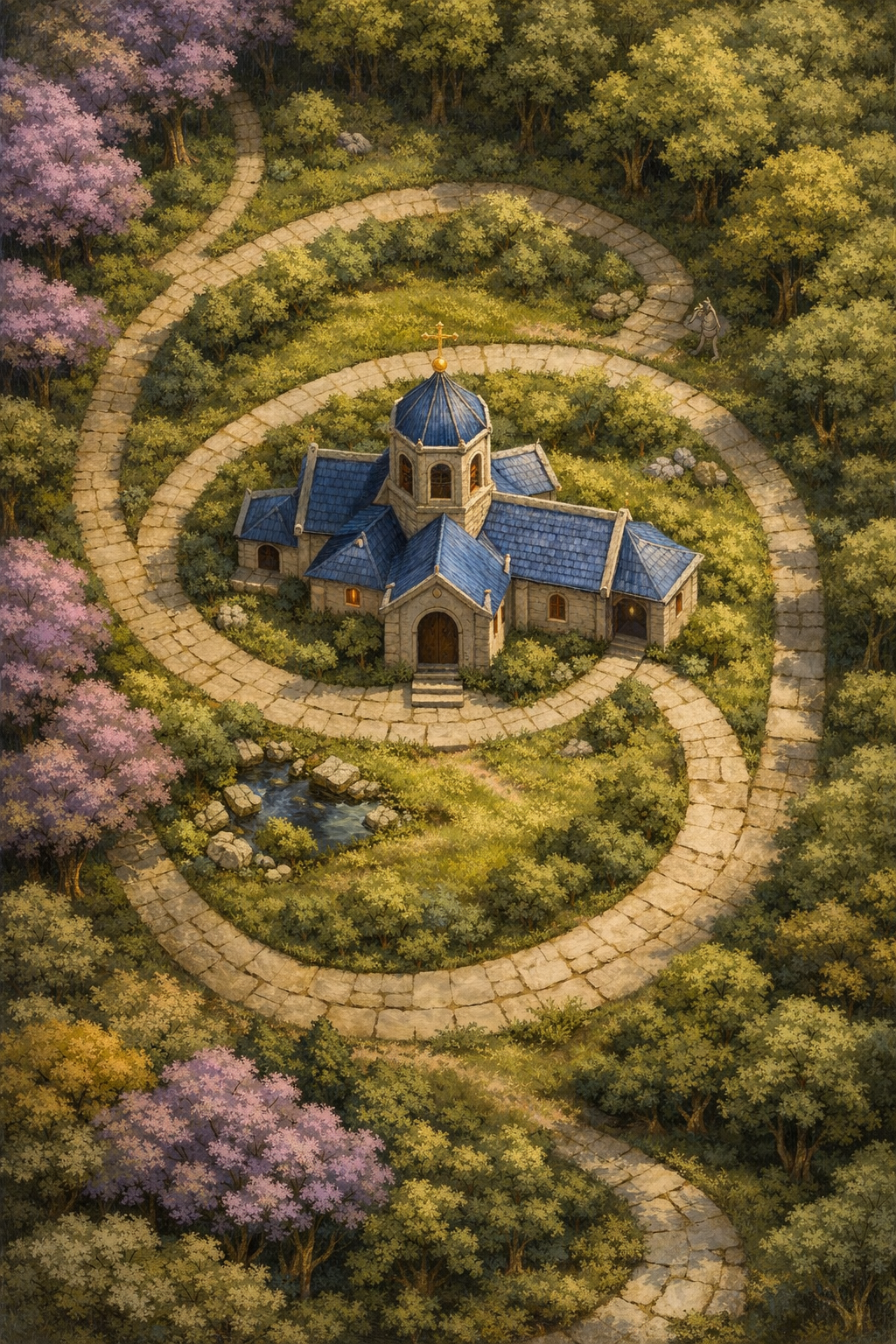
Surrounding the central halls are carefully cultivated gardens maintained by the monks. These gardens bloom throughout the year with fragrant flowers and quiet courtyards connected by winding stone paths designed to guide visitors on journeys of reflection and contemplation.

The Clue of the Path

Among the monastery’s many quiet mysteries is a legend known as The Clue of the Path. The winding stone pathways surrounding the monastery are said to form a hidden number when viewed with careful attention. Only the most observant visitors ever notice the pattern.

According to the monks, this number represents the number of days it takes a traveller to reach the nearby town of Bymotha, the gateway settlement leading deeper into the wildlands of Argent. Those who uncover the number are said to travel safely, guided by the silent wisdom of the monastery and the forest that protects it.

Today Sorka Monastery remains a place of quiet reverence. Whether visited by wandering scholars, pilgrims, or those simply seeking peace, it continues to embody the enduring spirit of contemplation that has lived within the Sorka Forest for centuries.

Pre-Sundering Shrine of the Ancients

Ancient marble sanctuaries scattered across the Mosaic Archipelago
Type: Ancient spiritual shrine
Known For: Crystal energy, mysterious occurrences, Veylborn sightings
Region: Mosaic Archipelago
Nearby Landmark: Pre-Sundering Towers

Scattered quietly across the islands of the Mosaic Archipelago stand the Pre-Sundering Shrines of the Ancients, weathered stone sanctuaries left behind by the mysterious civilization that existed long before the Sundering reshaped Aethoria. Though time has worn their surfaces smooth, these shrines remain powerful reminders of a forgotten age when crystal knowledge and spiritual philosophy were deeply intertwined.

Travelers and explorers often encounter these shrines in remote valleys, quiet forest clearings, or along windswept coastal ridges. For many wanderers they serve as places of respite and reflection — peaceful sites where adventurers pause to rest, drink from the basin waters, and gather their strength before continuing their journeys.

Despite their tranquil appearance, unusual stories surround the shrines. Some travelers claim to have experienced strange sensations while visiting them — whispers in the air, sudden feelings of clarity, or fleeting glimpses of strange luminous beings. Scholars debate these claims vigorously, though many believe that the shrines may still contain dormant crystal energies from the ancient world.

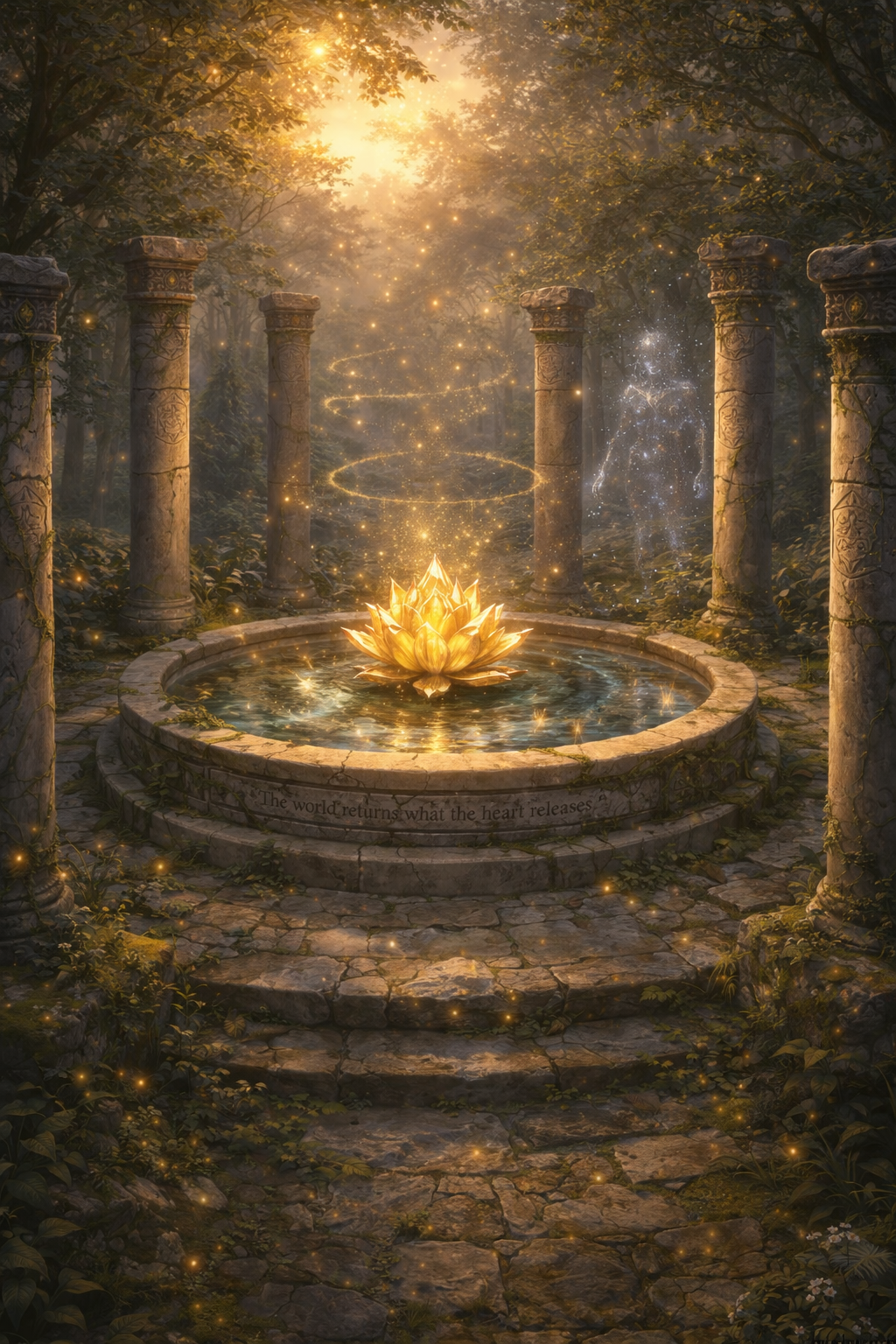
Architecturally the shrines are unmistakably Pre-Sundering in design. They are typically constructed from pale marble-like stone and surrounded by tall carved pillars arranged in precise geometric patterns. At the center of each shrine lies a circular basin that collects rainwater or draws water naturally from deep underground aquifers.

The surrounding pillars are believed to serve a greater purpose than simple decoration. Many scholars suspect that they once functioned as conduits, helping channel natural crystal energy from deep within the earth toward the basin at the shrine’s center. These quiet energy flows are thought to be one reason why Veylborn creatures are sometimes seen lingering near the structures.

In ancient times, records suggest that a delicate golden crystal flower once rested within the basin — shaped in the form of a lotus, a symbol long associated with spiritual balance and renewal. Though none of these crystal flowers remain today, the design can still be seen carved into the stone architecture of many surviving shrines.

The cultural philosophy of the Pre-Sundering peoples is believed to have been deeply connected to these places. According to surviving fragments of their writings, they believed that what one places into the world eventually returns in kind. The shrines were therefore used as locations where travelers could reflect upon their intentions, knowing that the powerful energies stored within the earth might amplify the thoughts and emotions carried within them.

Whether simple spiritual monuments or components of a much larger crystal network, the Pre-Sundering Shrines remain among the most quietly mysterious sites in all of Aethoria — ancient places where the past still whispers through stone and water.

Whispering Woods

A rain-soaked coastal forest where powerful sea winds give the trees their haunting voice
Type: Vast coastal forest
Region: Southwestern Pyprast Bastion
Nearest City: Pyer
Known For: Whispering canopy, cool sea mist, hunting grounds, medicinal plants
Notable Wildlife: Moonstalkers, Shadowfangs
Notable Flora: Tree Turnips, Forestine Fruit Burrs

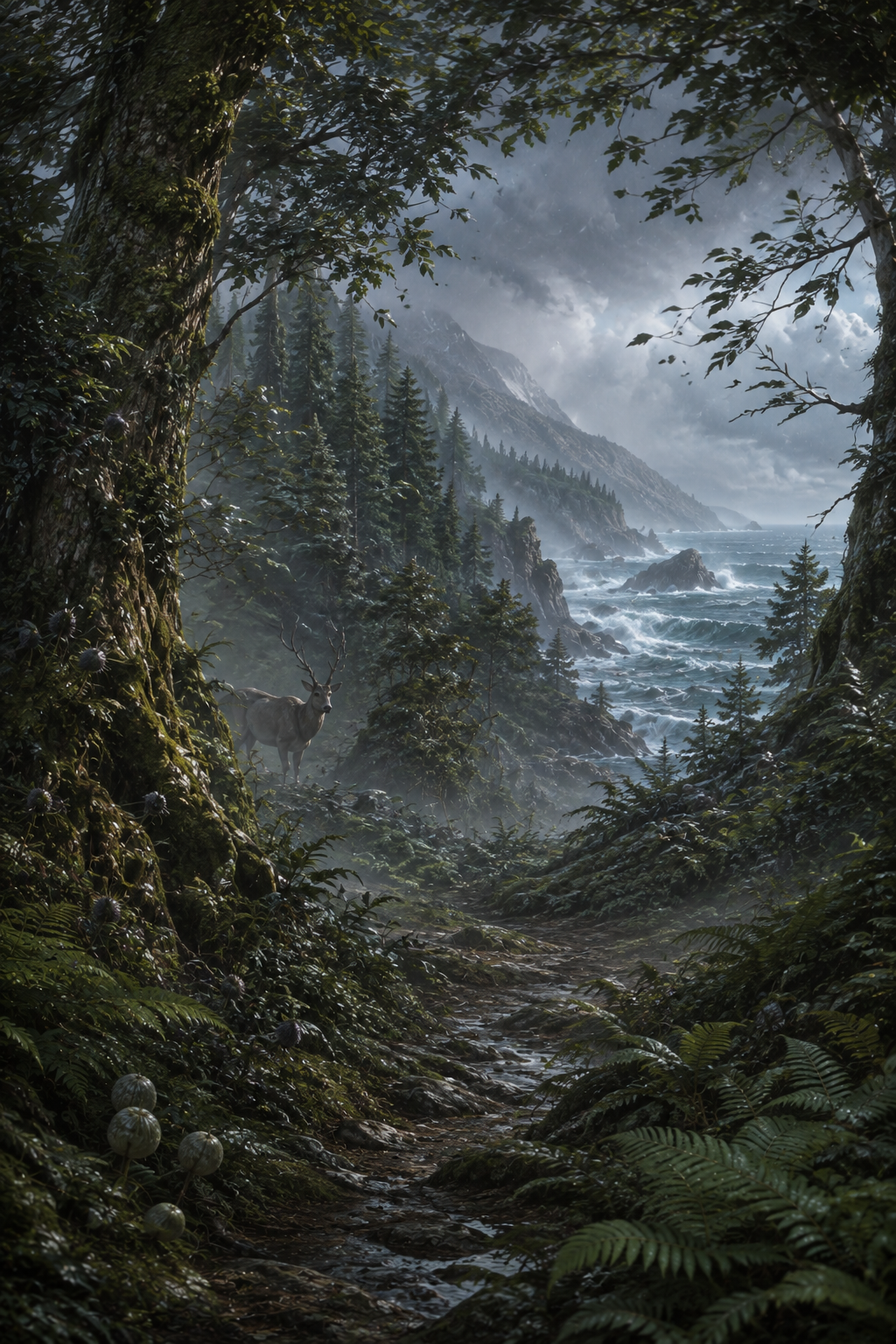
The Whispering Woods stretch across the southwestern tip of the Pyprast Bastion. Mountains frame the forest to the north, while its dense vegetation reaches southward across an open peninsula to the rugged shore of the Southern Ocean.

The forest takes its name from the ethereal voices heard within its canopy. Strong sea winds sweep inland through tightly packed branches, hanging growth, and heavy leaves, producing a shifting chorus of sighs, murmurs, and distant calls. Though travellers have invented many supernatural explanations for the sound, the wind is quite capable of being unsettling without magical assistance.

Geography and Climate

Cool ocean gusts carry frequent rain and mist into the woods, nurturing thick undergrowth and lush vegetation. The influence of the sea can be seen throughout the ecosystem, from wind-shaped trees to plants adapted to constant moisture and salt-laden air. Dense growth makes travel away from established paths slow and difficult, and permanent settlements are rare.

The Whispering Woods are the closest great forest to Pyer, capital of the Auric Exchange. Their proximity has made them a favoured sporting ground for wealthy citizens of the capital, although even experienced hunters treat the deeper forest with considerable caution.

Flora and Fauna

Elusive deer-like Moonstalkers move quietly through the mist and are most often seen at night or by seasoned trackers. They are the primary prey of Shadowfangs, aggressive apex predators common throughout the region. Shadowfangs do not usually attack unless cornered, and sensible hunters avoid testing how strictly they interpret the word “cornered.”

The cool, wet forest is also an excellent source of Tree Turnips, valued for both their nutritional and medicinal properties. These hardy plants have long been gathered by people living along the forest’s margins.

Forestine Fruit Burrs

Native Forestine Fruit Trees bear a remarkable fruit commonly called the Fruit Burr. Each fruit has a tough, leather-like skin of deep green and a tuft of purple, burr-like fibres. These fibres cling to passing animals, clothing, and packs, carrying the fruit away from its parent tree and helping spread its seeds through the forest.

Both the durable skin and unusual fibres have practical uses, making Forestine Fruit an important resource for those who know how to harvest it. Visitors who do not know how frequently discover that the forest has harvested them instead, usually several miles after the burr attached itself.

Significance

Although largely uninhabited, the Whispering Woods hold a special place in the imagination of Pyer’s citizens. They are at once hunting ground, natural resource, and symbol of the untamed world beyond the capital. The ceaseless whispers carried through the canopy remain a reminder that the wilderness owned by the Auric Exchange in their Pyprast Bastion is beautiful, valuable, and never entirely under anyone’s control.

Not All Power Wears a Crown

In Aethoria, power does not belong only to capitals and rulers. It lives in mountain observatories, ruined shrines, trade ports, crystal mines, monasteries, libraries, hidden marshes, and places so old that even scholars disagree whether they were built by hands, magic, or history itself.